Hagia Sophia Dress Code and rules for tourists
Visiting Hagia Sophia? Follow the strict dress code - cover shoulders, knees, and hair. Learn what’s allowed, what’s not, and how to prepare before you enter.
Last updated: May 20, 2026
Prepare your clothing before choosing a ticket. Paid entry changes neither the dress check nor security; a guided walk adds context across the two mosques. Match Your Preparation And Visit ↓
Booking Summary: In brief: select the exact ticket option, check child and access requirements, and leave time for security. Blue Mosque admission is free; guidance is optional.
Hagia Sophia Dress Code And Rules: Quick Reference
| Shoulders | Must be covered. No tank tops or sleeveless shirts. | Must be covered. No sleeveless tops or low-cut necklines. |
| Knees | Must be covered. Long trousers required. Shorts not permitted. | Must be covered. Skirts, dresses, or trousers to at least the knee. |
| Head covering | Not required. Remove hats on entry. | Mandatory. Headscarf required. Hats are not an acceptable substitute. |
| Shoes | Removed before carpeted areas. Free plastic bag provided. Socks optional. | |
| Photography | Allowed. No flash. Never photograph worshippers in prayer. No commercial equipment or tripods. | |
| Bags | Small bags only. Large backpacks, suitcases, and trolleys not permitted. | |
| Food and drink | Not permitted inside. Finish snacks and drinks before entering. | |
| Children under 8 | Generally exempt from dress code. Strollers must be folded and carried. Free entry with ID. |
Pack the scarf and suitable clothing before you leave; paid entry does not waive the checks. Review Your Visit Needs →
What Is The Dress Code For Hagia Sophia?
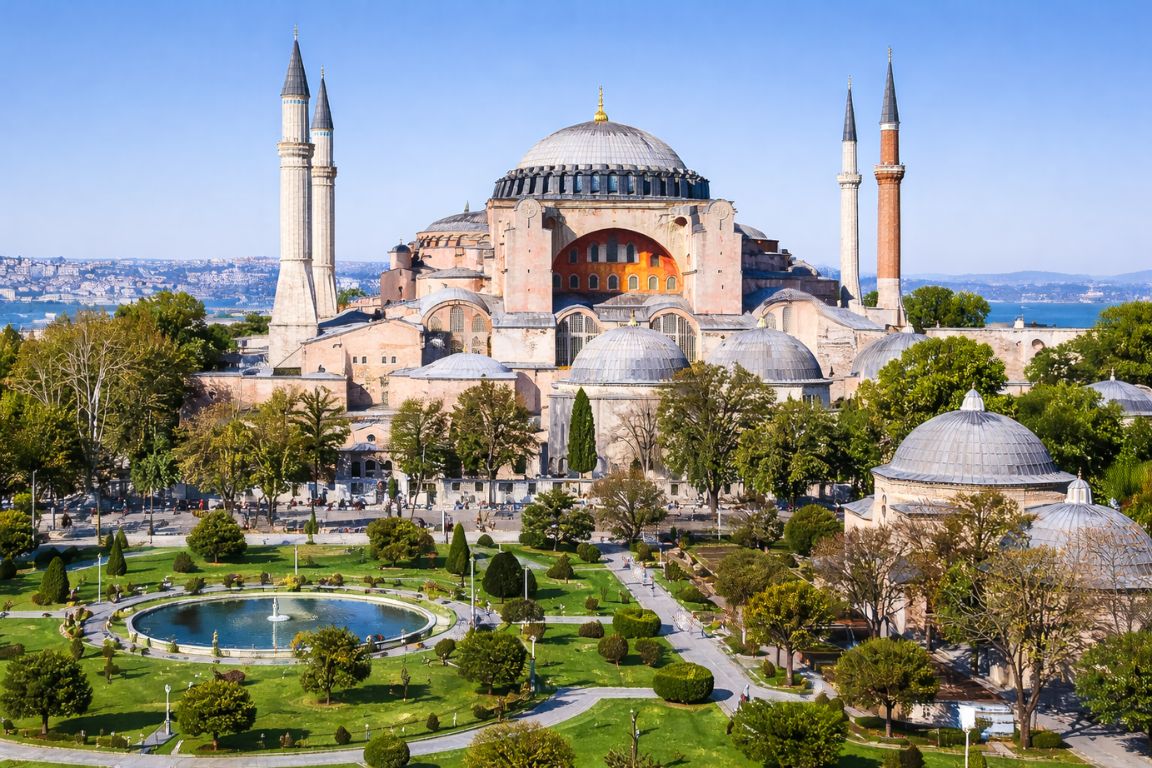 Hagia Sophia is an active mosque, not a museum, and its dress code is enforced at the entrance by staff. All visitors must cover shoulders and knees regardless of gender. Women must also cover their hair with a headscarf. This is mandatory, not a suggestion. Headscarves are available at the ticket booth for €1 and body cover robes for €3, but buying on-site during peak season can add a queue. Bring your own scarf. Visitors who do not comply will be refused entry.
The single most common dress code failure we see in our groups is women arriving without a scarf. Not because they didn’t know – most did – but because they packed it in their checked luggage, forgot it at the hotel, or assumed they could sort it out at the door without much delay. In peak summer, the queue for cover-ups at the entrance can run 10 to 15 minutes and the paper-like robes provided are uncomfortable to wear for 60 to 90 minutes in heat. A lightweight scarf in your day bag solves all of this. It weighs nothing, takes no space, and works for every mosque in Istanbul.
The dress code applies to the upper gallery visiting area where tourists are routed since 2024. You are in an active place of worship regardless of whether you see anyone praying during your visit. The rules are the same whether the gallery is empty or full. Staff at the entrance check clothing before issuing entry, and the check is real. One traveler on a Rick Steves forum in 2024 reported that her husband was turned back because his T-shirt displayed a design deemed to represent a flag, and had to turn it inside out before being admitted. That level of scrutiny is not common, but the basic requirements, shoulders, knees, headscarf for women, are consistently enforced.
Our groups arrive prepared and we never lose time at the entrance over dress code issues. If you want to visit with someone who handles these logistics, our team at Hagia Sophia Tours is here.
Carry your own covering so the entry plan does not depend on what is supplied at the door. Plan Entry After Preparing →
Do Men And Women Have Different Rules At Hagia Sophia?
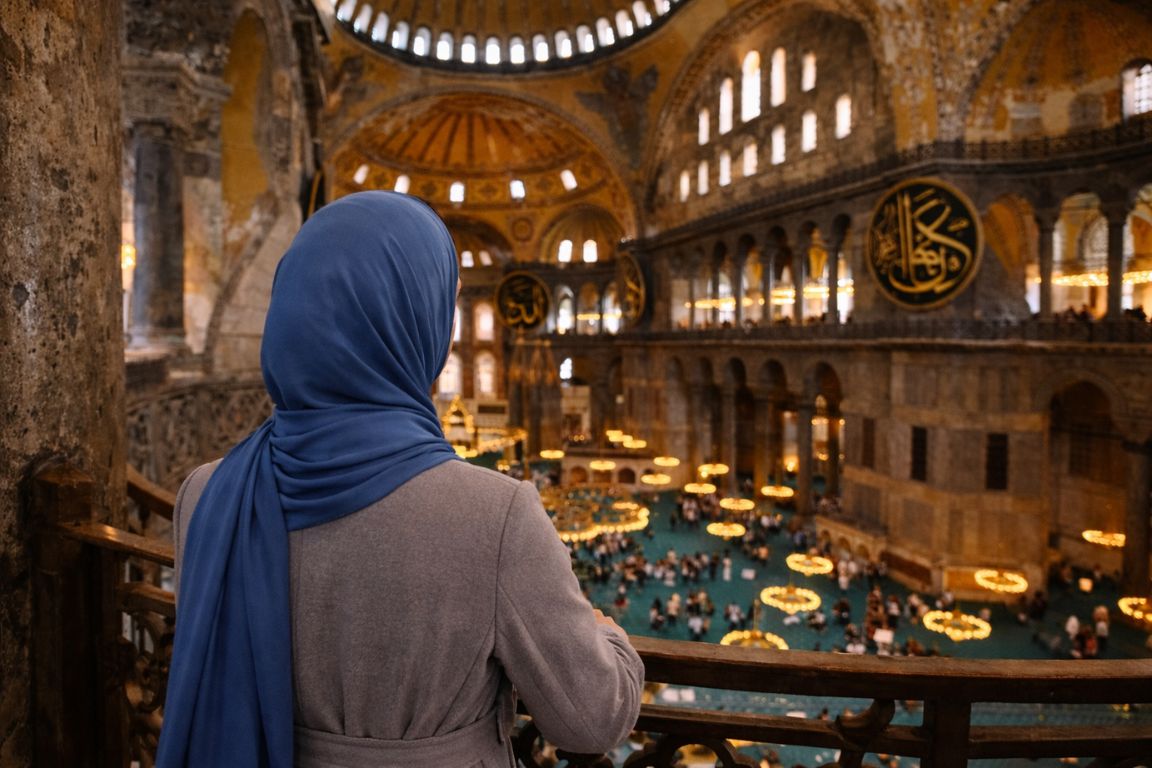 Yes. The core requirement of covered shoulders and knees applies to both. The significant difference is the headscarf: women must wear one, men do not. Men should also remove any hats on entry – a hat is not an acceptable substitute for a headscarf for women, and men keeping hats on inside is considered disrespectful. Beyond clothing, both are subject to the same behavior rules: quiet voices, no photography of worshippers, and respectful movement through the space.
For men, the practical dress question is almost always about shorts. Shorts are not permitted, period. This applies regardless of length. Long trousers are required. In summer heat that means lightweight linen or cotton trousers rather than jeans, which are warm but technically compliant. A standard T-shirt with short sleeves is fine as long as it covers the shoulders. Sleeveless shirts and tank tops are not acceptable. The rule is not subtle: staff will direct you to the cover-up counter if you arrive in them.
For women, the headscarf requirement is the one that catches people out most consistently. Istanbul is a secular city and many of the hotels, restaurants, and cultural sites visited before Hagia Sophia have no dress requirements at all. The contrast can create a false sense of flexibility. Hagia Sophia is different. The headscarf rule comes from the building’s function as an active mosque, where the same standard applies to all visitors without exception. The scarf must actually cover the hair, not just rest on top of the head. Staff check this at the entry point.
One gray area worth clarifying: leggings and tight trousers. These technically cover the knees but have been flagged by entrance staff at some mosques in Istanbul. At Hagia Sophia, the official guidance requires modest, non-form-fitting clothing. If you’re wearing leggings, the cover-up robe or a wrap skirt tied at the waist resolves the issue. A loosely tied wrap around the hips is not the most stylish solution in 35°C heat, but it works. The alternative is planning ahead and wearing loose cotton trousers.
Compare current ticket formats here.Choose modest clothing for the whole group, including the Blue Mosque if you add a guided walk. Read The Free Blue Mosque Visit →
What Happens If You Don’t Follow The Dress Code?
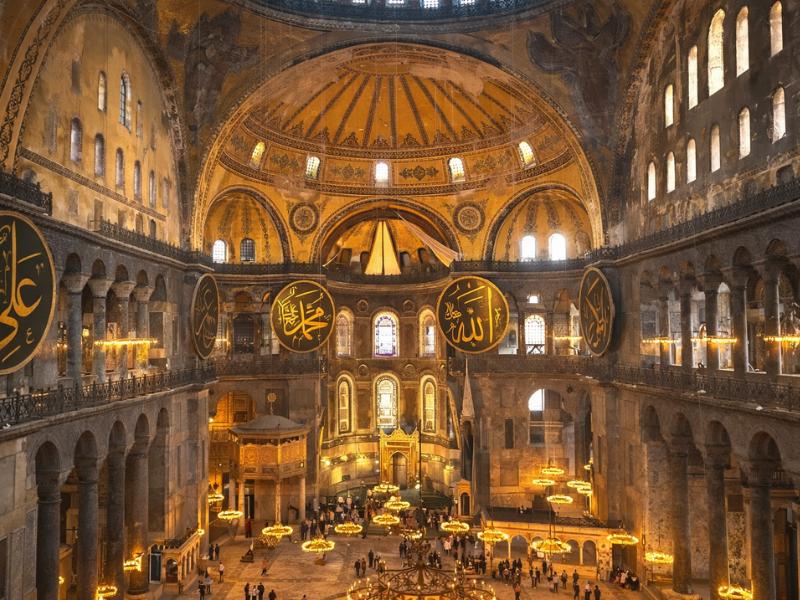
You will be directed to the ticket booth cover-up counter before entry. Staff do not let visitors through with uncovered shoulders, bare knees, or women without a headscarf. If you have a skip-the-line ticket, the dress check still applies and can eliminate your queue advantage if you need to stop for a cover-up. In rare cases involving other dress rule violations, such as clothing with offensive or political imagery, you may be asked to turn the garment inside out or remove it.
Compare current ticket formats here.Being turned back at the gate for dress code reasons is more than inconvenient: it potentially costs you 15 to 20 minutes of time you’ve already waited in the security line to get to that point. The security queue and the dress check are sequential. You pass through security, then face the dress inspection before the ramp. Discovering you need a cover-up after you’ve already spent 30 minutes in the security queue is a genuinely frustrating experience that is entirely preventable.
The cover-ups available at the entrance are disposable-style paper robes (€3) and paper-like headscarves (€1). They’re functional but not comfortable for an extended visit, especially in summer. The headscarves run out during peak hours in July and August. Multiple reviewers in 2024 and 2025 arrived during busy periods to find the headscarf supply depleted, requiring them to improvise or wait. This is another argument for bringing your own.
Dress code enforcement has been consistent since the mosque reconversion in 2020. It is not selectively applied or negotiable. The tone from staff is generally polite but firm. If you are redirected, comply without argument. The cover-up counter staff deal with this interaction dozens of times per hour and handle it efficiently.
Planning a trip to one of the world’s most iconic landmarks? Here’s our full guide on how to visit Hagia Sophia tours – covering entry rules, prayer times that affect tourist access, and what to wear inside.
The ticket option still requires covered knees, shoulders and a headscarf for women. Prepare those before reserving entry. Choose Entry After Preparing →
What Are The Rules About Shoes At Hagia Sophia?
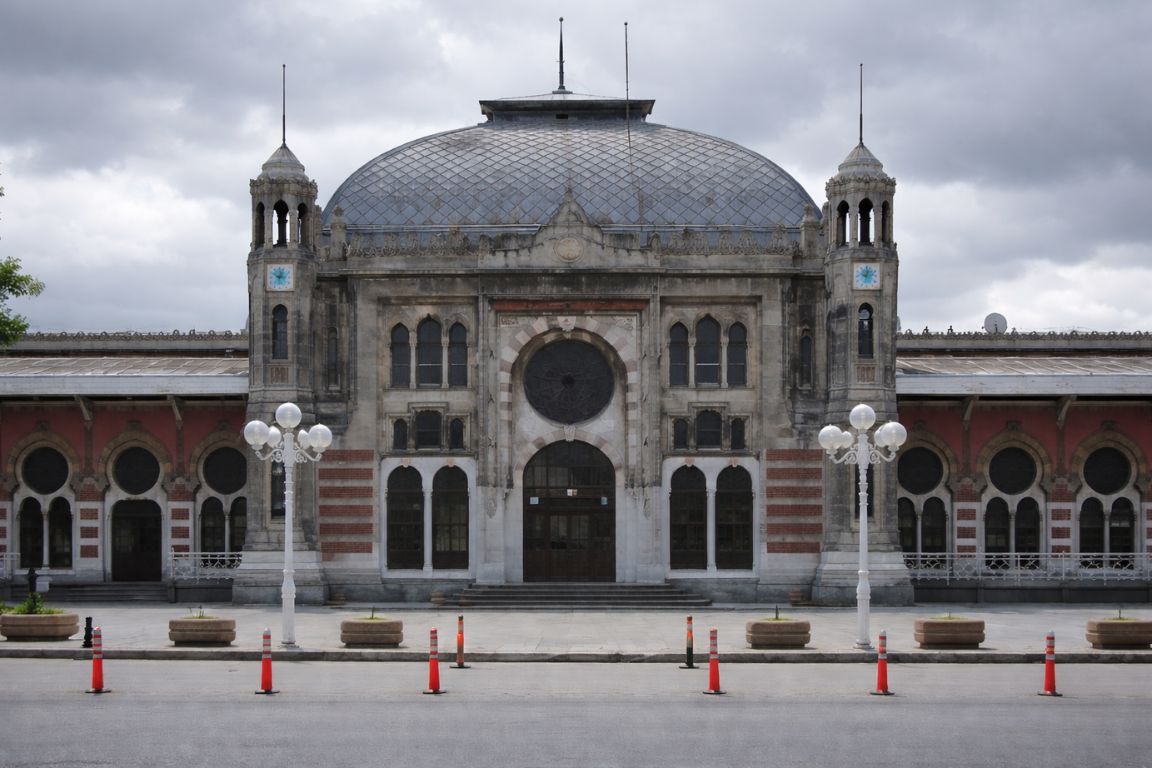 Shoes must be removed before stepping onto the carpeted mosque areas. At the tourist entrance for the upper gallery, you will encounter carpeted sections inside the visiting route where shoes come off. A free plastic bag is provided at the entrance to carry your shoes with you during the visit. Socks are optional: you can walk barefoot on the stone and marble sections of the route. Shoe racks are available but taking your shoes with you in the bag is recommended, particularly in peak season when racks fill quickly.
The shoe removal rule is standard practice in all mosques. What’s slightly different at Hagia Sophia compared to some other mosques is that the tourist upper gallery route passes through both carpeted and non-carpeted sections. You remove your shoes at the carpeted transition point, not at the building entrance. This means you walk through a portion of the stone approach with shoes on, then remove them when you reach the carpet.
Practical footwear tip: slip-on shoes make the visit significantly smoother. Lace-up boots or complex sandals create a bottleneck at the shoe removal point, particularly when others are waiting behind you. If you’re visiting multiple mosques in Istanbul in one day, slip-ons are the obvious practical choice. Bring a pair of socks if you prefer not to walk barefoot on stone; the floor surfaces in the gallery are clean and well-maintained.
There is no luggage storage facility at Hagia Sophia for shoes or anything else. The nearest luggage storage is at Sirkeci train station, about a 10-minute walk away. Don’t plan to leave anything at the building. The free plastic bag for shoes is genuinely useful – it keeps your hands relatively free for photography while keeping your footwear secure.
Choose comfortable walking shoes for the approach and follow staff directions at carpeted areas. Plan The Full Walking Route →
What Are The Photography Rules Inside Hagia Sophia?
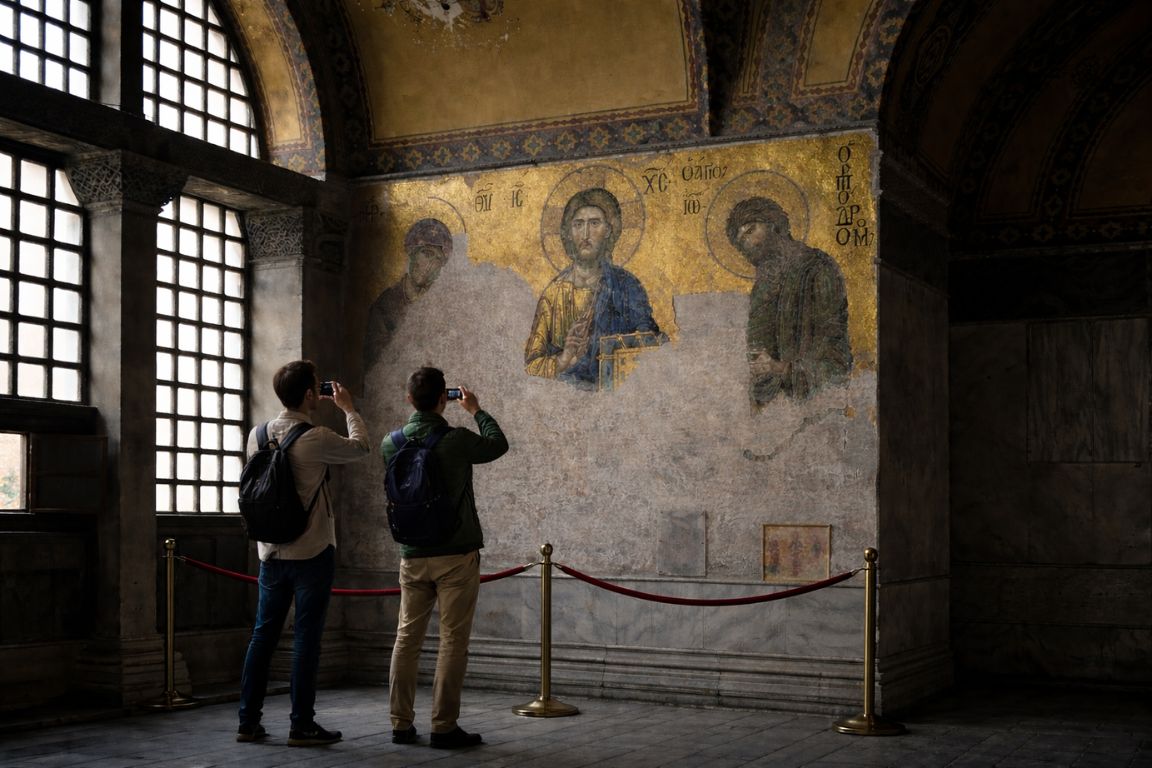 Photography is permitted throughout the upper gallery visiting area. Flash photography is banned everywhere inside. Never photograph people who are praying, including worshippers visible on the ground floor from the gallery above. Commercial photography equipment, professional tripods, and video production setups require prior official authorization and are not permitted for casual tourist visits. Standard smartphones, compact cameras, and mirrorless cameras are all fine without flash.
The flash ban exists for two reasons: protecting ancient mosaic tesserae from UV degradation, and maintaining the peaceful atmosphere for worshippers. Both are genuine concerns and the rule is consistently enforced. Modern camera and phone sensors perform well enough in low light that flash is rarely necessary for the mosaics anyway. If you use a phone with Night Mode, you’ll get better results in the gallery’s variable light than with flash at any point.
The most commonly misunderstood photography rule is the prohibition on photographing worshippers during prayer. The mosque’s ground floor is visible from the gallery railing, and when prayer is active, there may be worshippers below. Taking photographs aimed at them is not permitted. This applies even if you’re framing a architectural shot and people happen to be praying in the background. The distinction staff make is intentionality: a general gallery shot is fine, a deliberate photo of someone in the act of prayer is not. When in doubt, angle upward at the dome rather than downward at the prayer floor.
Standard travel tripods are not officially permitted for tourist visits. One traveler’s bag was held at the entrance security scanner when a small tripod was detected, and it was returned on exit. Gorillapods and flexible mini-tripods occupy a grey area: they are small enough not to trigger scanner alarms consistently, but their use inside the gallery is at staff discretion. If photography is a primary purpose of your visit, consult the official guidelines or contact the mosque administration about authorization in advance.
Use a phone or camera without flash and follow on-site restrictions. A tour booking is not a commercial photography permit. Choose What To Photograph →
What To Wear To Hagia Sophia: Practical Outfit Guide
| Summer (Jun-Aug) | Lightweight linen or cotton trousers, short-sleeve T-shirt, slip-on shoes, socks | Loose cotton maxi skirt or wide-leg trousers, short-sleeve top, headscarf in bag, slip-on shoes |
| Spring/Autumn | Chinos or lightweight trousers, shirt or T-shirt, comfortable walking shoes | Midi skirt or loose trousers, blouse, lightweight cardigan, headscarf, comfortable flats |
| Winter (Dec-Feb) | Jeans or trousers, long-sleeve shirt, light jacket (remove at entry if needed), warm socks | Jeans or trousers, long-sleeve top, coat (check at security if bulky), warm headscarf doubles as hair covering |
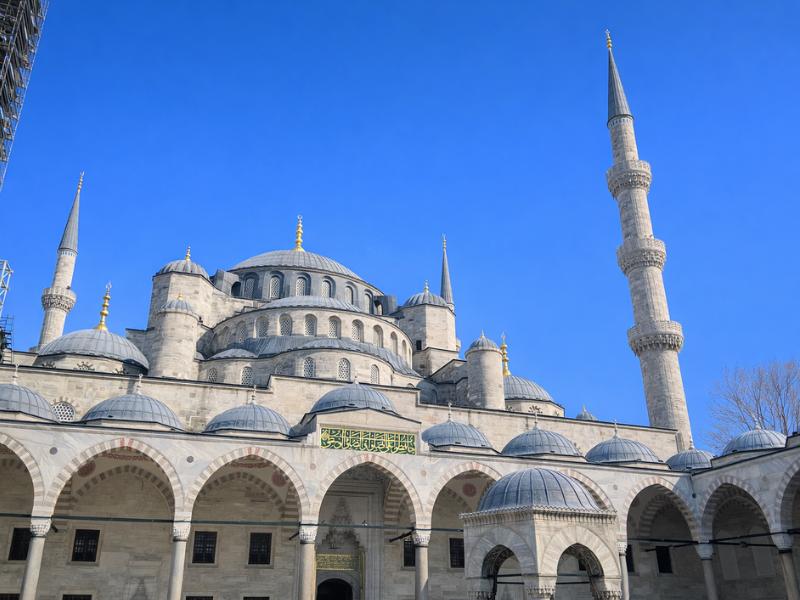
Connect the two mosques
Two mosques & Old Town walk
2.5–3 hours · English guided walk
Where could one mosque-ready outfit take you?Discover both mosques and the Hippodrome on an English guided walk through Sultanahmet.
Explore the Two-Mosque History Walk →What Are The Behavior And Noise Rules Inside The Mosque?
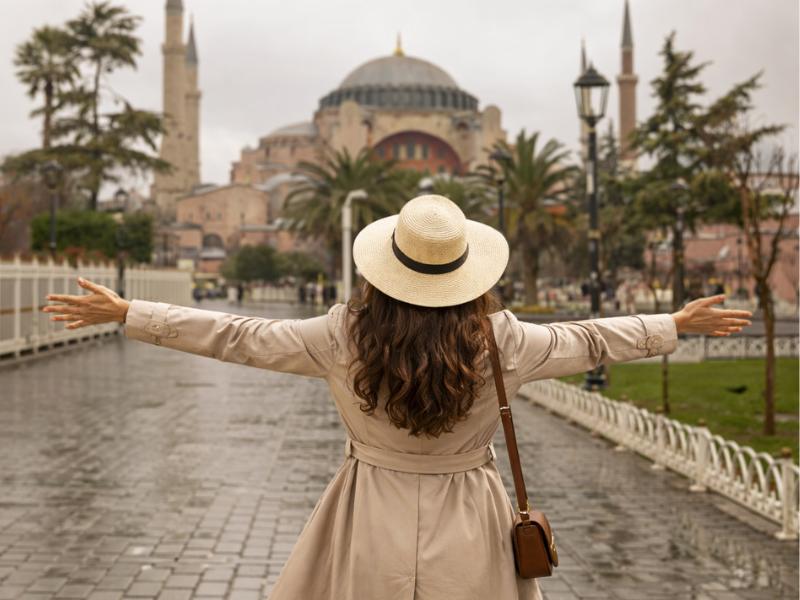
Hagia Sophia is an active place of worship. All visitors are expected to move quietly, speak at low volume, and treat the space with the respect accorded to any functioning mosque. Do not run, shout, sit on prayer carpets without purpose, or engage in behavior considered disrespectful in a sacred context. Remove hats on entry. Keep hands out of pockets when standing near the mihrab area visible from the gallery. Move through the one-directional visitor route at a considerate pace, not stopping to block the flow of other visitors for extended periods.
The visitor route in the upper gallery is one-directional and shared with other tourists. Moving too slowly or stopping dead in the middle of a narrow passage blocks the entire queue behind you. This is not a strict rule so much as a practical courtesy. Find a wider spot before stopping for extended photography or observation. The gallery has several natural widening points near the mosaic panels where groups naturally pause without blocking the flow.
Noise level is a real consideration. The gallery is acoustically live: voices carry and echo in ways that don’t feel like they should in such a large space. What feels like a conversational volume in the open air can feel intrusive to other visitors inside the gallery. This is not about silent reverence at all times, but about calibrating your voice to the environment.
Religious symbols, political symbols, and logos on clothing that could be considered provocative or disrespectful are subject to staff discretion. This came up in a documented 2024 case where a visitor’s T-shirt logo was interpreted as a flag. The building’s staff take the mosque’s sanctity seriously. Nothing on your clothing should make a political or religious statement that could be read as disrespectful in an Islamic place of worship. Plain clothing avoids any ambiguity.
Keep voices low and leave worshippers space. Audio with headphones supports a quiet independent visit. Plan An Independent Visit →
What Items Are Not Allowed Inside Hagia Sophia?
The following are either prohibited or restricted: large backpacks, suitcases, and wheeled luggage; food and drinks; professional tripods and commercial photography equipment; non-folding strollers (folding strollers must be carried by hand); pets (except registered guide dogs); and weapons or sharp items that trigger security screening. There is no luggage storage facility at or near the building. The nearest storage is at Sirkeci railway station, approximately 10 minutes away on foot.
The large bag prohibition is enforced through the security scanner rather than by visual inspection alone. Bags pass through an X-ray machine before entry. Oversized items will be flagged at the scanner and you will be directed away from the entrance to store them elsewhere before re-joining the queue. This is not a theoretical inconvenience: the queue is already long in peak season, and having to leave to store a bag means re-joining from the back.
Food and drinks inside the mosque are not appropriate regardless of whether they are formally signposted as prohibited. Eating while walking through a 1,500-year-old active house of worship is not consistent with the spirit of the visit. Water in a small, closeable bottle is practically tolerated on the tourist route in summer heat, but this is not official permission. Finish anything you’re eating or drinking before the security line.
The stroller policy from the official visiting guidelines (muze.gen.tr) is clear: fold and carry your stroller while inside the visiting area. The ramps and route are navigable with a compact folded stroller carried in your arms. A full-size pram or unfolding stroller is not going to work and will cause difficulty for other visitors on the one-directional route. A baby carrier is a better solution for Hagia Sophia visits with infants.
This entry listing prohibits oversized luggage and asks you to bring a charged smartphone and headphones. Read Entry And Bag Requirements →
What Are The Rules For Children Visiting Hagia Sophia?
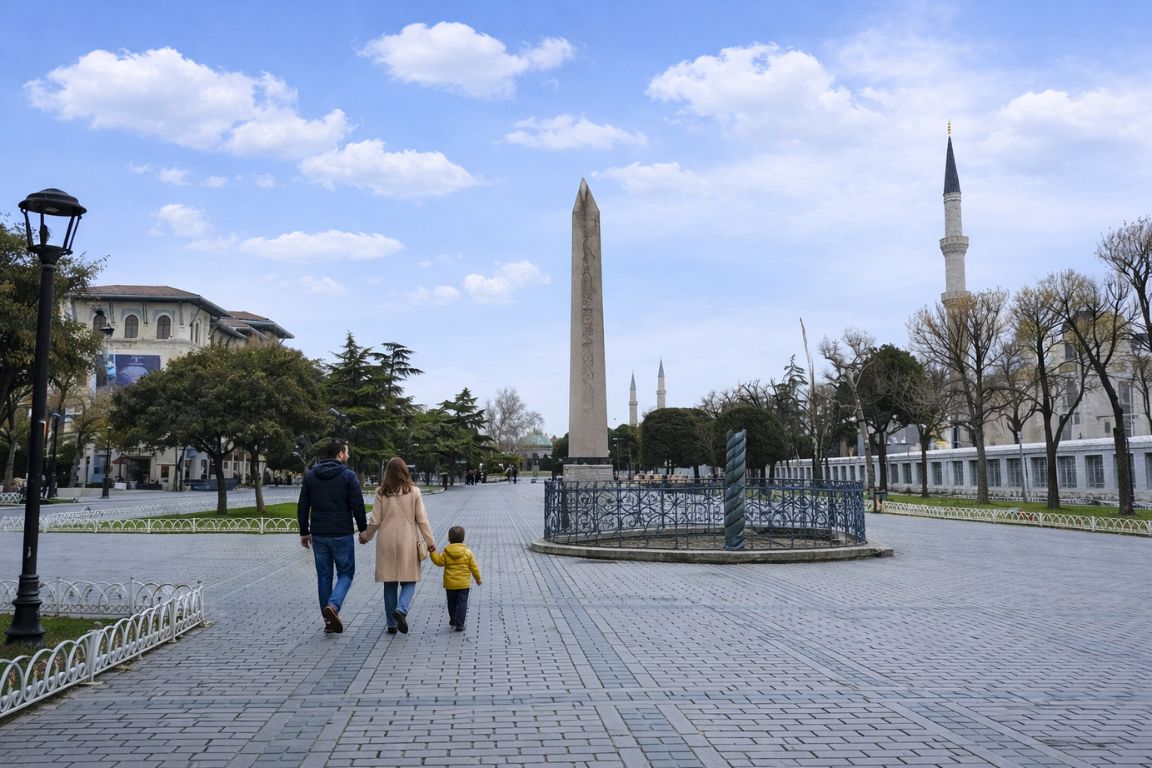 Children under 8 enter free with proof of age (ID or passport). They are generally exempt from the formal dress code requirements that apply to adults. Children over 8 are subject to the same dress code as adults. Non-folding strollers are not permitted; folding strollers must be carried by hand throughout the visit. The one-directional upper gallery route includes ramps that are accessible for carried strollers, but the marble floor sections and narrow gallery passages make large pushchairs impractical.
The dress exemption for children under 8 is broadly applied: young children in shorts and T-shirts are not typically turned away. In practice, the threshold of around 8 to 9 years old is when enforcement becomes consistent, particularly for shorts on boys and headscarves for older girls. If you’re unsure, dress children over 8 to the same standard as adults to avoid any discussion at the entry point.
Families with children benefit most from arriving at opening time. The gallery is far more manageable before tour groups arrive at 10:30. Managing an energetic 6-year-old in a narrow, one-directional gallery packed with adults and tour groups is genuinely difficult. The same gallery at 09:00 on a weekday morning gives the child room to move and gives you time at the Deesis mosaic without being pushed past it.
We’ve put together a full interior breakdown in our what to see inside Hagia Sophia tours guide so you know exactly where to go, what to look for, and how to read the layers of history on every wall.
The route has no dedicated rest areas or seating for visitors. There is no toilet access on the gallery tourist route. Check if children need bathroom breaks before entering the security queue, as once inside there is no way to exit and re-enter without rejoining from the beginning. The nearest toilets are in the surrounding Sultanahmet area, including public facilities near the Blue Mosque.
Want to know which landmark is worth visiting first and whether you actually need to see both? Here’s our Hagia Sophia tours vs Blue Mosque guide so you can make the call.
Child ticket rules and walking tolerance are different questions. Confirm ages and stroller arrangements with the provider before paying. Review Family Suitability →
Practical Planning Points For Your Visit
| Women brought their own headscarf vs. purchased at entrance | Own scarf saves time and is more comfortable in summer heat |
| Delayed at entry due to dress code non-compliance | Largely preventable; now a standard check item in our pre-visit briefings |
| Arrived wearing shorts (men) requiring cover-up at entrance | Especially common from cruise ship visitors; addressed in all group pre-communications |
| Used phone to photograph inside without flash issues | Modern smartphone cameras handle the gallery light well in standard mode |
| Wore slip-on shoes vs. lace-up footwear | Slip-ons save 2-3 minutes per shoe removal and reduce bottlenecking at carpet transitions |
We brief every group on dress requirements before they reach the entrance. No one in our care gets turned back at the gate. See guided Hagia Sophia tours that include entry .
Use the practical preparation points as a checklist, rather than relying on claimed visitor percentages. Check Preparation Before Booking →
Frequently Asked Questions
Is a headscarf mandatory for women at Hagia Sophia?
Yes. Women must cover their hair with a headscarf to enter Hagia Sophia. This is a firm requirement, not a suggestion, and is enforced by staff at the entrance. A hat is not an acceptable substitute. Headscarves are available at the ticket booth for €1 if you don’t have your own.
Pack your own scarf before leaving for the visit. Review Preparation →
Can men wear shorts at Hagia Sophia?
No. Long trousers are required for men. Shorts, regardless of length, are not permitted. Cover-up wraps are available at the entrance if you arrive unprepared, but planning ahead with lightweight long trousers is significantly more comfortable.
Choose long, modest clothing rather than depending on a cover-up. Plan Your Prepared Visit →
Do you have to remove your shoes at Hagia Sophia?
Yes, before stepping onto carpeted areas. A free plastic bag is provided to carry your shoes during the visit. Socks are not mandatory but are recommended for comfort on the stone sections of the route. Slip-on shoes make the process faster.
Bring comfortable footwear and follow carpet-area instructions. Read The Walking Plan →
Can you take photos inside Hagia Sophia?
Yes, with your phone or camera. No flash is permitted anywhere inside. Never photograph people who are praying. Professional tripods and commercial equipment are not permitted for tourist visits. Standard travel photography is encouraged – the building is visually extraordinary and photography is part of the visitor experience.
No flash or commercial equipment privileges come with a standard ticket. Plan Your Gallery Views →
Are children required to follow the dress code?
Children under 8 are generally exempt. Children over 8 are subject to the same dress code as adults. Non-folding strollers must be folded and carried inside the visiting area. Families benefit from arriving at opening time to avoid congestion in the gallery.
Confirm child ages and walking needs with the operator. Review Family Suitability →
What happens if you arrive without the right clothing?
You will be directed to the cover-up counter at the ticket booth before entry. Headscarves cost €1, body cover robes €3. In peak season, the supply can run low and a queue can form at the counter. The cover-up robes are functional but not comfortable for extended visits in summer heat. Bringing your own scarf and appropriate clothing is strongly recommended.
Prepare first, then select the entry format that fits your group. Choose Your Visit Format →
Prepare clothing before reserving admission; no paid format waives the dress check. Choose Prepared Entry →
Never Lose Time At The Entrance Over Something Preventable.
Our groups receive a full pre-visit briefing covering everything from headscarf requirements to shoe recommendations before they arrive. See the current Hagia Sophia tours.Explore at your own pace
Hagia Sophia gallery entry
Gallery entry · Smartphone audio
Clothing ready and travel date picked?Arrange gallery entry with audio, then explore at your own pace once you are inside.
Check Your Hagia Sophia Date →