How to Visit Hagia Sophia
Visiting Hagia Sophia? Learn ticket prices, opening hours, what to wear, and the best time to go - plus how to avoid queues and prayer closures.
Last updated: April 11, 2026
Explore the gallery at your own pace, connect two mosques with a guide, or make it part of a private Istanbul day. Find your Hagia Sophia visit →
Your visit, your pace: Gallery entry for independent exploring; a guided walk for the stories across both mosques; a private day for a route built around you. Choose your format →
Quick Facts: Hagia Sophia At A Glance
| Address | Sultanahmet, Ayasofya Meydanı No:1, 34122 Fatih, Istanbul |
| Opening Hours | Daily 09:00-19:00 (08:00-19:00 Apr-Oct); last entry 18:30 |
| Entry Fee (Foreign Tourists) | €25 per person – Prices verified April 2026 |
| Children | Under 8 free (ID or passport required) |
| Tourist Entrance | Northeast side, across from Sultan Ahmed III Fountain (near Topkapi Palace Imperial Gate) |
| Friday Closure | 12:00-14:30 closed to tourists for congregational prayer |
| Museum Pass Istanbul | NOT valid. Separate ticket required. |
| Dress Code | Shoulders and knees covered; women must wear headscarf (headscarves available at entrance for €1) |
| Photography | Allowed without flash; do not photograph people in prayer |
| Nearest Tram Stop | Sultanahmet (T1 line), 3-minute walk |
Have your sightseeing date picked out?Explore the mosaics and look over the nave with smartphone audio at your own pace.Check Your Hagia Sophia Date →
What Is Hagia Sophia And Why Does It Still Stop People In Their Tracks?
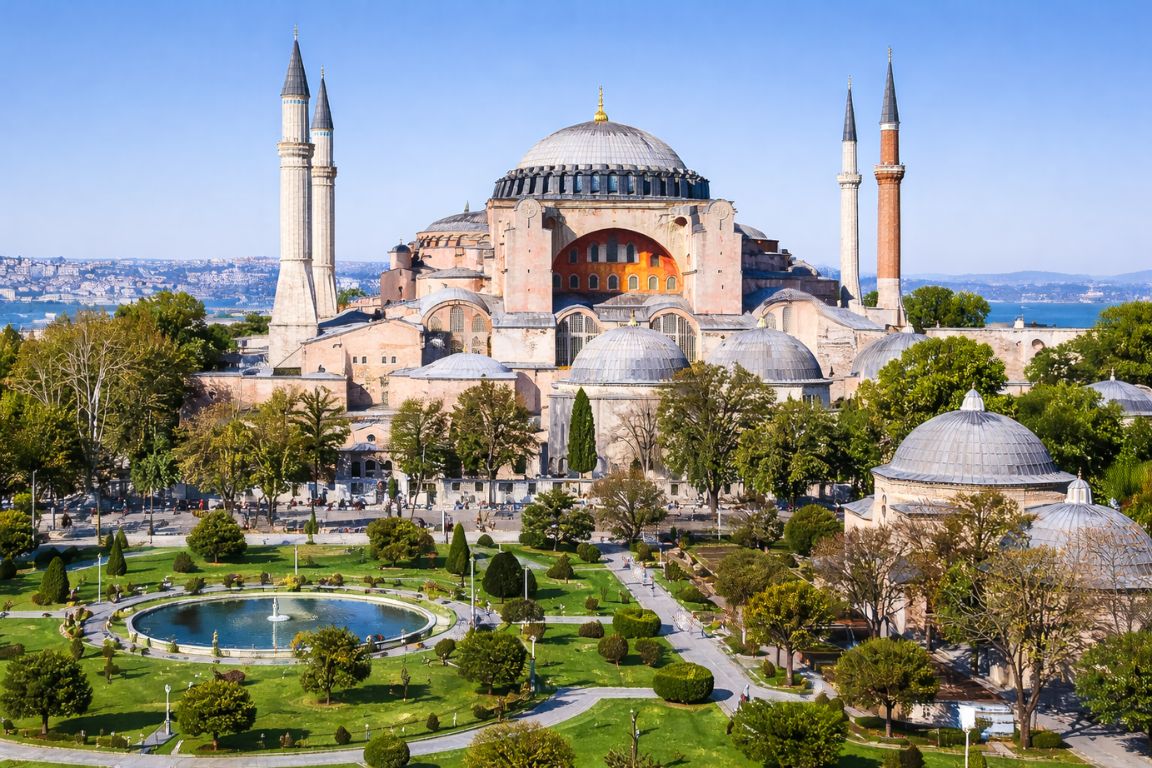 Hagia Sophia is a 6th-century Byzantine cathedral turned Ottoman mosque turned museum turned mosque again, standing in Istanbul’s Sultanahmet district. Built in 537 AD under Emperor Justinian I, it held the title of the world’s largest cathedral for nearly a thousand years. Today it functions as an active mosque and receives an estimated 17,000 to 20,000 visitors per day in peak season, making it one of the most visited sites on earth.
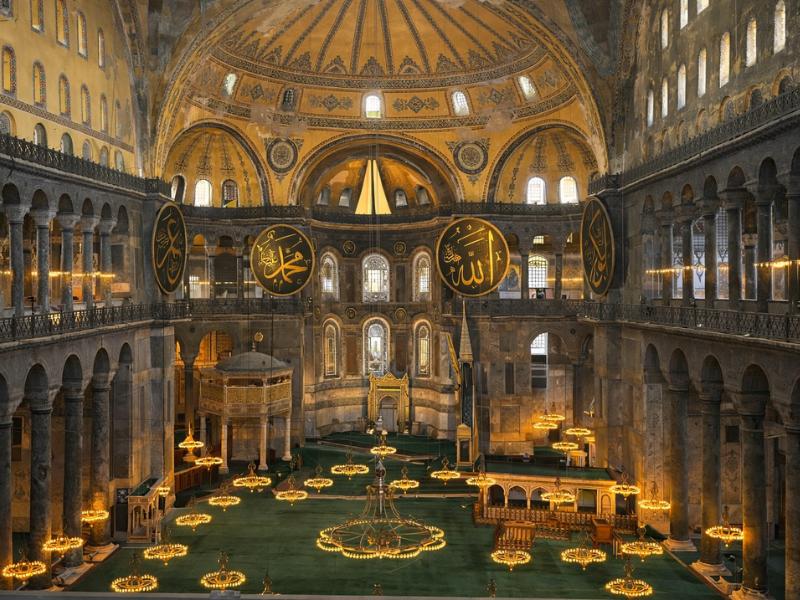
Most people arrive expecting a monument. What they find is something harder to name. The dome is 31 meters wide and seems to hang without support, the light inside arrives from 40 windows ringing its base in a way that makes the stone look weightless. It was, for its time, physically impossible. Engineers had not yet invented the math to explain why it stood. Justinian, upon seeing it completed, reportedly said: “Solomon, I have surpassed thee.”
The name itself trips people up. Hagia Sophia means “Holy Wisdom” in Greek, not a saint’s name as many assume. The Turks call it Ayasofya. Both names appear on signage around the city, so don’t be caught off guard.
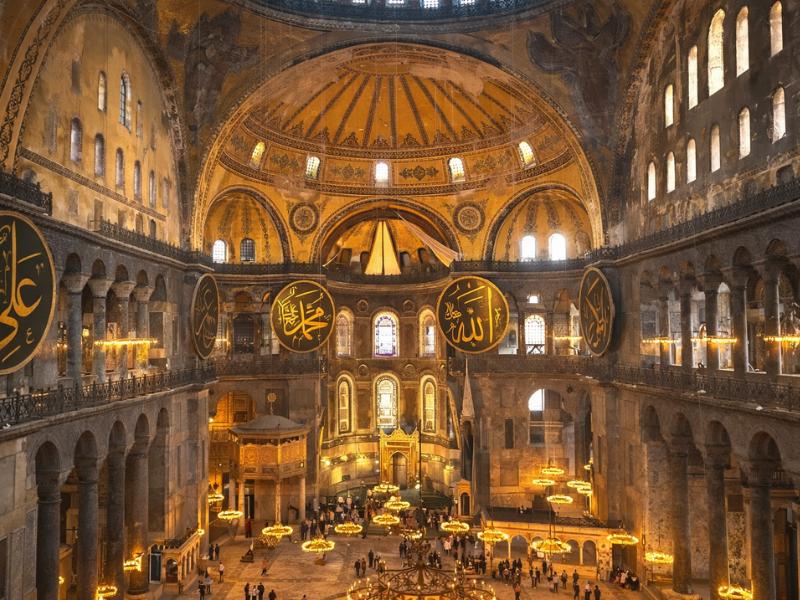
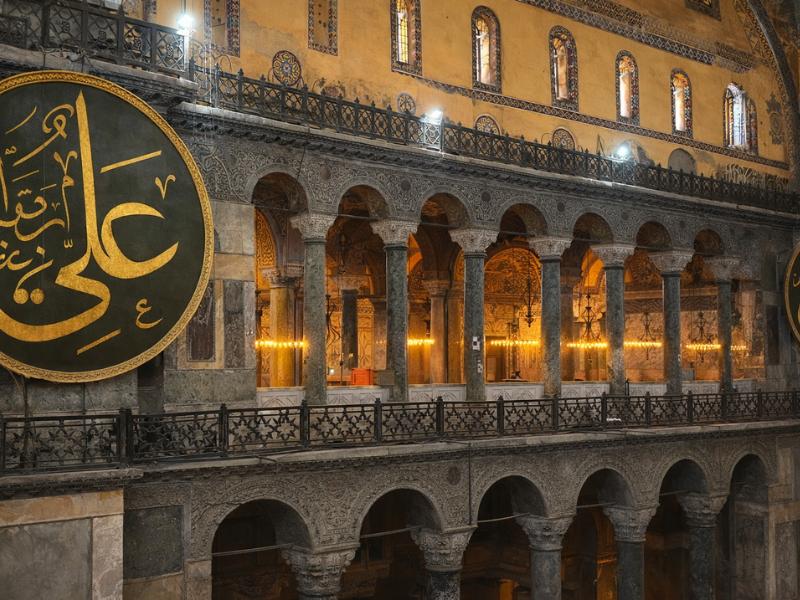
What makes this building unlike anything else you’ll visit is the layering. Fifteen centuries of history don’t announce themselves here, they press in from the walls. Christian mosaics sit beside Ottoman calligraphy. The tomb of a Venetian crusader doge who helped sack the city is marked by a plain slab on the floor. Viking mercenaries who served the Byzantine emperors scratched their names into the marble balustrades upstairs. One of them reads, simply, “Halfdan was here.” Every surface in this building has a story that contradicts another story two feet away.
In July 2020, the Turkish government reconverted it from a museum back to an active mosque, which changed how tourists access it. In January 2024, a new visitor system introduced a €25 entrance fee and a separate tourist entrance leading only to the upper galleries. The ground floor is now reserved exclusively for worship. If you read a visit report older than 2024, it no longer reflects what you’ll experience on arrival.
If you'd rather hand the logistics to someone who has been walking travelers through these doors since 2009, book the Hagia Sophia Guided Tour with Licensed Guide & Fast Entry for skip-the-line access and a briefing before you go in.
Plan your Old Town walk before the rest of your day.Follow the Byzantine and Ottoman connections across Hagia Sophia, the Blue Mosque and the Hippodrome.Check Dates for the Two-Mosque Walk →
Is Hagia Sophia Free To Enter Or Do You Need A Ticket?
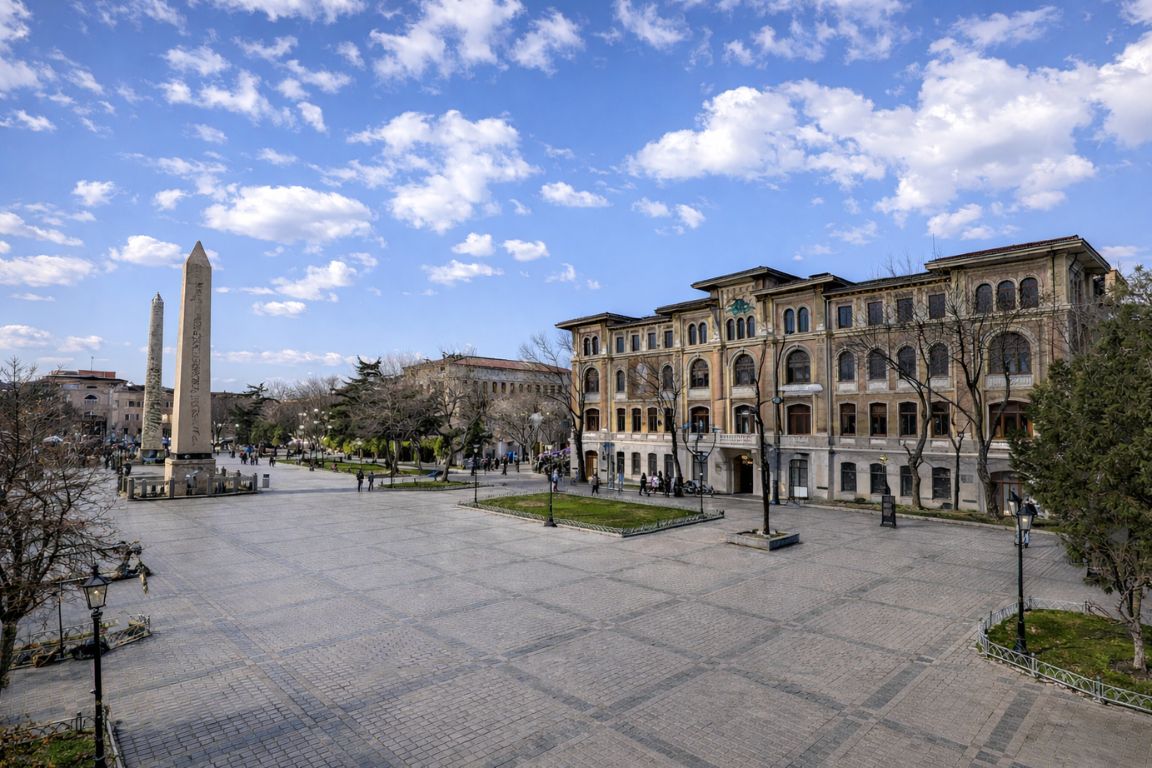 As of January 2024, foreign tourists pay €25 to access Hagia Sophia’s upper gallery visiting area. Children under 8 enter free with ID or passport. The Museum Pass Istanbul is not valid here. Turkish citizens entering to pray still use the main entrance free of charge. The €25 fee is accepted in euros or by credit card; Turkish lira payment is technically possible but uses an unfavorable exchange rate at the booth.
Before 2024, Hagia Sophia was completely free for tourists. That changed with a policy shift from Turkey’s Ministry of Culture and Tourism, which separated worshippers from cultural visitors and created a dedicated tourist route through the upper galleries.
A few things worth knowing before you get to the ticket booth. The official seller is DEM Museums, and tickets can be purchased on-site or online for skip-the-line entry. There is also a separate building nearby called the Hagia Sophia History and Experience Museum, which costs another €25 and has generated a lot of negative feedback from travelers who mistakenly purchased it thinking it was entry to the mosque itself. It is a virtual reality experience, not the mosque. Multiple visitors on travel forums have flagged the ticket area as confusing because the museum ticket booth and mosque ticket booth are in proximity. Read what you’re purchasing before you pay.
No student discounts, no museum pass workarounds, no assumption that a generic pass includes the mosque. The €25 gets you into the upper gallery visiting area, full stop. Foreign Muslim visitors are also required to purchase this ticket. Only Turkish citizens entering for religious prayer receive free access, and they use a different entrance entirely.
Want to know which ticket option gets you the best access without overpaying for extras you don’t need? Our Hagia Sophia tours tickets explained guide walks you through every entry option and what each one actually includes.
| Foreign tourist (adult) | €25 | Upper gallery visiting area |
| Child under 8 | Free (ID required) | Upper gallery visiting area |
| Turkish citizen (worship) | Free | Ground floor prayer area only |
| Museum Pass Istanbul | NOT valid | Separate ticket required regardless |
| Hagia Sophia History Museum (separate building) | €25 additional | VR experience, unrelated to main mosque |
What does a gallery ticket let you discover?Choose your sightseeing date before arranging the rest of your Sultanahmet day.Discover the Hagia Sophia Gallery →
What Are Hagia Sophia’s Opening Hours And The Best Time To Arrive?
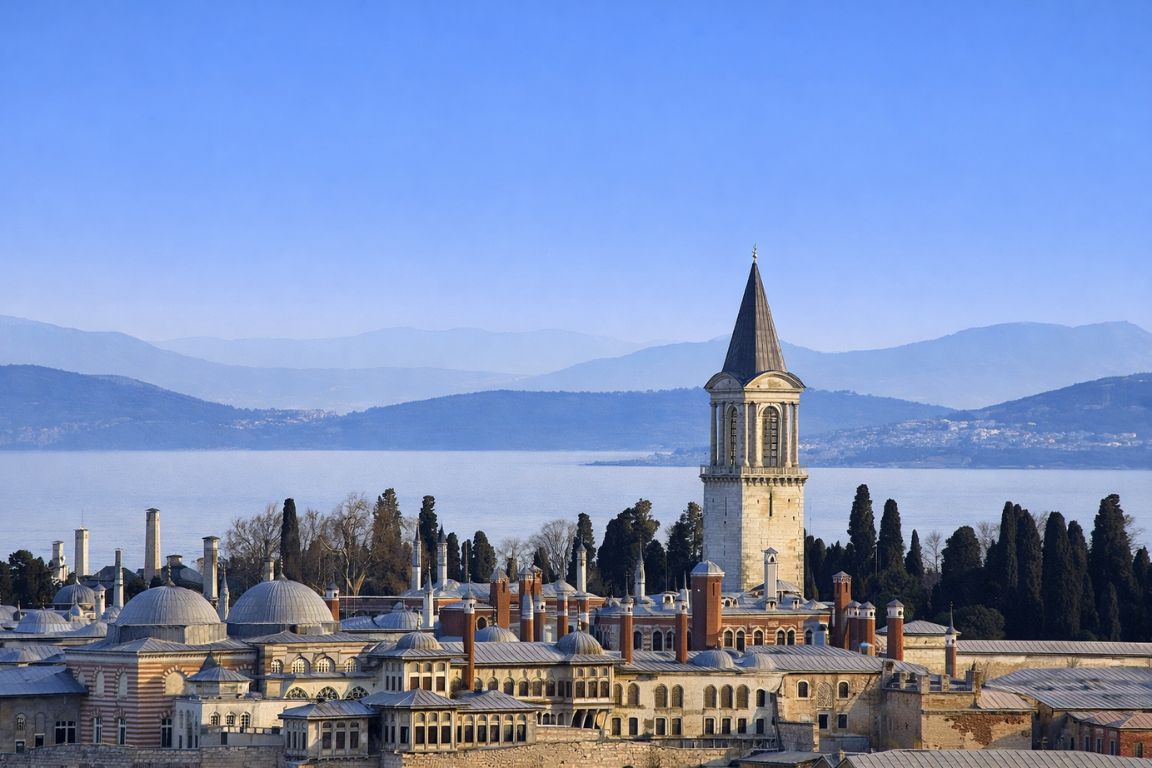 Hagia Sophia is open daily 09:00-19:00 (last entry 18:30). During the summer season from April through October, opening shifts to 08:00. The building closes to tourists every Friday from 12:00 to 14:30 for congregational prayer. Midweek mornings in shoulder season, specifically April, May, September, and October, consistently deliver the quietest visits. Avoid arriving between 10:30 and 13:00 – that is when security queues and gallery congestion peak.
Explore at your own pace
Hagia Sophia gallery entry
Gallery entry · Smartphone audio
Coming to Hagia Sophia this summer?Check gallery entry for your date before filling the rest of your itinerary.
Check Your Hagia Sophia Date →A few things the timing guides online tend not to mention. The security check at the entrance adds 15 to 45 minutes on a busy day, and that wait is separate from any ticket queue. Every visitor goes through it, even with a pre-purchased skip-the-line ticket. Bring as little as possible: large bags and anything that triggers the scanner add meaningful delays.
Fridays deserve their own note. It is not a partial closure. The tourist visiting area shuts down completely during that window. Plan a morning visit before noon, or arrive after 14:30. The Friday morning slot, right at opening, is one of the better-kept secrets: the building is calmer than a weekend morning, and the light through the dome windows hits the gallery floor at an angle that changes by the hour.
Tuesdays tend to be busier than other weekdays because Topkapi Palace is closed that day, pushing more visitors toward Hagia Sophia. Winter months from December through February offer the most uncrowded experience, sometimes with zero queue at opening. The interior is darker without summer sun, but many people find that atmosphere more fitting for the building’s weight.
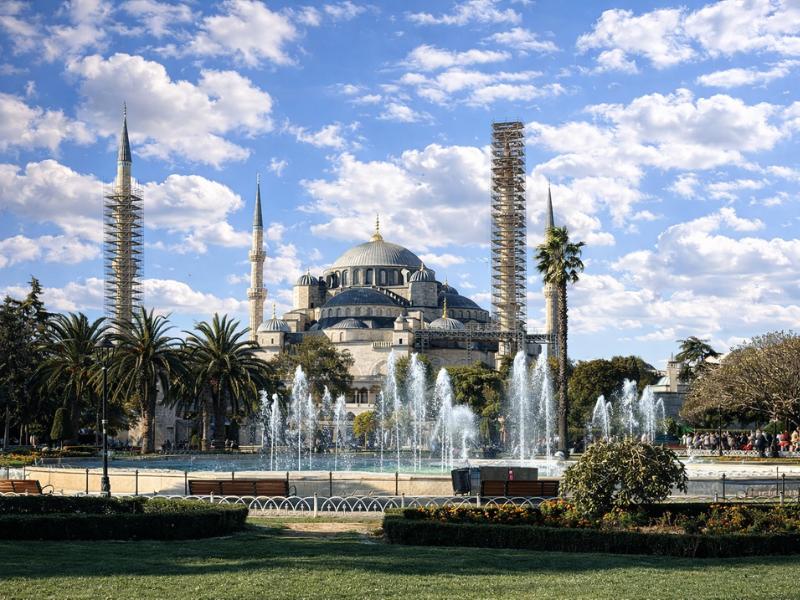
Make the day your own
Private Istanbul, at your pace
Private guide · 1, 2 or 3 days
What would Istanbul look like with a guide just for you?Explore a private day shaped around the sights and stories that interest you.
Explore Your Private Istanbul Itinerary →Want to walk into Hagia Sophia without queuing for an hour in the sun? Here’s our best time to visit Hagia Sophia tours guide so you can time it right.
| 08:00-09:30 weekday (Apr–Oct) | Low | Best light for photography; tours not yet arrived |
| 10:30-13:00 daily | Peak | Longest security queues; cruise ship groups arrive |
| Friday 12:00-14:30 | CLOSED to tourists | Congregational prayer; no tourist access regardless of ticket |
| 17:00-18:30 daily | Moderate-Low | Afternoon light through dome; groups mostly gone |
| Apr, May, Sept, Oct (weekday) | Low-Moderate | Best overall combination of weather and crowd level |
| Jul-Aug weekends | Very High | Peak season; 30-60 min queue common; arrive at opening |
| Dec-Feb (any day) | Very Low | Quietest period; darker interior; cold weather possible |
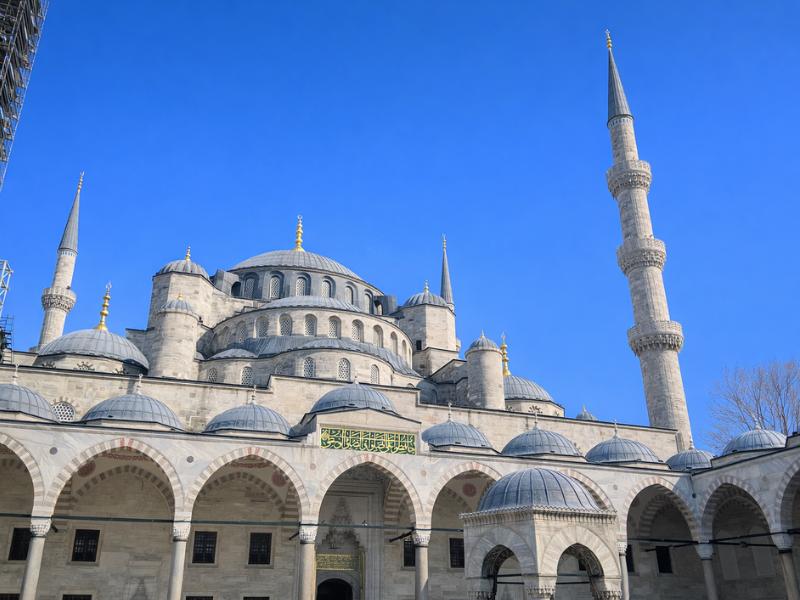
Connect the two mosques
Two mosques & Old Town walk
2.5–3 hours · English guided walk
Could one morning connect both of Istanbul’s great mosques?Follow a guide through Hagia Sophia, the Blue Mosque and the Hippodrome.
Explore the Two-Mosque History Walk →Choose your entry date before making other timed bookings.Independent entry gives you your own pace through the gallery and its mosaics.Check Your Hagia Sophia Date →
How Do You Get To Hagia Sophia From Istanbul’s Main Areas?
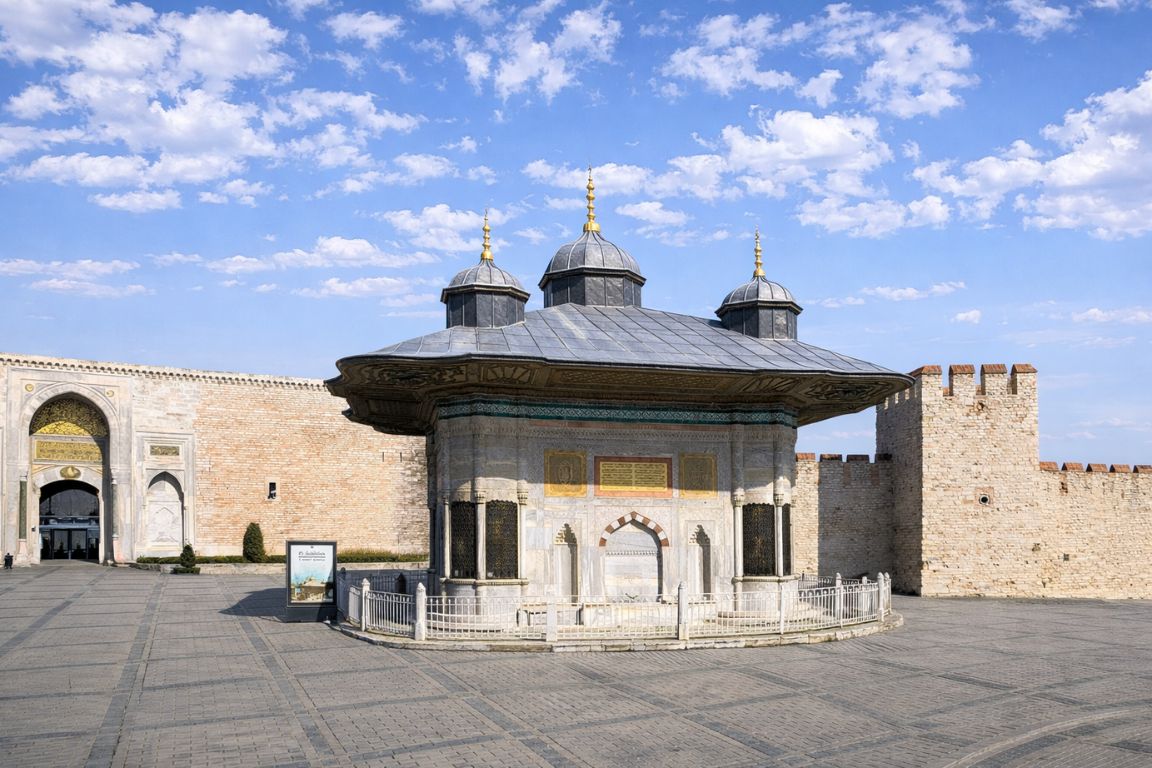 The T1 tram is the easiest and most reliable option. Get off at Sultanahmet station and walk three minutes to the tourist entrance near the Sultan Ahmed III Fountain. From Taksim Square, take the F1 funicular to Kabataş, then the T1 tram seven stops to Sultanahmet. Taxis work but Sultanahmet traffic is notoriously slow. Walking is realistic if you’re staying in the old city.
The tourist entrance is not where most people expect it. It’s on the northeast side of the building, tucked beside the Imperial Gate of Topkapi Palace, across from the Sultan Ahmed III Fountain. This is not the same fountain as the one in the courtyard between Hagia Sophia and the Blue Mosque. Several visitors have reported standing in the wrong queue at the wrong fountain. The ticket booth is directly next to the tourist entrance gate.
From Taksim, the tram route takes about 25 minutes total. From the Grand Bazaar area, you can walk to Sultanahmet Square in about 15 minutes. Buy an Istanbulkart if you plan to use public transit more than twice.
Where does the guided route take you from the German Fountain?Check departures from the German Fountain before planning your journey to the Old Town.Explore the Two-Mosque History Walk →
What Should You Wear And Bring To Hagia Sophia?
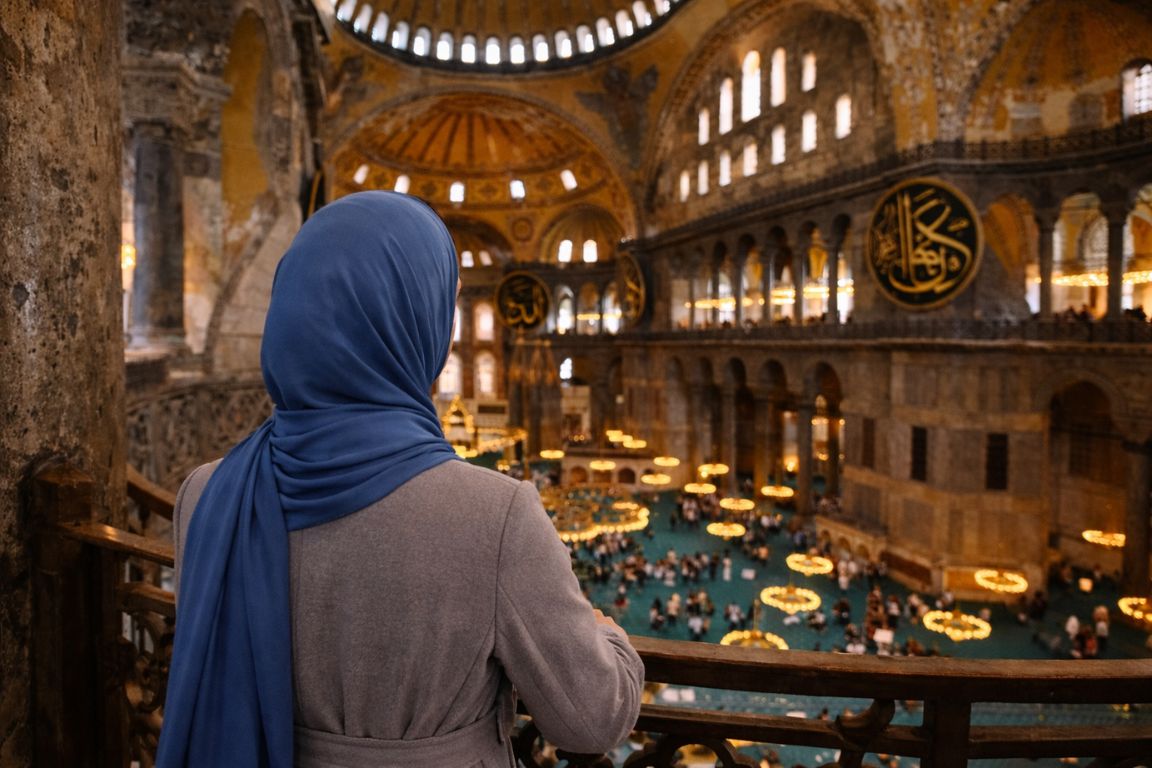 Both shoulders and knees must be covered for all visitors. Women must wear a headscarf inside. Shoes must be removed before stepping onto the carpeted areas. Bring your own scarf rather than relying on the ones at the entrance, which cost €1 and run out during peak hours. Avoid large bags, which slow down security screening. Bring a small bag for your shoes, since there is nowhere to store them at the entrance.
Leggings and yoga pants technically cover the legs but have been flagged by staff at the entrance on some visits – loose clothing is more reliably accepted. Men in shorts below the knee are generally fine; shorts above the knee are not.
Photography is allowed throughout the visiting area without flash. Do not photograph worshippers on the ground floor. There is no luggage storage inside Hagia Sophia or immediately outside; the nearest luggage storage is at Sirkeci railway station. Leave large suitcases at your hotel.
One practical detail that doesn’t make it into most guides: the security scanner at the entrance can flag belt buckles, metal water bottle lids, and camera equipment. Waterproof sandals you can slip off easily are genuinely useful, since the transition between carpeted and marble areas happens a few times along the visitor route and floor surfaces can be cold in winter or uneven in sections currently under restoration.
Not sure what to wear to an active mosque that sees millions of tourists every year? Here’s our full guide on Hagia Sophia dress code and rules for tourists – covering what to cover up, what’s provided at the door, and what gets you turned away.
Pack modest clothing, headphones and a charged phone if you plan to use audio. Read The Detailed Preparation Guide →
What Can You Actually See Inside Hagia Sophia?
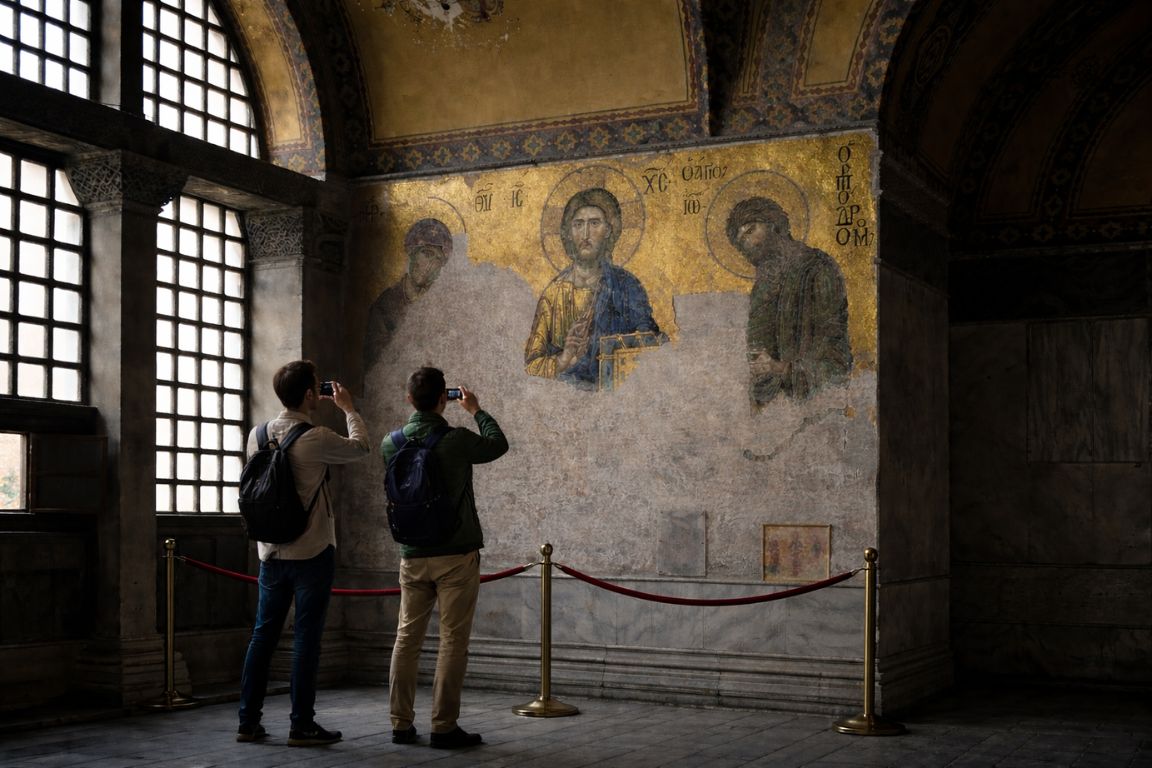 Since 2024, tourists access only the upper gallery visiting area, not the ground floor. From the gallery, you see the full nave and dome from above, walk through the Marble Door, and view the major Byzantine mosaics including the Deesis, the Empress Zoe mosaic, and the Komnenos family portrait. The Weeping Column and Viking runic graffiti are both in the upper gallery. The apse mosaic of the Virgin and Child is visible from the gallery but located below on the ground floor.
The gallery is not just a viewing platform. It is where the most significant art in the building lives. The Deesis mosaic, dating to around 1261, shows Christ flanked by the Virgin Mary and John the Baptist. The lower portion is badly deteriorated, but the surviving faces are extraordinary. Christ’s expression holds something between judgment and sorrow. Mary and John turn toward him in what the Byzantine world understood as intercession, pleading for humanity on the Day of Judgment. Scholars consider the Deesis a forerunner of Renaissance naturalism. Standing in front of it, you understand why.
Near the Deesis, you’ll notice a plain stone slab on the floor marking the tomb of Enrico Dandolo, the Doge of Venice who led the Fourth Crusade that sacked Constantinople in 1204. He died here and was buried inside the building. Directly across from him, on the gallery’s marble balustrade, look closely for the Viking runic graffiti. One inscription translates roughly as “Halfdan was here,” scratched into the stone by a Viking mercenary serving in the Byzantine emperor’s Varangian Guard, probably in the 9th century.
The Wishing Column, sometimes called the Weeping Column, is on the northern side of the gallery. The legend holds that pressing your thumb into the small worn hole and rotating it will grant wishes or healing. The hole is genuinely ancient and the marble around it is polished smooth from centuries of thumbs. Whether it works is between you and the column.
As of early 2026, there is scaffolding inside near the center of the nave, part of ongoing structural restoration work. Traveler reports confirm the scaffolding does not block the major mosaics in the upper gallery, and significant views of the dome remain intact.
Visiting Hagia Sophia for the first time without a guide? Here’s what to see inside Hagia Sophia tours so you don’t spend the whole visit staring at the ceiling and missing everything at eye level.
Four ways to shape your Istanbul visit
Explore at your own pace
Hagia Sophia gallery entry
Gallery entry · Smartphone audio
Know which day you want to explore the gallery?Check gallery entry for your date before filling the rest of your itinerary.
Check Your Hagia Sophia Date →Connect the two mosques
Two mosques & Old Town walk
2.5–3 hours · English guided walk
What connects the Blue Mosque with Byzantine Istanbul?Follow a guide through Hagia Sophia, the Blue Mosque and the Hippodrome.
Explore the Two-Mosque History Walk →Make the day your own
Private Istanbul, at your pace
Private guide · 1, 2 or 3 days
Have a whole day to make your own?Check private-guide dates before arranging separate sightseeing and transport.
Check Your Private Istanbul Date →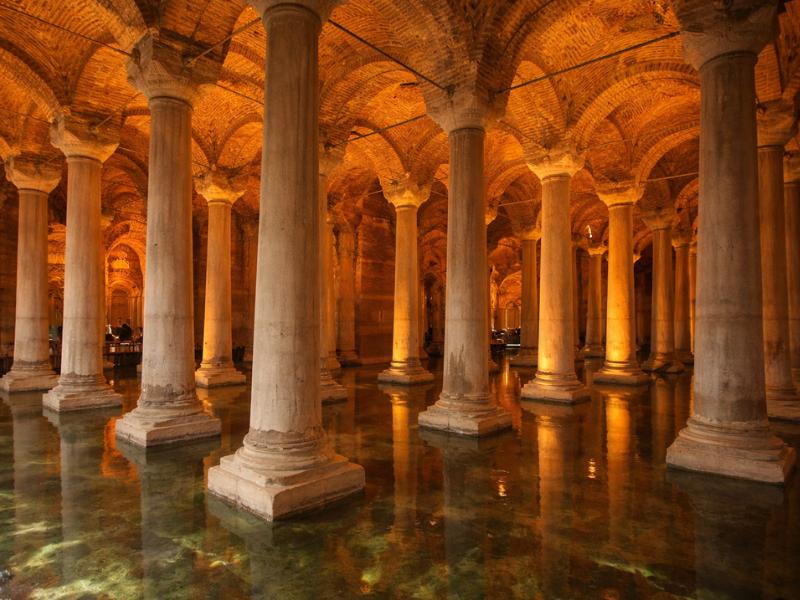
See two remarkable interiors
Hagia Sophia & Cistern combo
Hagia Sophia + Cistern · 3-day validity
From a soaring dome to an underground cistern?Discover two very different interiors in one flexible ticket bundle.
Explore the Gallery & Cistern Combo →
Explore at your own pace
Hagia Sophia gallery entry
Gallery entry · Smartphone audio
Which mosaics will you stop for?Explore the upper gallery with audio and spend longer at the details that catch your eye.
Discover the Hagia Sophia Gallery →What Is The Difference Between Hagia Sophia And The Blue Mosque?
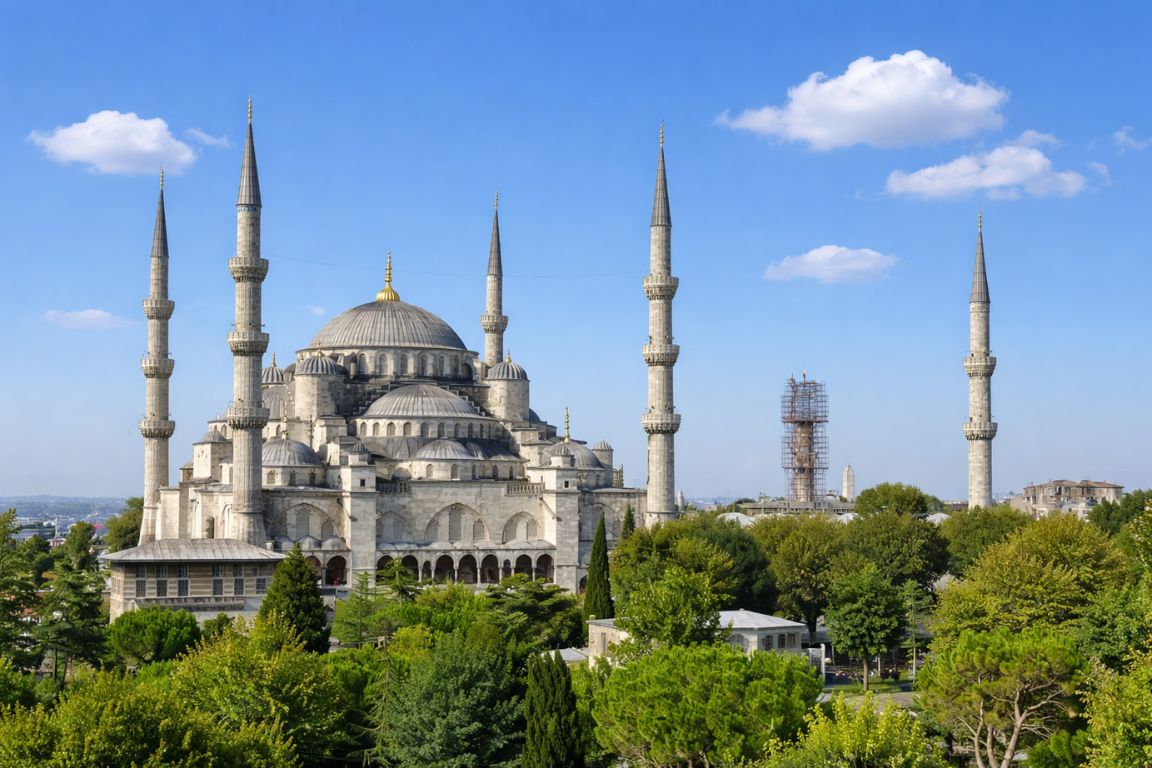 Hagia Sophia was built in 537 AD as a Byzantine Christian cathedral and carries nearly 1,500 years of layered religious history: cathedral, Ottoman mosque, secular museum, and active mosque again. The Blue Mosque (Sultan Ahmed Mosque) was built in 1616 as a purpose-built Ottoman imperial mosque. The Blue Mosque is free to enter; Hagia Sophia costs €25. They stand about 250 meters apart in Sultanahmet Square and can be visited in a single morning.
The experience inside each building feels completely different. Hagia Sophia is older, larger, and weightier in the way that monuments accumulate weight. The dome is an engineering rupture, a 6th-century structure doing something that should not have been possible. The interior is a conversation between Byzantine mosaics and Ottoman calligraphy, Christian saints and Islamic inscriptions, marble from six different centuries. You feel the archaeology of the place.
The Blue Mosque is unified. It was designed by one tradition, in one era, with one purpose. Its 20,000-plus hand-painted Iznik tiles give the interior a coherence Hagia Sophia deliberately avoids. It has six minarets, which caused a scandal when it was built because the same number stood at the Grand Mosque in Mecca. If Hagia Sophia is the city’s most contested building, the Blue Mosque is its most serene. Visitors consistently use the word “graceful” for the Blue Mosque and “monumental” for Hagia Sophia. Both are fair.
Practically: the Blue Mosque is still an active mosque and closes to tourists during each of the five daily prayer times (roughly 90 minutes total per session). Hagia Sophia closes only on Friday midday for congregational prayer. If you’re planning to visit both, a good sequence is Blue Mosque first at opening, then Hagia Sophia after. The Blue Mosque also went through a significant interior renovation that ran for several years; check current access status before you go.
We’ve put together a full head-to-head breakdown in our Hagia Sophia tours vs Blue Mosque guide so you know exactly how to split your time, what each site offers, and which one aligns with what you actually came to Istanbul to see.
| Built | 537 AD (Byzantine) | 1616 AD (Ottoman) |
| Entry Fee | €25 (tourists) | Free |
| Prayer Closures | Friday 12:00–14:30 only | 5 times daily (~90 min each) |
| Dome Width | 31 meters | Smaller, cascading dome system |
| Minarets | 4 | 6 |
| Interior Character | Layered: Byzantine mosaics + Ottoman calligraphy | Unified: 20,000+ Iznik tiles, symmetrical Ottoman design |
| Visit Duration | 60-90 min minimum | 30-45 min |
| Distance Apart | ~250 meters, 3-minute walk across Sultanahmet Square |
Visiting both mosques on this trip?Check a guided departure before fixing lunch or another timed booking around your morning.Check Dates for the Two-Mosque Walk →
Can You Visit Hagia Sophia Independently Or Do You Need A Guide?
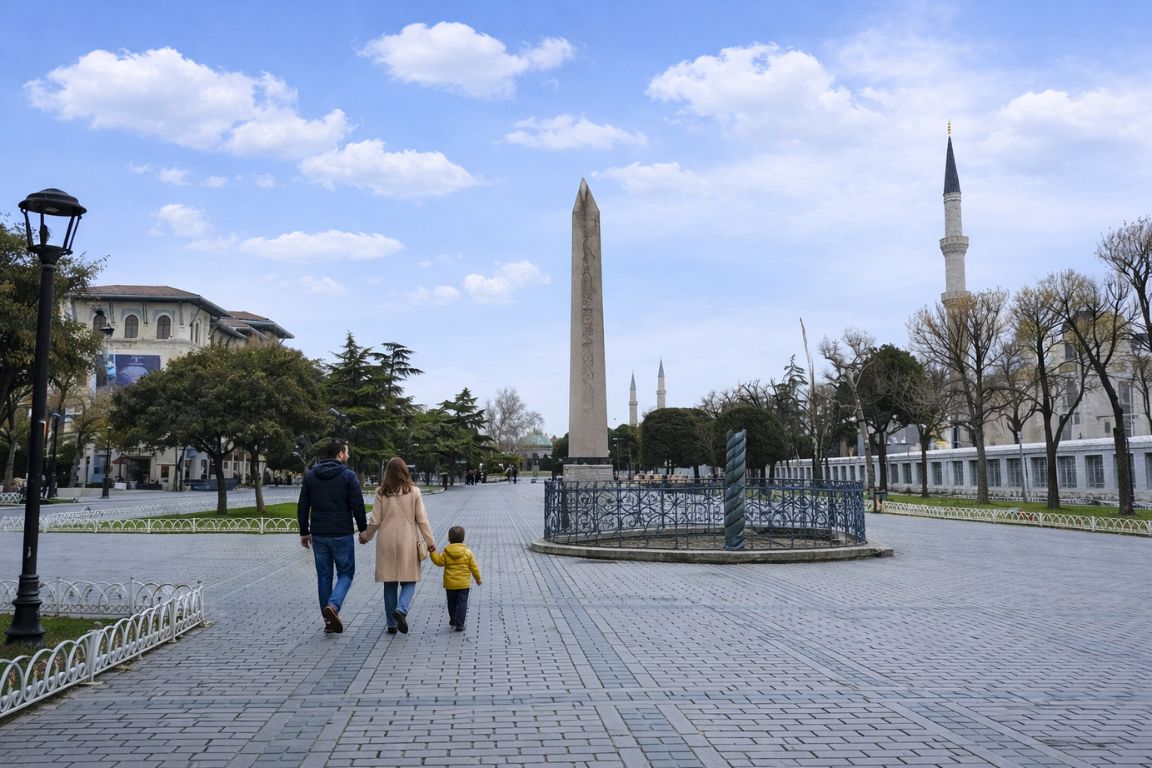 You can visit independently. As of 2024, professional tour guides are no longer permitted inside the tourist visiting area. The official AR audio guide, available in 23 languages via QR code on your phone, is included with your €25 ticket and provides commentary throughout the upper gallery route. Self-guided visits work well in the early morning or late afternoon when the gallery is less congested and you can move at your own pace.
The no-guides-inside policy is one of the more significant practical changes of the 2024 visitor system, and it affects how most organized tours operate. If you book a guided tour through an operator, your guide will prepare you thoroughly outside the building, walk you through context before entry, and be available for questions while you’re inside the gallery. They simply cannot lead a traditional walking commentary inside anymore.
For a first visit, there is a real argument for guided context. The upper gallery presents fifteen centuries of overlapping history in a relatively compressed space. Without background on who Empress Zoe was, or what the Deesis was commissioned to commemorate, or why the Ottoman calligraphy medallions say what they say, the experience is still visually staggering but intellectually incomplete. The AR system is helpful, but it moves on its own schedule and doesn’t answer questions.
What guides genuinely add is sequencing and selection. Knowing where to stand for the first view of the dome, when to turn around at the Marble Door, how long to spend at the Deesis versus the Zoe mosaic, these are the differences between a rushed pass-through and a visit you remember for years. We've seen it on the Hagia Sophia Guided Tour with Licensed Guide & Fast Entry. The people who rush because they didn’t prepare almost always say they wish they’d had more context.
See the best Hagia Sophia tours and choose a format that fits your morning.
Trying to decide between booking a guided tour or just walking in independently? Check out our guided vs self-guided visit to Hagia Sophia tours guide before you commit either way.
Connect the two mosques
Two mosques & Old Town walk
2.5–3 hours · English guided walk
Choose your guided morning before arranging the afternoon.Explore the Byzantine and Ottoman stories on a guided walk through both mosques and the Hippodrome.
Check Dates for the Two-Mosque Walk →How Long Do You Need At Hagia Sophia And Is A Guided Tour Worth It?
Plan at least 60 minutes for a self-guided visit; 90 minutes is more realistic for someone who wants to absorb the mosaics without rushing. A guided experience runs 1.5 to 2 hours. Factor in 20 to 45 minutes for the security and entry process before you get inside. If you’re combining Hagia Sophia with the Blue Mosque and Topkapi Palace in a single day, allocate the morning to Hagia Sophia and leave Topkapi for after lunch.
Most travelers report needing more time than they expected. The upper gallery is a U-shaped route that looks compact on a map but contains more stops than an average museum floor. People who’ve visited before consistently say they wished they’d slowed down at the Deesis. It is not the biggest mosaic in the building, but it holds its own in a way that takes a few minutes of standing still to register.
On whether a guided tour is worth the additional cost: the short answer is yes, particularly for anyone visiting Istanbul for the first time. Not because you can’t navigate the space alone, but because the building rewards knowledge, and gathering that knowledge on your own requires research that most people don’t do before a trip. Guides also handle the logistics of prayer time conflicts, know which sections are currently restricted due to ongoing restoration, and can read the gallery in a way that the audio system cannot replicate.
Trying to pick between a private guided tour and a small group experience? Check out our best Hagia Sophia tours guide before you book anything in Istanbul.
How much could a private itinerary fit around your interests?Check a private guide’s dates before arranging separate visits; choose the route around your interests.Explore Your Private Istanbul Itinerary →
What Are The Biggest Mistakes Visitors Make At Hagia Sophia?
The most common and costly mistakes: arriving on a Friday between 12:00 and 14:30 (the building is closed to tourists), not buying tickets online and losing 30-45 minutes in the security and ticket queue, accidentally purchasing the separate Hagia Sophia History Museum ticket instead of or in addition to the mosque entry, arriving underprepared on dress code and being turned back at the entrance, and trying to access the ground floor where worshippers are active.
The ticket confusion issue is real and documented across multiple travel forums from 2024 and 2025. The History and Experience Museum is a separate €25 virtual reality attraction near the main entrance area, and its ticket booth is close to the mosque’s ticket booth. Some visitors have ended up paying €50, spending time in the museum thinking it was the mosque, and then being unable to get a refund. The museum ticket says “Hagia Sophia” at the top. If you’re at the ticket booth, confirm you’re buying entry to the mosque itself, not the museum.
The second pattern that shows up constantly in reviews is the dress code. Hagia Sophia is stricter than many mosques about enforcement. A woman turned back at the entrance because she forgot a headscarf loses at minimum 20 minutes going back to get one or finding one nearby. Headscarves are sold at the entrance for €1 but run out during peak periods. The paper-like body cover robes they sell there are also not something anyone is happy to put on. Pack your own.
A less obvious one: Tuesdays. Topkapi Palace is closed on Tuesdays, which pushes a slice of the day’s tourist traffic toward Hagia Sophia. If you have flexibility, Wednesday or Thursday mornings are typically the calmest weekday options in peak season.
The last thing worth flagging, specific to the post-2024 visiting system: the tourist route goes up a ramp and deposits you directly in the upper gallery. You will look down at the prayer hall, and it can be tempting to try to find a way down. There isn’t one. The ground floor is not part of the tourist route and you will be redirected. Knowing this in advance prevents a lot of confusion and wasted time at the gallery barriers.
Questions before you book? Compare formats on the best Hagia Sophia tours page, or go to the skip-the-line group tour with an expert guide.
See two remarkable interiors
Hagia Sophia & Cistern combo
Hagia Sophia + Cistern · 3-day validity
Booking Hagia Sophia and the Cistern for the same stay?Pair Hagia Sophia’s gallery with the Basilica Cistern’s columns and Medusa heads in one ticket bundle.
Check Your Two-Site Visit Dates →Practical Planning Points For Your Visit
| Arrived without prior knowledge of 2024 rule changes | Pre-visit briefing reduces confusion at entry |
| Spent 90+ minutes inside (vs. the 45-min average) | Allow time to read the historical context |
| Said the Deesis mosaic was the highlight of the visit | Allow extra time for the Deesis if mosaics are your priority |
| Visited both Hagia Sophia and Blue Mosque in same morning | Paired visits work best with a 08:30 start |
| Compare guide commentary with independent preparation | Context changes the experience completely |
Have your day in Istanbul picked out?Check gallery entry for that date before fixing the rest of your sightseeing plan.Check Your Hagia Sophia Date →
Frequently Asked Questions
Is Hagia Sophia free?
No. Foreign tourists have paid a €25 entry fee since January 2024. Only Turkish citizens entering for worship use the free entrance. Children under 8 enter free with ID.
Use the free Blue Mosque visit if your sightseeing budget excludes paid gallery entry. Plan Free Sightseeing →
Can I use the Istanbul Museum Pass at Hagia Sophia?
No. The Museum Pass Istanbul is not valid at Hagia Sophia. You must purchase a separate €25 ticket regardless of what other passes you hold.
Could one booking cover both remarkable interiors?Explore a bundle for Hagia Sophia and the Cistern, with three days to make the visits.Explore the Gallery & Cistern Combo →
What is the difference between Hagia Sophia and the Hagia Sophia History Museum?
They are two completely separate buildings. The mosque itself requires a €25 ticket and is entered from the northeast side near Topkapi Palace. The History and Experience Museum is a nearby virtual reality attraction that costs an additional €25. Many visitors have accidentally purchased the museum ticket instead of the mosque ticket. Confirm which one you are buying before paying.
A History Museum ticket is not a mosque-gallery ticket. Read The Ticket Breakdown →
Are professional tour guides allowed inside Hagia Sophia?
As of 2024, professional tour guides are no longer permitted to lead commentary inside the tourist visiting area. Guided tour operators brief their groups outside and may accompany them inside without leading formal tours. An AR audio guide in 23 languages is included with your €25 ticket.
Ask the operator where commentary happens and how the gallery portion works. Review Guiding Details →
Can you visit Hagia Sophia and the Blue Mosque in the same day?
Yes. They are 250 meters apart in Sultanahmet Square. A practical sequence: Blue Mosque first at opening (free, closes during prayer times), then Hagia Sophia. Allow a full morning and start no later than 09:00.
Putting both mosques into one morning?Check the guided walk’s departures before arranging the rest of your Sultanahmet day.Check Dates for the Two-Mosque Walk →
Is Hagia Sophia accessible for wheelchair users?
The tourist route through the upper gallery uses ramps but is officially noted as not fully suitable for wheelchairs. Visitors with mobility difficulties are directed to use the Turkish citizen entrance with their paid tickets. Confirm accessibility arrangements in advance with the official ticket booth.
Plan your visit with a licensed Hagia Sophia tour.
Hagia Sophia rewards preparation. The 2024 rule changes, the scaffolding, the prayer time schedule, and the mosaic locations that most visitors miss are the details a private Hagia Sophia tour with skip-the-ticket-line entry is set up to handle. Browse current Hagia Sophia tours to see what fits.
What else could you discover between the two mosques?Check the two-mosque walk’s departures before adding another timed visit to your day.Explore the Two-Mosque History Walk →
The recommended entry and walking products exclude wheelchair users. Confirm an alternative access arrangement before paying. Review Access Needs →