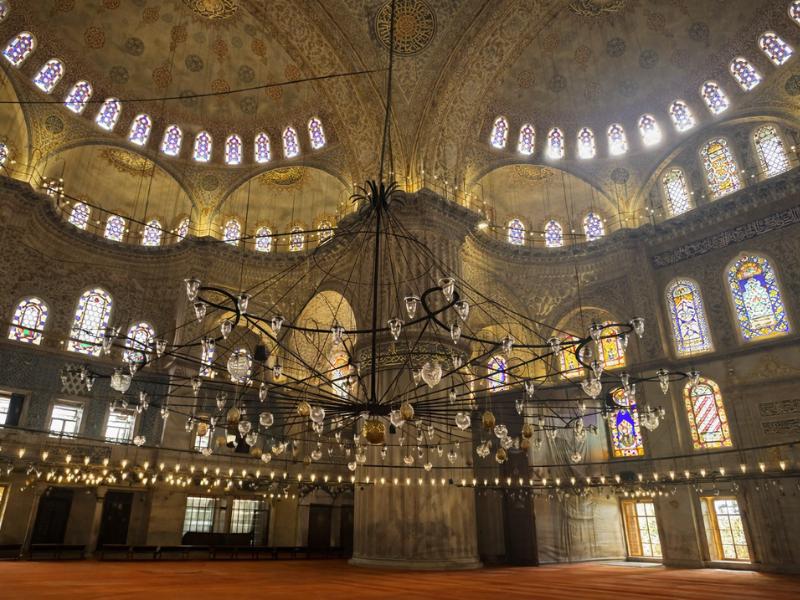
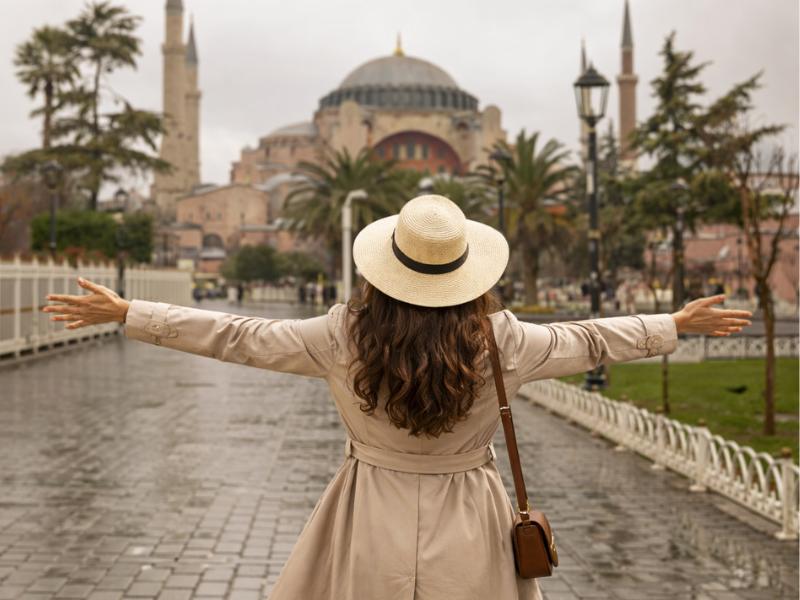
Hagia Sophia vs Blue Mosque
Hagia Sophia vs Blue Mosque - both are must-sees, but very different. Compare history, cost, atmosphere, and the best order to visit to make the most of your day.
Last updated: April 11, 2026
Keep Blue Mosque admission free in your budget. Pay for the guided walk for interpretation and a shared itinerary, or book only Hagia Sophia and visit the Blue Mosque independently. Choose One Mosque Or Both ↓
Booking Summary: In brief: select the exact ticket option, check child and access requirements, and leave time for security. Blue Mosque admission is free; guidance is optional.
Hagia Sophia Vs Blue Mosque: Side-by-Side Comparison
| Built | 537 AD (Byzantine) | 1609-1616 (Ottoman) |
| Entrance fee | €25 for tourist gallery access | Free for all visitors |
| Dome diameter | 31 metres | 23.5 metres |
| Dome height | 55.6 metres | 43 metres |
| Minarets | 4 (added Ottoman era) | 6 (original design, controversial) |
| Defining interior feature | Byzantine mosaics, pendentive dome, calligraphy medallions | 21,043 Iznik tiles in 50+ floral designs |
| Tourist access area | Upper gallery only (since Jan 2024) | Main prayer hall (visitor zone behind barrier) |
| Friday closure | 12:00-14:30 | Closed all morning; reopens ~14:30 |
| Security queue | 20-90 min (season-dependent) | 30-60 min (peak season) |
| Recommended visit time | 60-90 min | 30-45 min |
| Atmosphere | Monumental, historically dense, complex | Serene, harmonious, unified Ottoman design |
Blue Mosque admission stays free; a paid walk buys guidance and may bundle Hagia Sophia entry. Plan The Free Blue Mosque Visit →
What Is The Difference Between Hagia Sophia And The Blue Mosque?
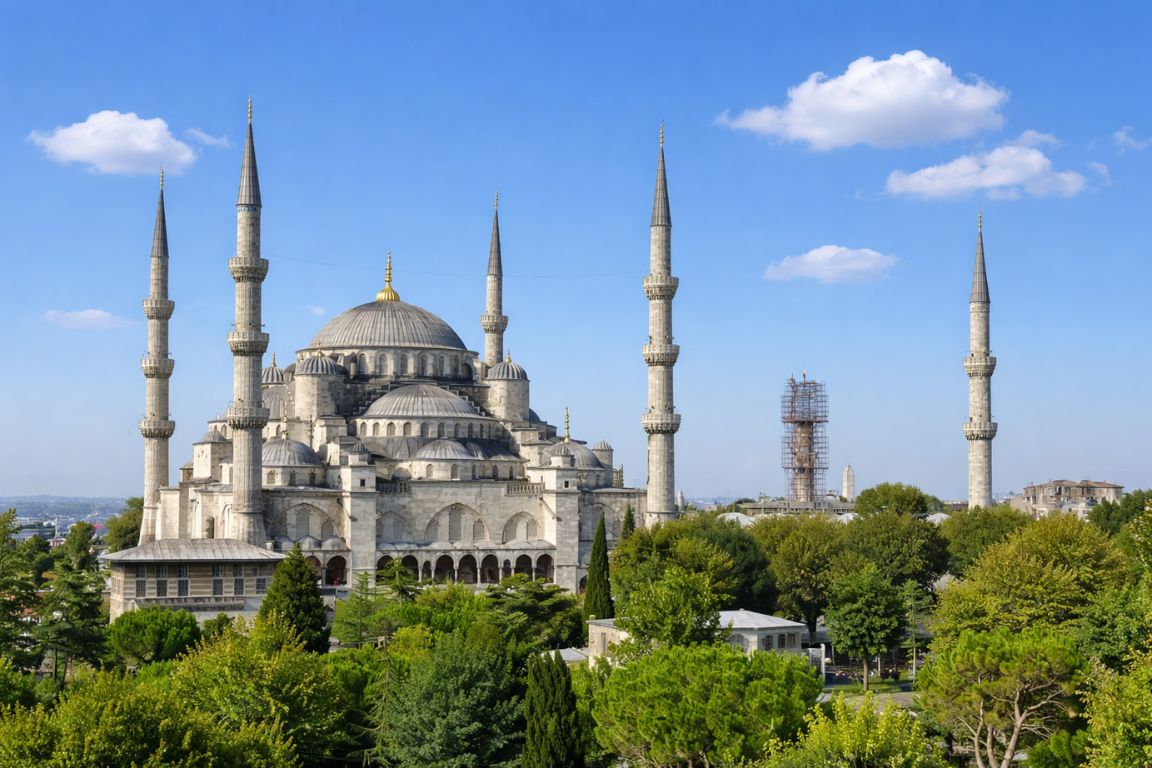 They are two entirely separate buildings 250 metres apart, built over a thousand years apart, for different purposes, by different civilizations. Hagia Sophia (537 AD) started as a Byzantine Christian cathedral and carries the layered identity of a building that has been church, mosque, museum, and mosque again. The Blue Mosque (1616) was purpose-built as an Ottoman imperial mosque specifically designed as a response to Hagia Sophia. One is an archaeological palimpsest of empires; the other is a singular, unified Ottoman statement of faith and power.
Visitors mix them up constantly and it’s an understandable mistake. Both have multiple minarets, both have grand domes, both sit on the same square, and both currently function as active mosques. From a distance, their silhouettes share a family resemblance precisely because the Blue Mosque was built to echo its predecessor. The dialogue between them is the point. Understanding what the Blue Mosque was designed to do – match, rival, perhaps surpass the greatest inherited building in the empire – makes standing between them in Sultanahmet Square an entirely different experience.
The practical differences matter just as much as the historical ones. Hagia Sophia charges €25 for tourist access and routes visitors through the upper gallery on a one-directional path. The Blue Mosque is free, routes tourists through the main prayer hall behind a low barrier, and takes 30 to 45 minutes compared to Hagia Sophia’s 60 to 90. The timings don’t align perfectly: Hagia Sophia’s Friday closure runs 12:00 to 14:30 while the Blue Mosque’s Friday closure covers the entire morning. Coordinating both in one day requires a specific sequence, which we’ll come to later.
A guided walk connects these separate buildings with the Hippodrome between them. Explore Both Mosques With A Guide →
Which One Is Older And Why Does That Matter?
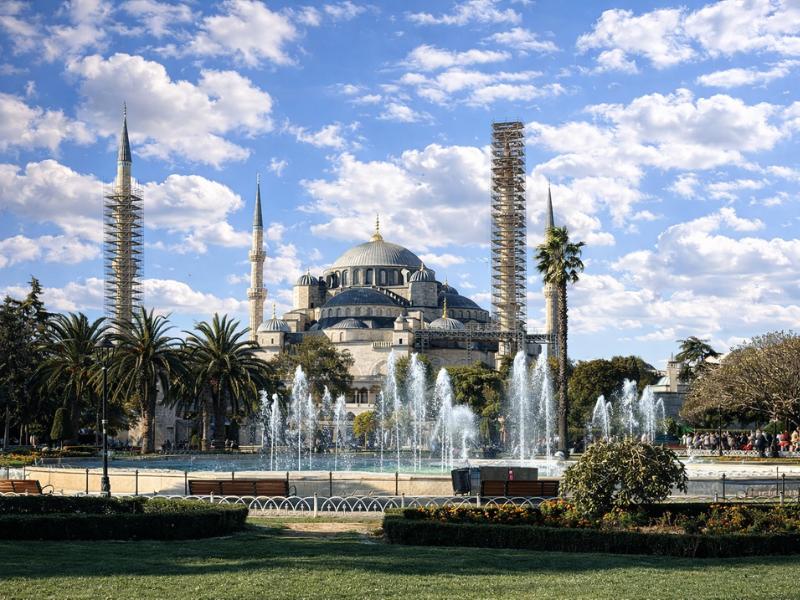
Hagia Sophia is 1,080 years older. It was completed in 537 AD; the Blue Mosque in 1616. That gap is not just a number – it separates two entirely different worlds of engineering, religion, and political context. Hagia Sophia solved structural problems that had defeated builders for centuries and remained the world’s largest cathedral for nearly a thousand years. The Blue Mosque was built precisely because Hagia Sophia existed: a young sultan with no military victories needed a legacy, chose the site directly opposite the greatest building in his empire, and tasked his architect with matching it.
When Emperor Justinian consecrated Hagia Sophia in 537 AD, he reportedly declared “Solomon, I have surpassed thee.” He wasn’t being modest. The pendentive system his architects used to place a circular dome on a square base was a genuine engineering breakthrough, and the resulting interior – a dome appearing to float on a ring of light from 40 windows – had never been seen before. For the Byzantine Empire, this was not just a church but the architectural embodiment of divine order on Earth.
When Sultan Mehmed II conquered Constantinople in 1453, his first act was to ride to Hagia Sophia. He converted it to a mosque immediately. For the Ottoman sultans that followed, Hagia Sophia was both an inheritance and a challenge: the benchmark against which all new imperial mosques were measured. The great architect Mimar Sinan spent his career studying its engineering. His student Sedefkar Mehmed Aga was eventually given the commission for what would become the Blue Mosque, with an explicit brief: build something that stands beside Hagia Sophia as an equal.
Sultan Ahmed I was nineteen years old when he commissioned the project and had no major military victories to fund a grand mosque through the traditional spoils-of-war method. He used the state treasury instead, which caused significant friction with religious scholars. He chose the site of the former Byzantine Great Palace directly facing Hagia Sophia, and he specified six minarets – a number that caused controversy because only the Grand Mosque in Mecca had six. Ahmed responded by funding a seventh minaret for Mecca at his own expense. The rivalry, the ambition, and the theological provocation are all baked into the building’s origins. None of that reads from the outside without knowing the story.
The story between these two buildings is one of the most compelling architectural dialogues in human history. Our guides tell that story on the Hagia Sophia & Blue Mosque small-group tour.
Read the chronology before visiting so the later mosque becomes a useful architectural comparison. Read Hagia Sophia’s Timeline →
How Do The Interiors Compare – Art, Architecture, And Atmosphere?
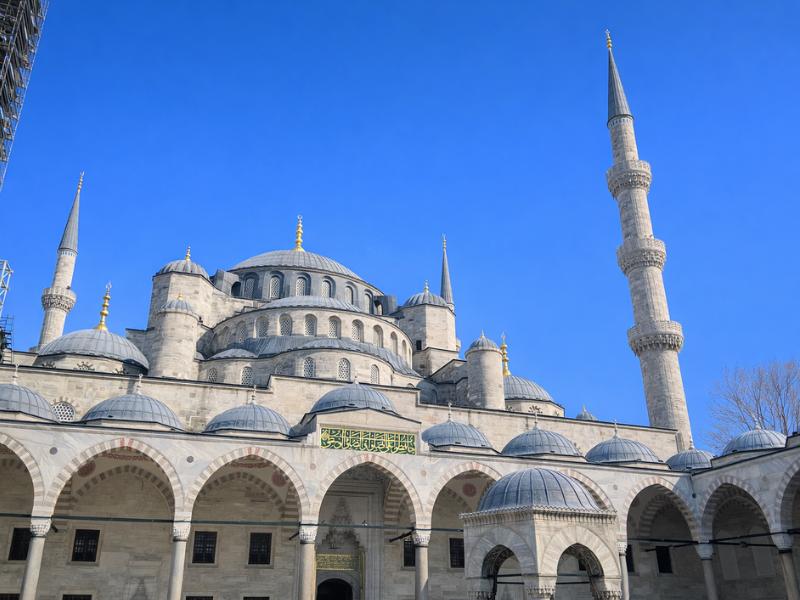
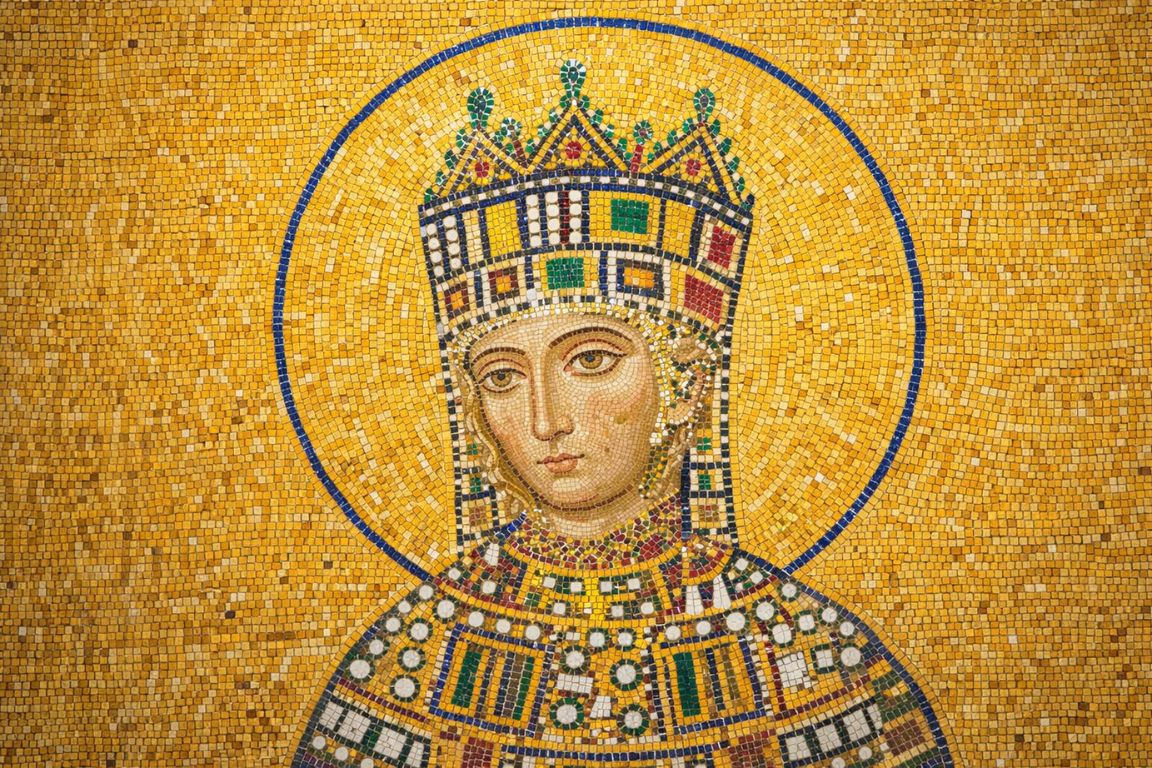 Hagia Sophia’s interior is dense, layered, and historically charged: Byzantine mosaics of Christ and the Virgin share space with massive Ottoman calligraphy medallions, marble columns from ancient temples, and a dome engineered to appear weightless. The Blue Mosque’s interior is more unified and serene: 21,043 handmade Iznik tiles in over 50 floral designs cover every surface, 260 stained glass windows flood the space with filtered light, and the overall effect is one of calm, harmonious Islamic design rather than layered cultural collision. Hagia Sophia overwhelms with complexity; the Blue Mosque overwhelms with coherence.
Standing in Hagia Sophia’s upper gallery, the first thing visitors register is scale. The dome is 31 metres across and rises 55.6 metres off the ground. The 40 windows at its base were engineered to make the masonry appear to dissolve into light – a deliberate spiritual illusion that still works over fifteen centuries later. Then the layers start arriving: the 11th-century Deesis mosaic with Christ rendered in a naturalism that preceded the Italian Renaissance by two centuries, the Empress Zoe mosaic with its face altered twice by political marriages, the Ottoman calligraphy medallions so large they had to be assembled inside the building because they couldn’t fit through the doors. Byzantine faces on one wall, Arabic calligraphy of Allah on the next. The building refuses to be one thing and never has been.
The Blue Mosque’s interior is something different. The tiles run from floor level upward in multiple registers – geometric patterns at the lower walls, increasingly naturalistic flowers, tulips, roses, carnations, and cypresses higher up. The dominant blue of the Iznik glaze gives the nickname but the palette is wider than it sounds: turquoise, sage green, and a specific tomato-red that the workshops of Iznik found technically difficult to produce are all present. Light enters through 260 windows and diffuses through the space without the sharp directional drama of Hagia Sophia’s morning dome shafts. The effect is softer, more even, and in its own way more enveloping.
The main structural difference visitors notice is the four “elephant feet” – the massive cylindrical columns that support the Blue Mosque’s dome. Architectural historians have criticized them as a conservative solution compared to Hagia Sophia’s pendentive engineering, which creates the impression of a dome with no visible support. The elephant feet, each five metres in diameter, are unmissable and do interrupt the visual flow of the interior. This is the price of playing architectural safe in a building where the stakes were very high. The Blue Mosque’s dome at 23.5 metres diameter and 43 metres height is still impressive; it just operates at a different register than Hagia Sophia.
One significant practical update for 2026: the Blue Mosque completed its most comprehensive restoration in April 2023 after six years of work (2018-2023). The scaffolding that obscured the interior Iznik tiles and the courtyard for years is gone. The outer courtyard, which had been inaccessible for extended periods, is now fully open. Visitors in 2026 are seeing the Blue Mosque’s interior and exterior at close to their best condition in modern history.
Connect the two mosques
Two mosques & Old Town walk
2.5–3 hours · English guided walk
What connects the mosaics and the Blue Mosque’s tiles?Explore the Byzantine and Ottoman stories on one guided route through the Old Town.
Explore the Two-Mosque History Walk →What Are The Practical Differences – Tickets, Hours, And Access?
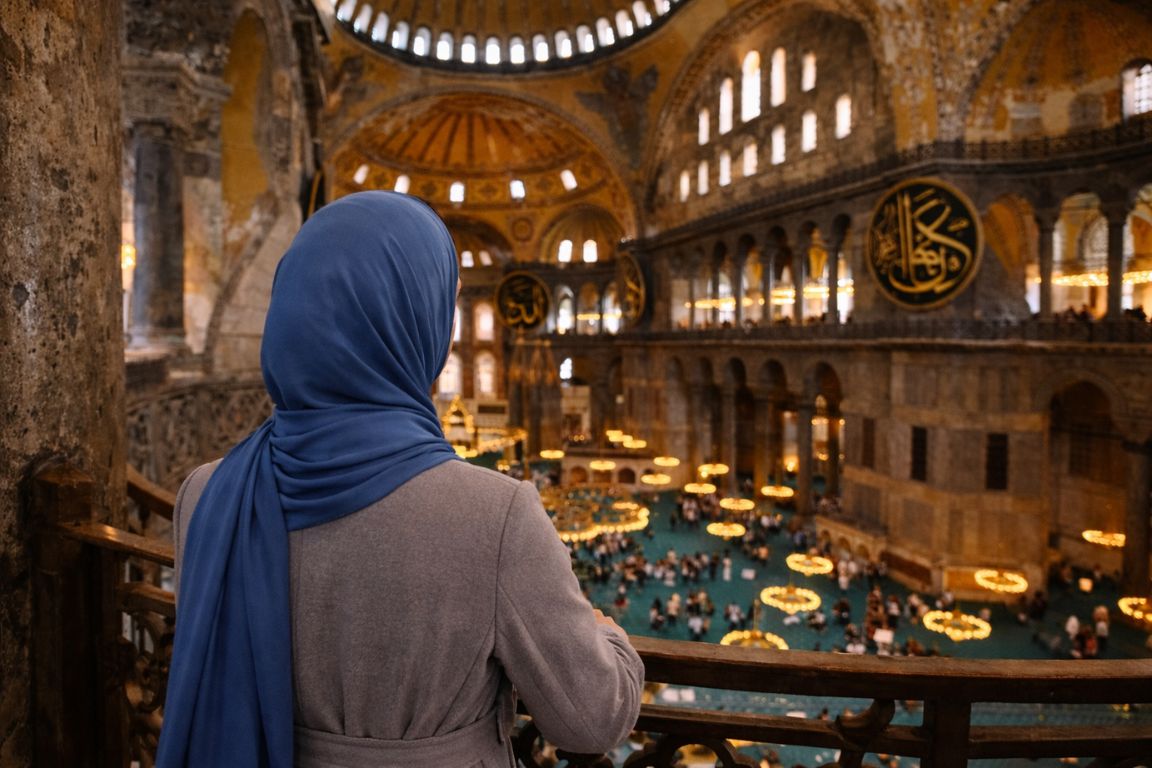 The key practical differences: Hagia Sophia costs €25 and routes tourists through the upper gallery only; the Blue Mosque is free and routes tourists through the main prayer hall visitor zone. Both close Friday midday for prayers, but the Blue Mosque stays closed all Friday morning while Hagia Sophia opens in the morning and closes 12:00-14:30. Hagia Sophia’s security queue runs longer in peak season (up to 90 min). Both require the same dress code. The Blue Mosque’s renovation completed in 2023 means its interior is now fully visible without scaffolding for the first time in years.
| Ticket | €25, purchase online (DEM Museums) or at booth; skip-the-line recommended | Free, no ticket required |
| Opening hours (summer) | 08:00-19:00, last entry 18:30 | 08:30 to ~18:00-19:00 (prayer breaks) |
| Opening hours (winter) | 09:00-19:00 | 08:30 to ~17:30 (prayer breaks) |
| Friday rules | Open morning, closed 12:00-14:30 | Closed all morning, reopens ~14:30 |
| Daily prayer closures | Partial restrictions (~20-40 min per prayer) | Full closure (~90 min per prayer session) |
| Dress code | Shoulders/knees covered; women headscarf mandatory; shoes removed at carpet areas | Same but scarves provided free at Blue Mosque vs €1 at Hagia Sophia |
| Museum Pass | Not valid | Not applicable (free entry) |
| Distance apart | ~250 metres, 3-4 minute walk across Sultanahmet Square |
One practical asymmetry that surprises visitors: the Blue Mosque’s daily prayer closures are fuller than Hagia Sophia’s. When Hagia Sophia restricts access during a non-Friday prayer, tourists can often still be in parts of the gallery. When the Blue Mosque closes for prayer, the visitor zone closes completely and tourists wait outside, sometimes for 90 minutes. Check the daily prayer schedule before planning your Blue Mosque visit slot, as these windows shift throughout the year with the sun’s position.
Want to know which ticket option gets you the best access without overpaying for extras you don’t need? Our Hagia Sophia tours tickets explained guide walks you through every entry option and what each one actually includes.
Buy only Hagia Sophia entry if you want to handle both visits independently; Blue Mosque admission needs no paid ticket. Arrange The Paid Half Of The Day →
Which One Should You Visit First?
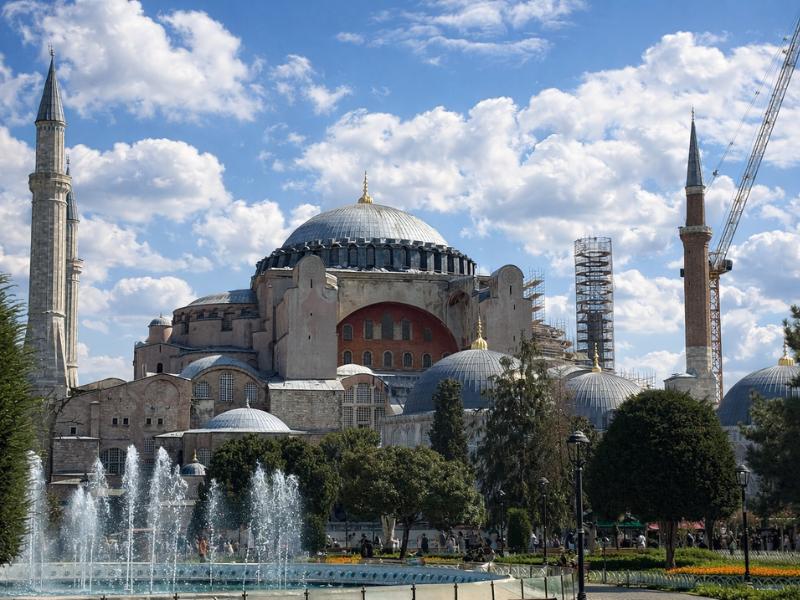
Visit Hagia Sophia first. It has the longer security queue, the more time-sensitive morning light, and the higher crowd-management stakes. The best window is opening time (08:00 in summer, 09:00 in winter). With Hagia Sophia completed by 10:30 or 11:00, you have flexibility for the Blue Mosque in the morning before any prayer closures. Alternatively, visit the Blue Mosque in early afternoon after noon prayers reopen it. The reverse sequence – Blue Mosque first, Hagia Sophia after – is workable but creates scheduling risk since Hagia Sophia’s morning advantage is harder to recover if you’ve spent the opening hour at the Blue Mosque.
The logic is partly about crowds and partly about experience. Hagia Sophia at 08:00 on a weekday morning, before tour groups arrive, is as calm as this building ever gets. The dome light is active, the gallery is navigable, and you can stand at the Deesis mosaic without being pushed past it. By 10:30 that same day, the building is in its peak crowding window. The Blue Mosque doesn’t have the same urgency because its crowd patterns are more even – the prayer closure structure naturally interrupts the flow of visitors throughout the day, preventing the sustained midday peak that builds at Hagia Sophia.
The narrative sequence also argues for Hagia Sophia first. You are walking from the older building to the younger one, from the structure the Blue Mosque was responding to toward the building that answered it. After spending an hour with Byzantine mosaics under Justinian’s dome, crossing the square and entering the Blue Mosque carries the weight of that story with you. The tiles mean something different when you know what they were designed to compete with. The six minarets visible from Hagia Sophia’s entrance become a deliberate architectural argument rather than just a distinctive silhouette.
Independent visitors can choose their order. A guided product follows its operator’s itinerary, which may start at the Blue Mosque. Review The Guided Route →
Can You Visit Both In One Day?
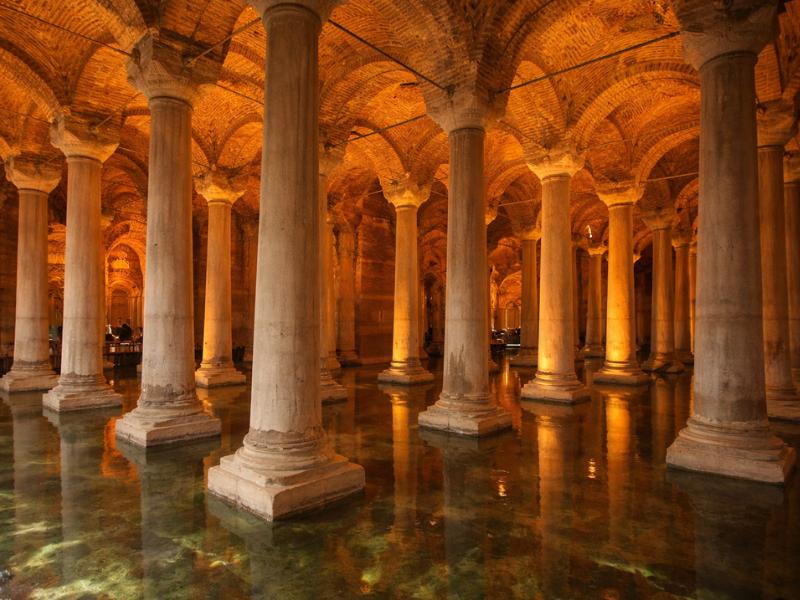
Yes, comfortably, and this is the standard approach. With a morning start at Hagia Sophia (arriving at opening) and the Blue Mosque timed after the midday prayer reopening, both visits fit within a half-day. The sequence most guides recommend: Hagia Sophia at 08:00-09:00 (60-90 min inside), then either wait for the Blue Mosque’s morning window before noon or have lunch and enter after 14:00. The Basilica Cistern is 5 minutes from both sites and makes a natural addition to a full Sultanahmet morning.
The practical risk in a same-day visit is prayer timing. On a non-Friday, the main hazard is arriving at the Blue Mosque during one of the five daily prayer closures. These run roughly 90 minutes each and the windows shift throughout the year. On Friday, the coordination is more complex: the Blue Mosque is closed all morning while Hagia Sophia is open, and both close around 12:00-14:30. For a Friday visit, the best approach is Hagia Sophia in the morning (before 11:30), lunch, then both reopen in the afternoon.
Time allocation that works consistently: 60 to 90 minutes inside Hagia Sophia, 20 to 30 minutes walking between sites and transitioning through security, 30 to 45 minutes inside the Blue Mosque, and 10 to 15 minutes in the Blue Mosque’s courtyard before or after. That’s a comfortable 3-hour block from first entry to exiting the Blue Mosque’s outer courtyard. Add the Basilica Cistern (45 minutes to an hour) for a half-day that covers the three most significant sites in Sultanahmet. Save Topkapi Palace for a separate morning.
Want more than just a walk-through of the main hall? Our best Hagia Sophia tours guide covers the experiences that include skip-the-line access, upper gallery entry, and expert commentary on the Byzantine mosaics most visitors walk straight past.
Recommended tours for both buildings
Hagia Sophia & Blue Mosque Small-Group Guided Tour
A three-hour small-group visit inside both buildings, with time to ask questions at each stop.
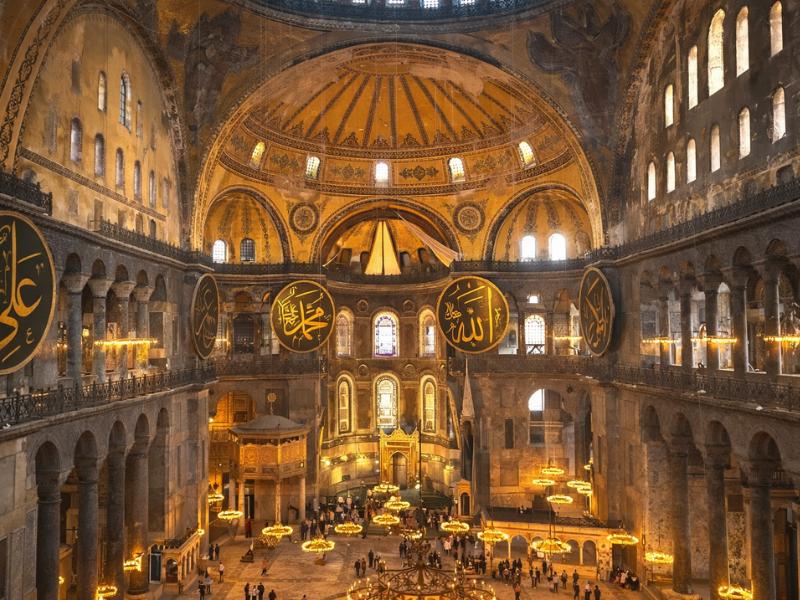
Hagia Sophia Skip-the-Line Entry Ticket
A reserved entry ticket for the tourist gallery. The Blue Mosque stays free and is a short walk across the square.
Hagia Sophia & Basilica Cistern Combo Ticket with Optional Topkapi Palace
Hagia Sophia paired with the Basilica Cistern. Topkapi Palace is an optional add-on for a separate visit.
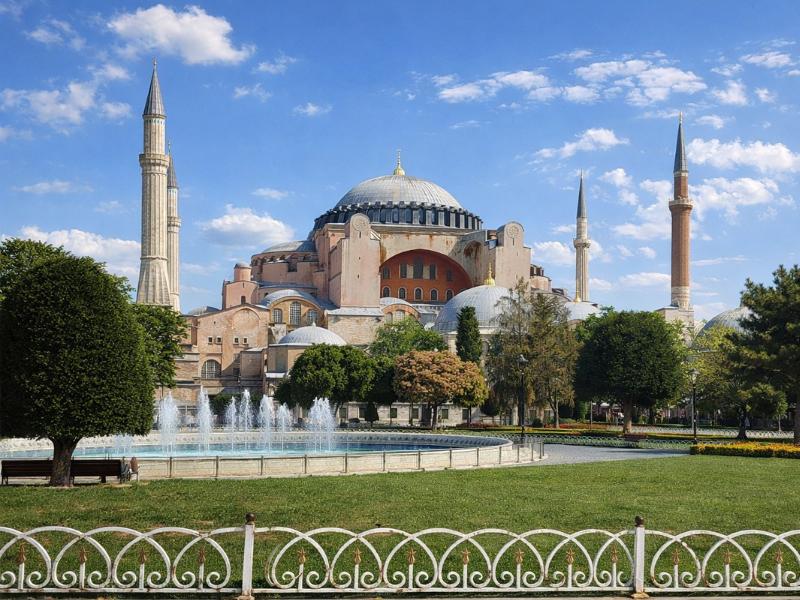
Exclusive Private Hagia Sophia Tour – Skip the Ticket Line
A private Hagia Sophia visit with skip-the-ticket-line entry, built around the gallery route and the building’s two histories.
Connect the two mosques
Two mosques & Old Town walk
2.5–3 hours · English guided walk
Ready to put both mosques into your day?Check the guided walk’s departures before adding another timed visit to your itinerary.
Check Dates for the Two-Mosque Walk →Which Is Better For Photography?
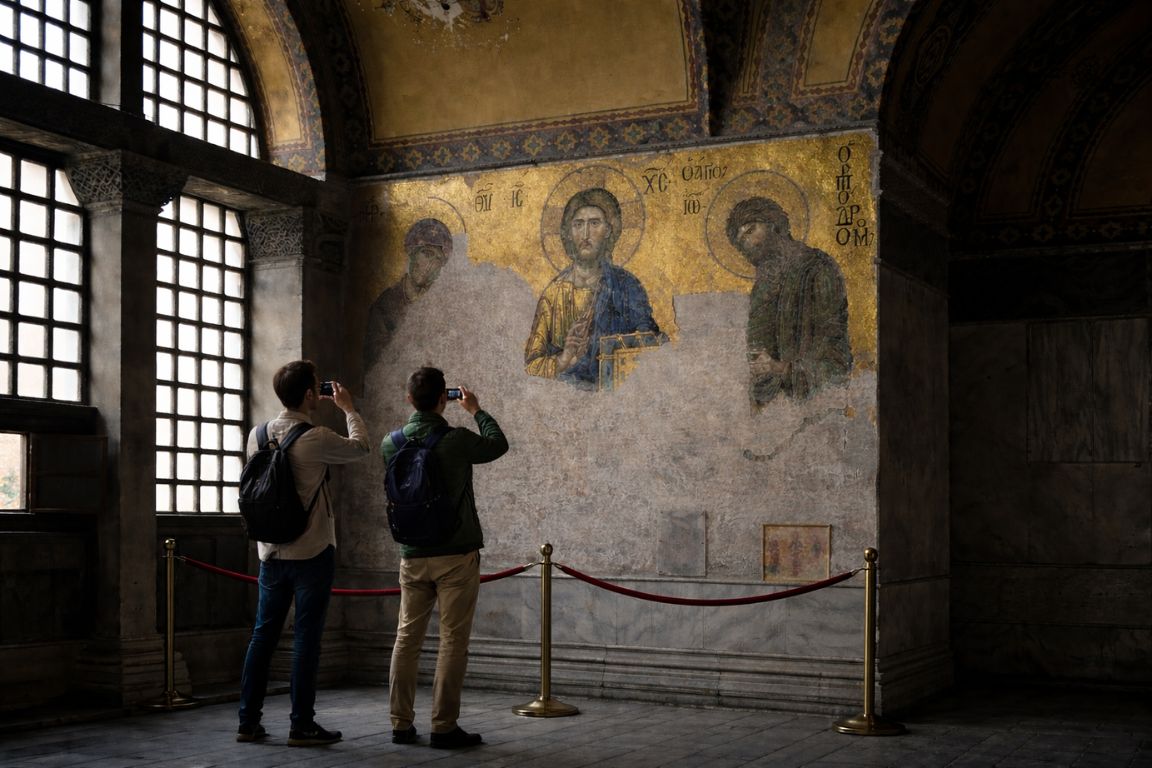 They reward different approaches. Hagia Sophia is better for interior architectural photography: morning dome light shafts, close-up mosaic detail from the gallery, and the visual tension of Byzantine and Ottoman art on the same wall. The Blue Mosque is better for exterior photography – its six minarets and cascading dome system photograph cleanly from Sultanahmet Square, and the courtyard provides symmetry shots that Hagia Sophia’s exterior doesn’t easily offer. For exterior shots that include both buildings in the same frame, rooftop cafes on the south side of the square are the standard vantage point.
Inside Hagia Sophia, the prime photographic window is 09:00 to 11:00 on a clear day. The morning sun enters through the dome’s 40 windows at an angle that creates visible shafts of light and makes the gold tesserae in the mosaics luminous. By noon this effect is gone. The Deesis mosaic responds well to slightly directional light: the rendering of Christ’s face, which art historians read as a precursor to Renaissance naturalism, becomes more legible with careful framing and the gallery’s natural light rather than flash. The same approach works for the Empress Zoe and Komnenos mosaics along the south gallery route.
The Blue Mosque’s interior tiles photograph best at midday when the overhead light through the 260 windows is at its most even – exactly the opposite of Hagia Sophia. The even diffused light prevents harsh shadows on the tile surfaces and shows the color range of the Iznik glaze most accurately. The “elephant feet” columns are a compositional challenge: they interrupt wide-angle interior shots in ways that require careful framing. Standing directly under the central dome and shooting straight up is the most common way to neutralize them. For exterior shots of the Blue Mosque, morning golden hour from the north produces a warm light on the stone facade and avoids backlit silhouettes.
The best single photography location for both buildings simultaneously is a rooftop terrace south of Sultanahmet Square – the Seven Hills Hotel terrace is the most frequently mentioned. From there, both domes and all ten minarets (four Hagia Sophia, six Blue Mosque) are in the same frame. Most of these locations require buying a drink or meal, which is reasonable given the view. Sunset and blue hour from this vantage point produce some of the strongest Istanbul photographs available to casual visitors.
We’ve put together a full interior breakdown in our what to see inside Hagia Sophia tours guide so you know exactly where to go, what to look for, and how to read the layers of history on every wall.
A standard walking tour is not a photography permit or a private photo session. Follow site rules and allow time for your own frames. Review Photography And Clothing Rules →
Which One Should You Choose If You Only Have Time For One?
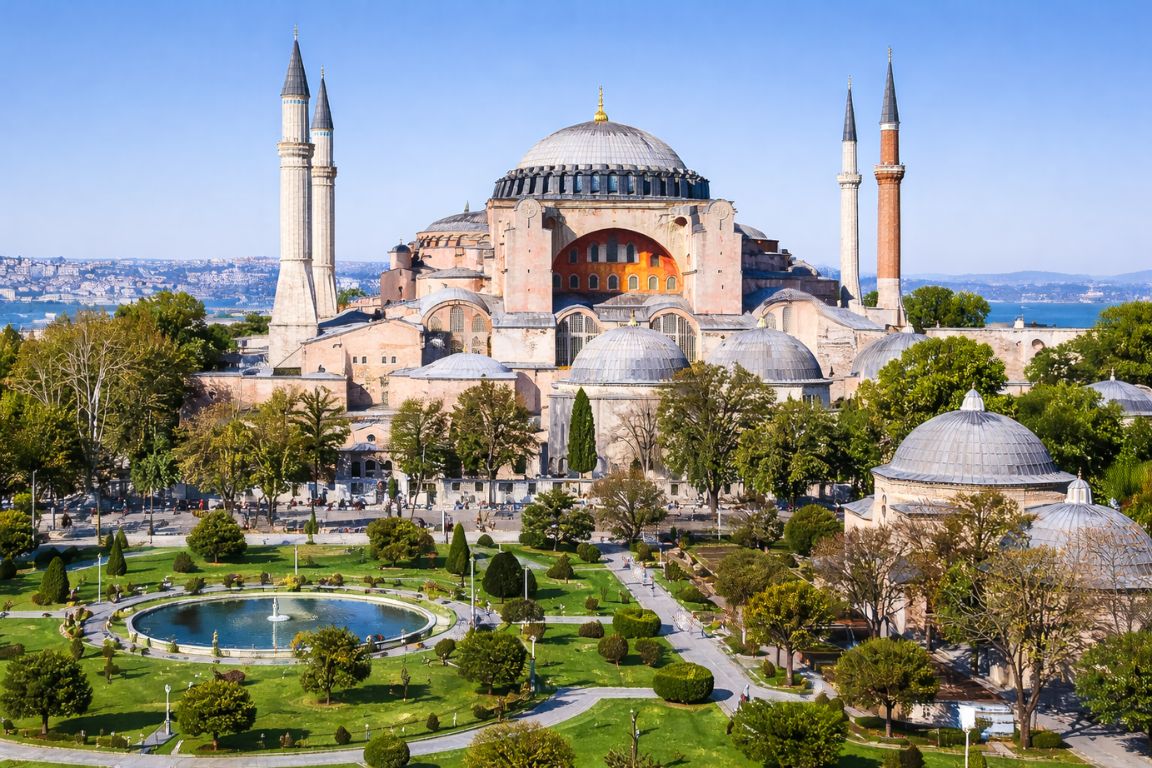 Choose Hagia Sophia. It is the more historically significant building, carries a greater depth of visual and intellectual content, and is genuinely irreplaceable as an architectural experience. The Byzantine mosaics, the pendentive dome that changed architectural history, and the unique visual layering of two major world religions coexisting on the same walls cannot be found anywhere else on Earth. The Blue Mosque is a beautiful building and worth visiting, but it is one of several outstanding Ottoman imperial mosques. Hagia Sophia has no parallel.
That said, the case for the Blue Mosque in certain circumstances is real. If you are visiting with young children who struggle with crowd management, the Blue Mosque is significantly calmer and more navigable. If the cost of Hagia Sophia’s €25 ticket is a constraint, the Blue Mosque’s free entry makes the decision for you. If your primary interest is experiencing a living, functioning mosque in its original and unified architectural context – not a layered historical monument – the Blue Mosque delivers that more completely. And if you are visiting on a Friday afternoon when Hagia Sophia’s morning window has closed, the Blue Mosque is the clear choice for the afternoon.
One perspective we share with every group: the most common reaction from people who visited only one and skipped the other is regret. They are not substitutes for each other. Each building is genuinely specific – the Blue Mosque’s tiles and the Hagia Sophia’s dome work on you in completely different ways, and the context each provides makes the other more meaningful. The 250 metres between them is one of the shortest walks with the highest reward density in the world. We have never met a traveler who visited both and wished they had skipped one.
We’ve put together a full timing breakdown in our best time to visit Hagia Sophia tours guide so you know exactly when to go based on your priorities whether that’s photos, crowds, or just getting in and out efficiently.
Choose free Blue Mosque entry if cost decides the day, or gallery entry if the Byzantine mosaics are your priority. Match Your Priority →
Practical Planning Points For Your Visit
| Visited both in the same day | Most groups complete both plus the Basilica Cistern in a single morning |
| Rated Hagia Sophia the more memorable of the two | Consistent across all visit types – solo, family, groups |
| Surprised the Blue Mosque was free | Common first-time visitor assumption is both charge entry |
| Wished they had more time at Hagia Sophia specifically | Most common regret on rushed half-day itineraries; reinforces our 90-min minimum recommendation |
| Preferred the Blue Mosque’s atmosphere to Hagia Sophia’s | Typically visitors who prioritize the active mosque experience over historical complexity |
We run the most efficient route between both buildings every day, with context that makes each more interesting than it would be alone. See the Istanbul highlights tour, which includes both buildings and tickets.
Use your own interests and schedule to judge the pairing. A reported visitor preference is not your itinerary. Choose What Matters To You →
Frequently Asked Questions
Are Hagia Sophia and the Blue Mosque the same building?
No. They are two entirely separate buildings 250 metres apart. They are often confused because both have multiple minarets, both have grand domes, and both currently function as active mosques in the same historic district. Hagia Sophia was built in 537 AD as a Byzantine cathedral; the Blue Mosque was built between 1609 and 1616 as an Ottoman imperial mosque specifically designed to face and rival Hagia Sophia.
Keep the two entrances and admission arrangements separate. Plan The Free Blue Mosque Visit →
Which is more impressive, Hagia Sophia or the Blue Mosque?
They impress in different ways. Hagia Sophia is more historically significant, carries greater architectural innovation, and delivers a denser, more complex experience through its Byzantine mosaics and layered religious history. The Blue Mosque is more serene and unified, with 21,043 Iznik tiles and a harmonious Ottoman interior that many visitors find more immediately beautiful. Most travelers who see both say Hagia Sophia is more remarkable; most find the Blue Mosque more calming.
A guided walk lets you compare both buildings in their Old Town context. Explore Both Mosques →
Do you need a ticket for the Blue Mosque?
No. Entry to the Blue Mosque is free for all visitors. You do not need to purchase a ticket. A security check is still mandatory and can take 30 to 60 minutes in peak season. Hagia Sophia charges €25 for tourist gallery access.
Pay nothing for Blue Mosque admission itself; guidance is optional. Choose Free Entry Or A Walk →
Can you visit Hagia Sophia and the Blue Mosque in one day?
Yes, comfortably. They are 250 metres apart and together take roughly 2 to 2.5 hours including the walk. Visit Hagia Sophia at opening (08:00–09:00) and the Blue Mosque in the late morning or after the midday prayer reopening. The Basilica Cistern, 5 minutes away, fits naturally into the same morning.
Allow 2.5 to 3 hours for this guided walk, plus your journey to the start. View The Two-Mosque Route →
Which has better interior photography conditions?
Hagia Sophia is better for architectural and mosaic photography in the morning, when dome light shafts are active. The Blue Mosque is better for tile photography at midday with even diffused light, and for exterior photography showing all six minarets. Both prohibit flash. Rooftop cafes south of Sultanahmet Square offer the best exterior shots of both buildings together.
Follow photography rules at both sites and keep your own time for framing. Read Photography Rules →
Which should you visit if you only have time for one?
Hagia Sophia. It is the more historically significant building with no architectural parallel anywhere in the world. The Blue Mosque, while beautiful, is one of several outstanding Ottoman imperial mosques. If you have any constraints – cost, crowds with young children, or a Friday afternoon schedule – the Blue Mosque is the logical alternative. If possible, visit both.
250 metres. Two buildings. Fifteen centuries of architectural conversation.
Browse the best Hagia Sophia tours and pick a format that covers both sides of the square.
Confirm which admissions your chosen option includes before you pay for a two-mosque experience. Review The Visit Options →
Let cost, history and available time decide rather than forcing both into a short stop. Match Your Priority →