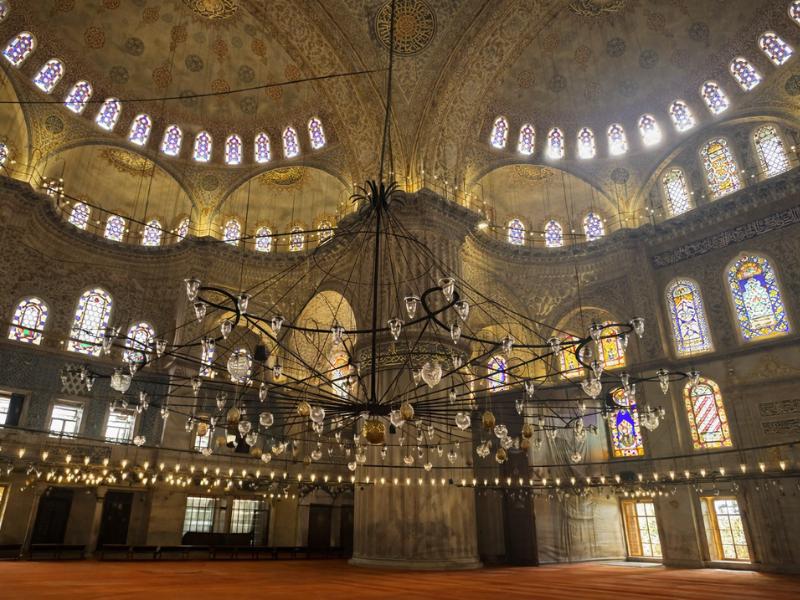
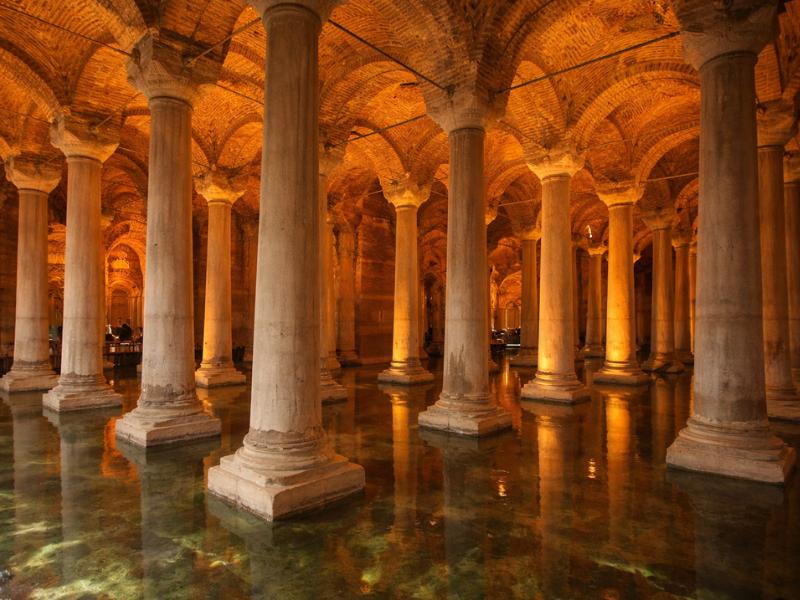
Guided vs Self-Guided Visit to Hagia Sophia
Hagia Sophia tours have changed - no guiding inside. Discover whether self-guided or guided visits are worth it, what the audio guide offers, and who benefits most from each option.
Last updated: May 1, 2026
Pay for a guide when you want conversation and a connected itinerary. Choose entry with audio when pace matters most; compare complete party totals before deciding. Choose Guided Or Independent ↓
Booking Summary: In brief: select the exact ticket option, check child and access requirements, and leave time for security. Blue Mosque admission is free; guidance is optional.
Guided Vs Self-Guided Hagia Sophia Visit: Quick Comparison
| Cost per person | €35-€80 (small group); €150-€350+ (private) | €25 (ticket includes audio guide in 23 languages) |
| Guide inside the gallery? | No, guides are not permitted inside since 2024. Full briefing happens outside; guide accompanies but cannot narrate | Audio guide via QR app, ~45 min content at 20 stops |
| Skip-the-line | Yes, guided tours include skip-the-line ticket queue (not security) | Online ticket skips ticket booth queue only; security queue same for everyone |
| Timing handled for you | Yes, prayer times, crowd windows, and post-entry logistics managed | No, you research and manage timing yourself |
| Depth of historical context | High – full pre-entry briefing, stories and questions answered, connecting narrative across layers of history | Moderate – audio covers main points; depth depends on how much you research in advance |
| Pace and flexibility | Structured – group moves together, typically 2.5-3 hrs covering Hagia Sophia + Blue Mosque | Fully flexible – linger as long or as briefly as you want |
| Best for | First-timers, families, cruise passengers, history enthusiasts, tight schedules | Independent travelers, returning visitors, early mornings on weekdays, those who pre-research |
| Languages available | Depends on guide; major languages covered by most operators | 23 languages via QR audio app (download before arrival) |
Compare like-for-like totals, including tickets excluded from a private quote. Calculate The Per-Person Difference →
What Is The Difference Between A Guided And Self-Guided Visit To Hagia Sophia?
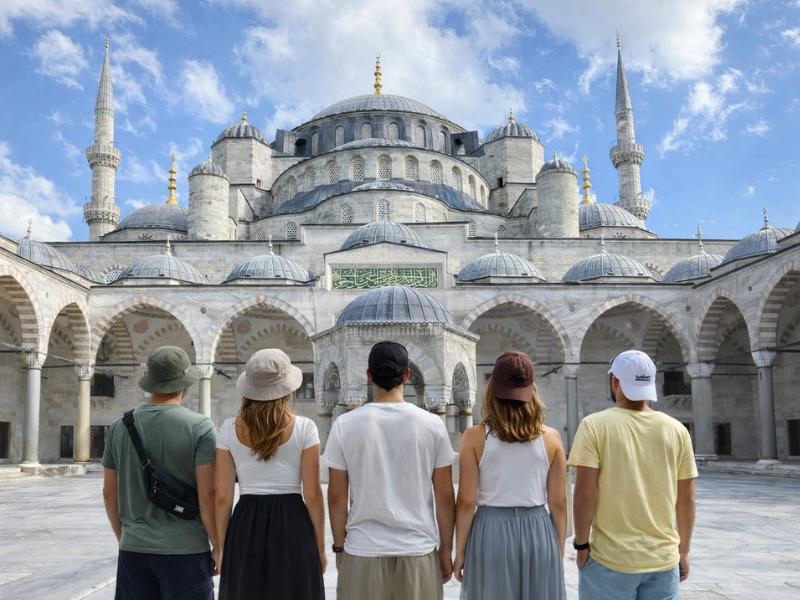
The key operational difference since January 2024 is that professional guides are no longer permitted inside the upper gallery. Guides brief their groups fully before entry, accompany them through the visit, and answer questions outside and between stops but they cannot narrate once inside the gallery itself. Self-guided visitors use the QR-activated audio guide included with their €25 ticket, covering 20 stops in 23 languages. The practical choice between the two is therefore about what you value: pre-visit context and crowd logistics versus pace and cost.
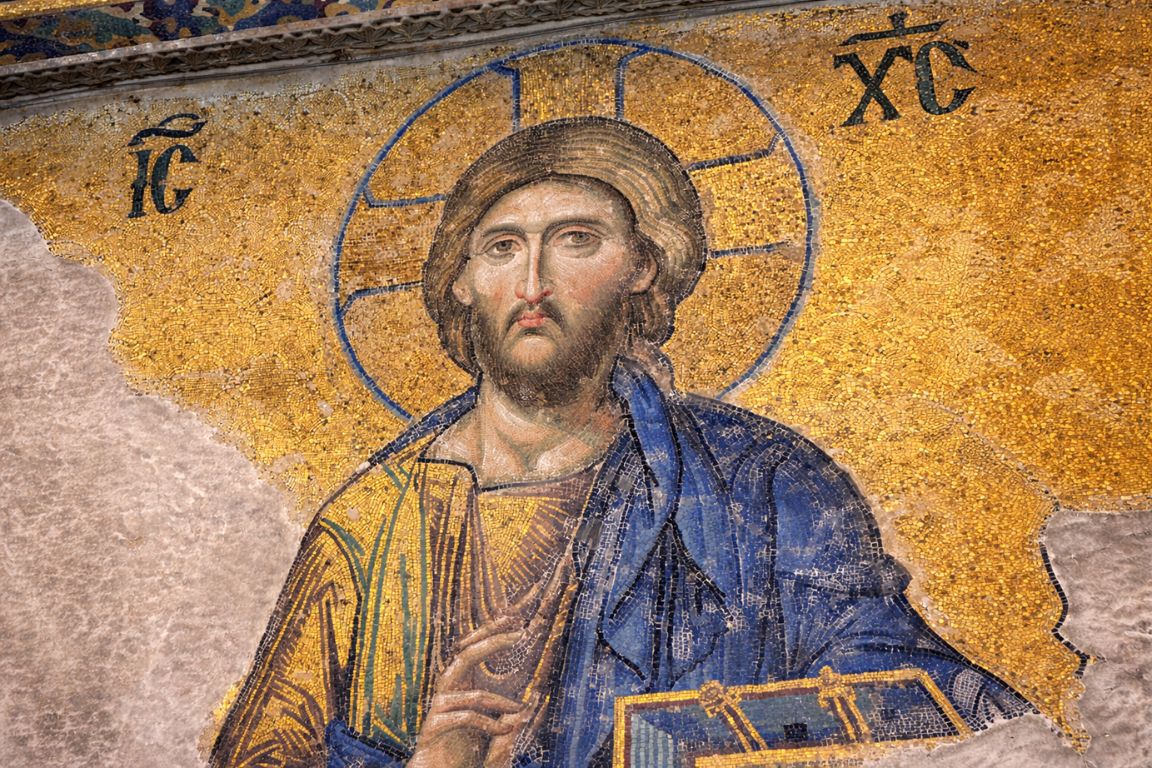
The no-guide-inside rule changed the nature of guided tours in a meaningful way. Before 2024, a good guide standing next to the Deesis mosaic could explain the faces of Christ, the Virgin Mary, and John the Baptist in real time, respond to questions, and connect what you were seeing to the broader story of Byzantine art history and the specific political moment the mosaic was commissioned. That live, interactive, in-front-of-the-object experience is no longer available from any guide at Hagia Sophia. What guided tours now offer instead is a comprehensive pre-entry briefing that prepares you to see the mosaics with understanding rather than confusion, combined with a guide who remains with the group to manage logistics, answer questions between stops, and ensure nobody misses key moments.
This shift makes the quality of the pre-entry briefing the defining variable. A strong guide delivers a 20 to 30-minute briefing outside the entrance that covers the building’s history, the engineering logic of the dome, the major mosaics you’re about to see and what they mean, the relationship between the Byzantine and Ottoman layers, and what to specifically watch for on the one-directional gallery route. Armed with that context, the audio guide inside becomes a supplement rather than the primary source of understanding. Without that briefing, most visitors walk past the Empress Zoe mosaic without knowing that the male face was altered twice as she remarried, or stand at the Deesis without understanding that its rendering of Christ’s humanity was centuries ahead of Italian Renaissance painting.
Since 2009 we have built the guided visit around the pre-entry briefing, knowing that what happens outside the gate determines how much visitors understand inside. The small-group Hagia Sophia and Blue Mosque tour is structured around that reality.
Pay for the connected Old Town walk and the chance to ask questions. Confirm the current Hagia Sophia guiding format with the operator. Explore The Guided Walk →
What Does A Guided Tour Of Hagia Sophia Actually Include?
 A standard small-group guided tour of Hagia Sophia includes: a skip-the-line ticket, a licensed guide who meets the group at a designated point (usually near the Hippodrome), a comprehensive pre-entry briefing covering history, architecture, and what to look for inside, accompaniment through the gallery with the guide available for questions, and typically also the Blue Mosque as a second stop within a 2.5-3 hour tour. Private tours offer the same structure but exclusively for your group. Ticket inclusion depends on the booked option. The shared walk recommended below includes Hagia Sophia admission; its English private option excludes tickets. Guides cannot narrate inside the gallery since the 2024 rule change, but most operators have adapted by frontloading the substantive content before entry.
Small-group tours typically run with a maximum of 12 to 15 people, departing from a meeting point near Sultanahmet Square. The guide navigates the ticket entrance, moves the group through the security queue (which cannot be skipped by anyone that queue applies regardless of ticket type), and delivers the briefing either in the courtyard approach or during the walk to the entrance. The gallery visit itself lasts 40 to 60 minutes, after which the guide reconvenes the group and walks them across the square to the Blue Mosque, briefing again before entry.
Private tours follow the same structure but with one critical difference: the pace is entirely dictated by your group. If someone wants to spend 20 minutes at the Deesis, that happens. If children need a break, the guide absorbs it without a schedule pulling in another direction. Private tours also allow for more personalized content – a guide who knows your group has a strong interest in Byzantine art history versus one that prefers architectural engineering will pitch the briefing differently. For families with children, this pacing flexibility is often the primary reason to pay the private premium.
One important clarification about what “skip-the-line” means at Hagia Sophia specifically: guided tours include a skip-the-line ticket, which bypasses the ticket booth queue. The security screening queue – the metal detector and X-ray scanner that everyone passes through – cannot be skipped regardless of ticket type. In peak summer, this security queue runs 20 to 60 minutes. Guides factor this into the tour schedule and use the queue time productively for context-setting conversation. This is worth knowing before you arrive: the queue you see snaking back from the entrance is the security queue, not the ticket queue, and it applies to everyone including guided groups.
Choose the shared option naming Hagia Sophia admission. The private English option excludes tickets, and neither includes hotel pickup. Choose A Walk With Admission →
What Are The Advantages Of A Self-Guided Visit?
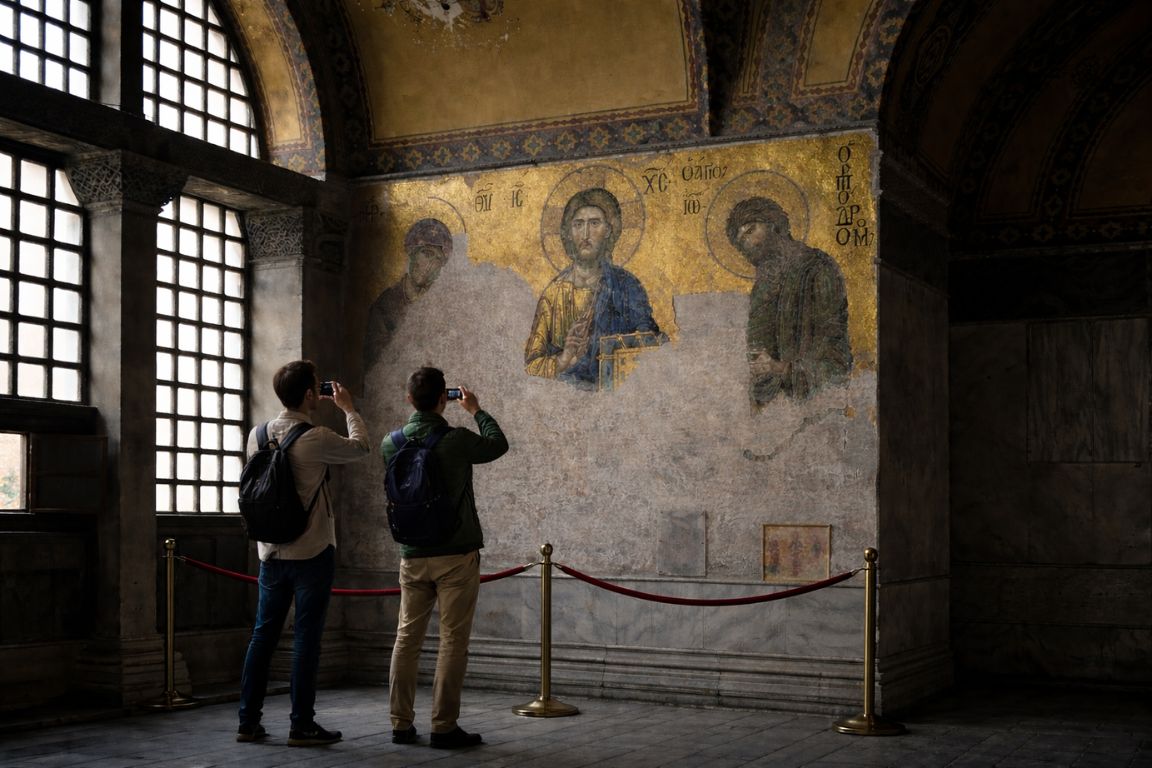 Self-guided visits offer three things a tour cannot: complete pace control, lower cost, and genuine solitude at individual stops. For visitors who arrive early on a weekday morning, do research in advance, download the audio guide before reaching the site (internet can be unreliable at the entrance), and move through the one-directional gallery at their own speed, the experience can be excellent. The audio guide included with the €25 ticket covers 20 stops in 23 languages and takes approximately 45 minutes of total content, enough for a well-oriented visit.
The pace argument is more significant at Hagia Sophia than at many other sites, for a specific reason: the gallery route is one-directional. You cannot go back. If you want to stand at the Deesis for 10 minutes, you need to step to the side to avoid blocking the flow of other visitors. On a weekday morning in October this is easily done. On a summer Saturday at 11:00 with tour groups moving through every 15 minutes, it is not. Self-guided visitors arriving at opening time on a quiet day genuinely have access to a quality of experience that a large group tour – arriving mid-morning with 12 others – cannot replicate.
Cost efficiency is also real. The €25 ticket includes the audio guide. Skipping a tour and adding nothing saves the €10 to €55 gap between the ticket price and a small-group tour. For budget travelers, couples, or experienced visitors returning to the building for a second time, the self-guided ticket represents strong value. Returning visitors in particular often prefer to be in control: they know which mosaics they want to focus on, they know to look for the Viking graffiti on the south gallery balustrade, and they don’t need a pre-entry briefing covering things they already know.
One practical advantage specific to very early morning self-guided visits: no group timing constraint. A tour group has a meeting time, a security queue window, and a structured flow that means they arrive at the Deesis at roughly the same time regardless of conditions. A self-guided visitor who arrives at opening can be at the Deesis before any tour group reaches that section, with the morning light through the dome’s windows at its most active. For photographers especially, the self-guided approach allows the kind of patient timing around crowds and light that group logistics make impossible.
Confused about whether Hagia Sophia is free to enter or not? Check out our Hagia Sophia tours tickets explained guide before you show up at the door.
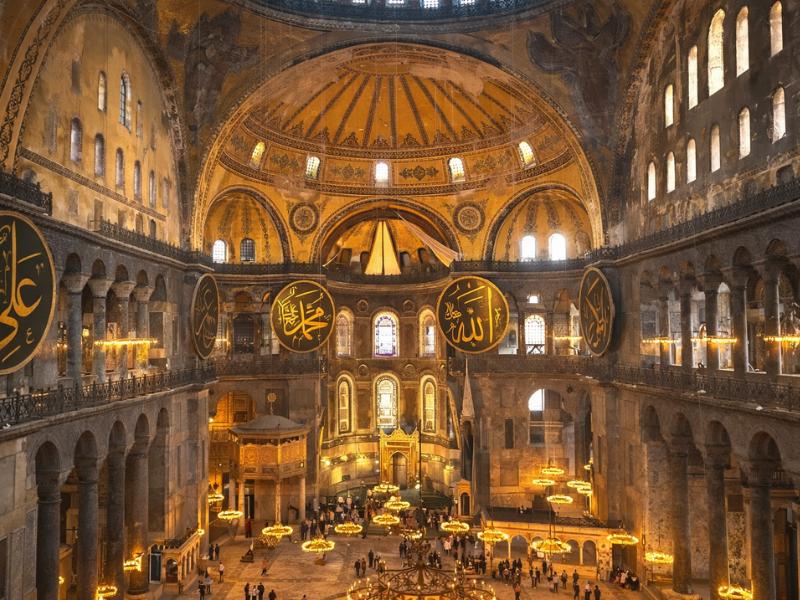
Explore at your own pace
Hagia Sophia gallery entry
Gallery entry · Smartphone audio
What would you linger over with no group to follow?Use smartphone narration and set your own pace through the gallery and mosaics.
Discover the Hagia Sophia Gallery →How Good Is The Official Audio Guide At Hagia Sophia?
 The QR-activated audio guide included with every €25 ticket is competent for general orientation but has specific limitations worth knowing. It covers approximately 20 stops with around 45 minutes of total content. The narration explains the main mosaics, the dome’s engineering, and the Ottoman additions at a level appropriate for first-time visitors. It does not go deep on the political context behind individual mosaics, the significance of specific iconographic details, or the relationship between the building’s Byzantine and Ottoman layers. Download the app before arriving – internet connectivity at the entrance is unreliable – and bring your own headphones, as rented headsets at the door add cost and a queue.
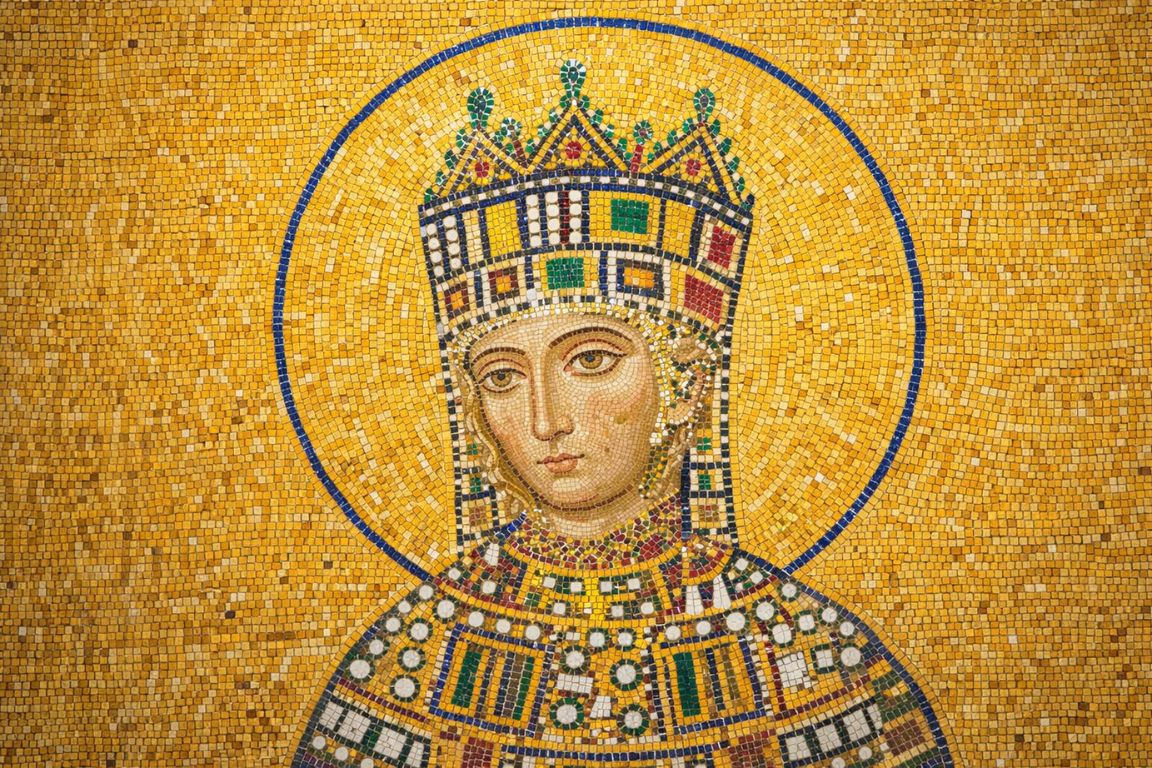
The audio guide covers what most first-time visitors need to leave the building with a basic understanding of what they saw. The Deesis gets explained; the Empress Zoe mosaic gets explained; the dome’s engineering principles get covered. The Ottoman additions – the calligraphy medallions, the mihrab, the Sultan’s lodge – are mentioned. For a visitor who does no advance research, the audio guide is substantially better than nothing.
Where it falls short is in depth and narrative connection. The guide describes what each mosaic depicts without consistently explaining why it was commissioned, what political moment it was responding to, or why the rendering style represents a departure from earlier Byzantine conventions. The Empress Zoe mosaic, for example, had its central male face altered at least twice as the empress remarried – a detail visible in the tile density if you know what to look for, and one of the most human stories in the building. The audio guide does not cover this. Neither does it explain that the Deesis mosaic’s naturalistic portrayal of Christ preceded Italian Renaissance humanism by approximately two centuries, which is the reason art historians consider it one of the most significant artworks in the world.
There is also a technical consideration that has generated negative reviews: connectivity. Hagia Sophia sits in a congested tourist area of Istanbul, and mobile data signal at the entrance and inside the gallery is variable. Multiple visitors in 2024 and 2025 reported being unable to access the audio content after entering because they hadn’t downloaded it in advance. The app needs to be downloaded and the content cached before you reach the building. This is a specific and preventable problem that happens often enough to be worth flagging explicitly.
This product offers English audio on your own phone; it does not promise the same content as another operator’s app. View The Ticket-And-Audio Option →
What Do You Miss Without A Guide At Hagia Sophia?
 Without a guide and without advance research, the typical self-guided visitor misses: the political story behind the Empress Zoe mosaic’s altered face; the pre-Renaissance naturalism in the Deesis that makes it historically significant beyond being decorative; the deliberate architectural lighting design and what it reveals about Byzantine theology; the Viking graffiti on the south gallery balustrade and the story of Varangian mercenaries in Byzantine service; the Dandolo tomb marker on the gallery floor and what it means that a Venetian doge who sacked Constantinople in 1204 is buried inside; the specific engineering breakthrough of the pendentive system and why it changed architectural history. The audio guide covers some of these; a good guide covers all of them with the context that makes them stick.
The mosaic narrative is the biggest gap. The gallery contains three major mosaics directly on the tourist route: the Deesis (c. 1261), the Empress Zoe panel (11th century), and the Komnenos mosaic (12th century). Each is a political document as much as a devotional image. The Empress Zoe mosaic shows an empress whose power was so significant that whoever held it had to validate themselves by marrying her, and the mosaic records this through altered faces. The Komnenos mosaic shows Emperor John II in a posture of deliberate piety, a calculated image reinforcing his legitimacy. The Deesis – the most famous of the three – dates from 1261, the year Constantinople was recaptured from the Latin occupiers, and its emotional naturalism is a statement about Byzantine cultural recovery as much as a spiritual appeal. None of this is apparent from looking at the mosaics without context.
The engineering story is a second gap. The building’s dome appears to float on a ring of light from 40 windows, an effect that is not accidental. The Byzantine architects Anthemius of Tralles and Isidore of Miletus were mathematicians, and the pendentive system they used to place a circular dome on a square base was a genuine structural breakthrough. Understanding this makes standing inside the building a different experience: you are not just in a large space, you are in a space that solved a problem no one had solved before, and the solution is still visible in the geometry above you.
The hidden details are a third category. Viking graffiti scratched into the marble balustrade of the south gallery by Varangian guards in the 9th century is one of the most viscerally historical objects in the building – physical evidence of Norse mercenaries passing through Constantinople while serving Byzantine emperors. Knowing to look for it, knowing what it says (the most legible inscription reads “Halvdan”), and knowing the story of the Varangian Guard turns an otherwise easy-to-miss scratch in stone into something that connects this building to a moment in medieval European history most visitors haven’t thought about since school. A guide points to it. The audio guide mentions it. Without either, most visitors walk past it completely.
Worried about missing the highlights in such an overwhelming space? Check out our what to see inside Hagia Sophia tours guide before your visit so you know exactly where to look.
Bring a short list of details and questions, starting with the Deesis and the imperial mosaics. Preparation also improves a DIY visit. Read The Gallery Highlights →
Which Type Of Tour Is Best For First-Time Visitors?
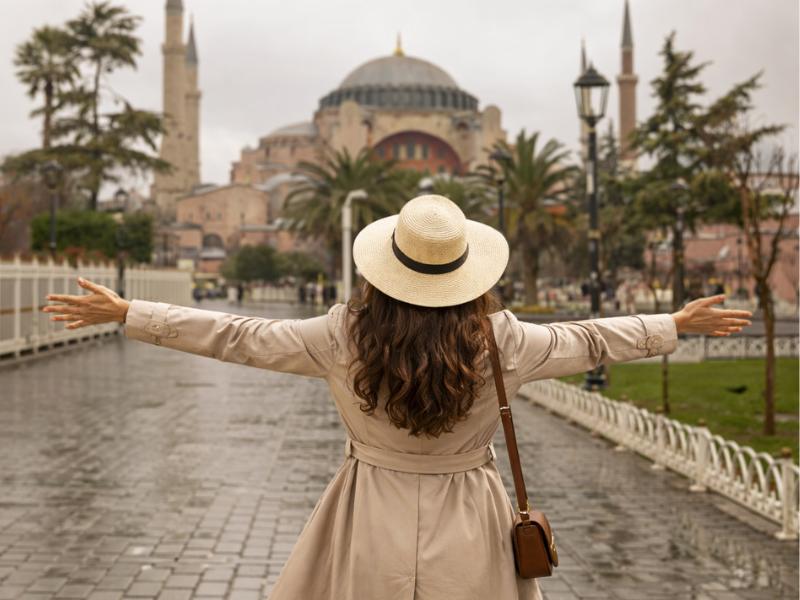
For first-time visitors, a guided tour delivers a meaningfully better experience than a self-guided one, specifically because Hagia Sophia has almost no interpretive signage inside the gallery. The one-directional route moves you past mosaics, architectural details, and historically loaded objects with minimal explanation posted on the walls. A first-time visitor without a guide or strong advance research faces the very real risk of walking the gallery in 30 minutes having registered that it was large and impressive but without understanding what they saw. A good guide prevents that outcome – not by doing something flashy, but by frontloading the 20 minutes of context that makes the 60 minutes inside comprehensible.
The “I could see it was impressive but I didn’t really understand it” reaction is common in self-guided Hagia Sophia reviews. It’s a building that rewards prior knowledge disproportionately. The mosaics are not labeled with anything beyond a brief identifying note. The architectural elements – the pendentives, the semi-domes, the narthex ramp, the marble door – are not explained as you pass them. The relationship between the Byzantine mosaics and the Ottoman calligraphy panels sharing the same walls, one of the most visually charged juxtapositions anywhere in the world, is not contextualised by any posted material.
This doesn’t mean self-guided is wrong for first-time visitors – it means that a self-guided first visit requires genuine advance preparation. Reading two to three detailed articles about Hagia Sophia’s history and architecture before arriving, understanding what the major mosaics are and why they matter, and knowing the one-directional route layout will produce a genuinely good self-guided experience. The visitors who leave disappointed from self-guided visits are almost always those who arrived with no preparation and relied on the audio guide alone.
For first-timers who prefer a guided option, small-group tours covering Hagia Sophia and the Blue Mosque in one 2.5 to 3-hour block represent the strongest value. They provide the pre-entry briefing, the skip-the-line ticket, the crowd management, and a second site in a single booking at a per-person cost that compares well against the time cost of doing the logistics independently.
Visiting Hagia Sophia for the first time and want to get it right? Here’s our best Hagia Sophia tours guide so you don’t leave wishing you’d booked something better.
Recommended tours by visit type
Hagia Sophia & Blue Mosque Small-Group Guided Tour
Pre-entry briefing, skip-the-ticket-line entry, and a second stop at the Blue Mosque. About 3 hours.
Hagia Sophia Skip-the-Line Entry Ticket
Ticket only, for visitors who have already read up and want to use the included audio guide at their own pace.
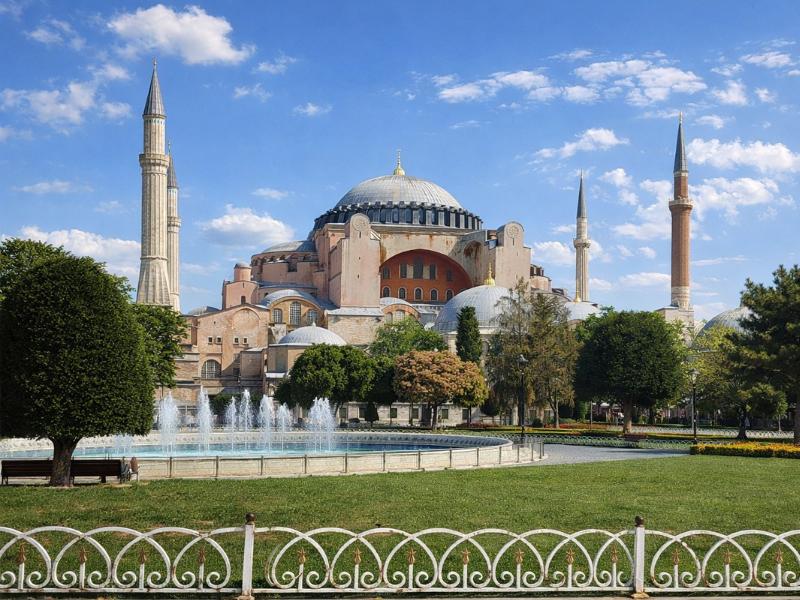
Exclusive Private Hagia Sophia Tour – Skip the Ticket Line
Private licensed guide and skip-the-ticket-line entry, useful when you need the pace set around your own group.
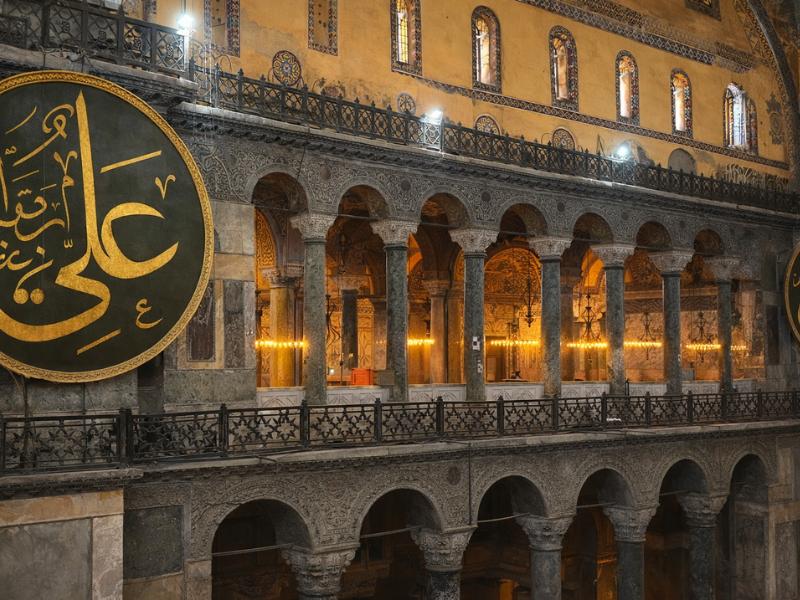
Hagia Sophia Guided Tour with Licensed Guide & Fast Entry
Hagia Sophia only: licensed guide, fast entry, and a focused briefing if you are not adding the Blue Mosque.
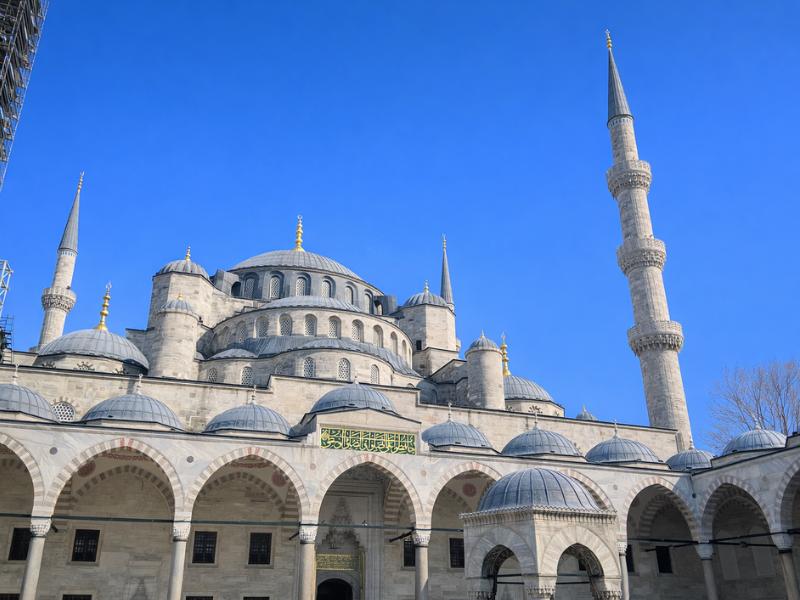
Connect the two mosques
Two mosques & Old Town walk
2.5–3 hours · English guided walk
Planning your first morning in the Old Town?Connect the two mosques and the Hippodrome with a guide before exploring more of Istanbul independently.
Check Dates for the Two-Mosque Walk →Which Option Works Best For Families With Children?
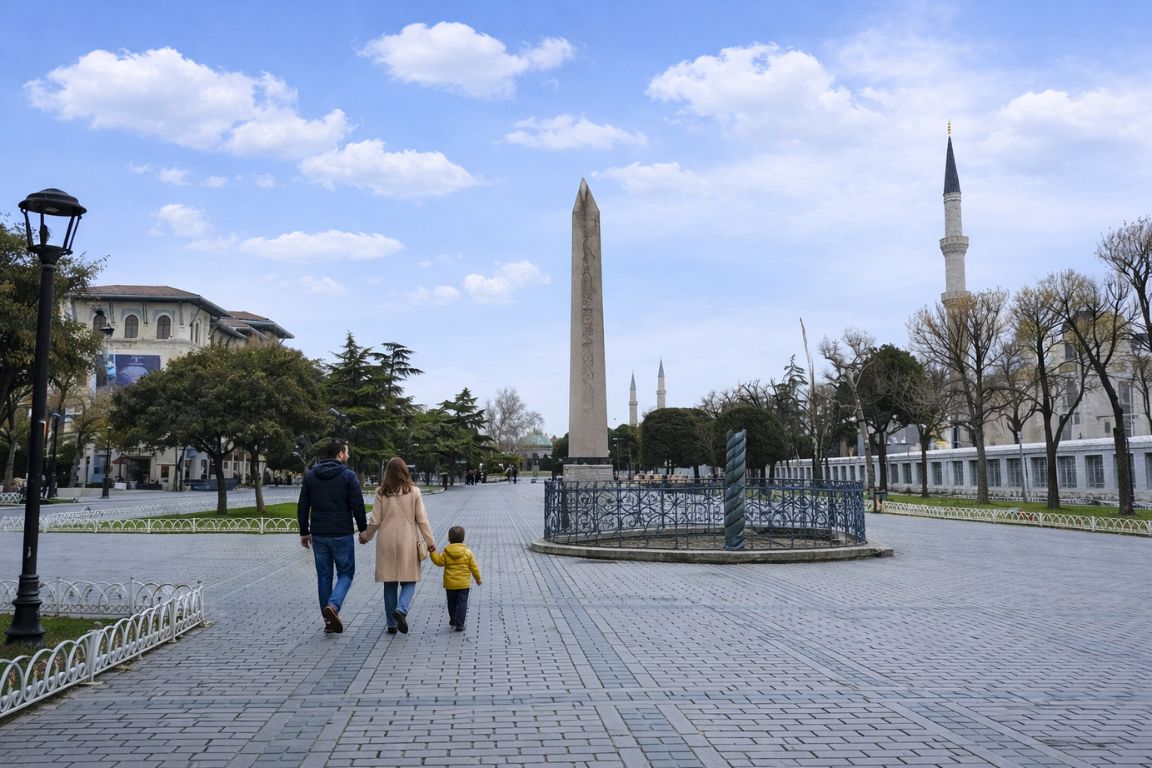 For families with children aged 8 to 14, a private guided Hagia Sophia tour is the strongest option because it allows the guide to pitch content at the right level, the pace to absorb breaks without schedule pressure, and the logistics to be handled by someone who isn’t simultaneously managing children and navigation. Children under 8 enter free. The one-directional gallery route and no seating mean there’s no obvious resting point for younger children mid-visit. Private tours eliminate the “keeping up with a group” dynamic that makes a structured visit with young children genuinely difficult.
The pacing argument for private tours becomes more concrete when you consider Hagia Sophia’s physical layout. The tourist entrance ramps up into the gallery, the route is one-directional through an enclosed corridor system, and there are no benches or seating areas for children who need to rest. On a summer day, the gallery temperature is also warm. A family with a 5-year-old and a 10-year-old moving through this environment while simultaneously trying to absorb content from an audio guide or navigate a large group tour is genuinely hard work. A private guide absorbs all the logistics, adapts the content to the children’s age, knows which stories land with kids (the Viking graffiti, the wishing column, the Venetian doge buried inside a mosque), and manages the pacing around whatever the family needs.
For older children and teenagers with genuine history interest, a small-group tour works well. The group size keeps the experience social while the guide provides structure. Review-based selection matters here: look for guides specifically described as good with families or who frame content with accessible stories rather than purely academic delivery. The best small-group guides for mixed ages thread historical narrative with the kind of human-scale detail that keeps teenagers engaged: why was a Venetian doge buried inside a Byzantine mosque, who scratched graffiti into that marble 1,200 years ago, and what exactly did the Ottoman architects do with Christian mosaics they couldn’t bring themselves to destroy.
The self-guided option with children is viable but requires an early start. A family arriving at opening on a weekday in shoulder season will find the gallery uncrowded enough to move at their own pace, stop for breaks, and spend time at the details children respond to. The audio guide’s content is not pitched at children but most children who’ve been given a brief of what they’ll see beforehand engage well with the mosaics specifically. Arriving after 10:30 on any day with children is the scenario to avoid: the gallery gets crowded, the one-directional flow creates pressure to keep moving, and the experience narrows to getting through rather than experiencing the building.
Children under 5 may find this walk challenging. A private booking does not remove the walking; confirm your family’s needs first. Review The Family Constraint →
Practical Planning Points For Your Visit
| First-time visitors who rated guided tour as “significantly better than expected” | Consistently highest when guide delivered strong pre-entry briefing covering mosaic political context |
| Self-guided visitors who wished they had more context while inside | Most common feedback from those who relied solely on the in-gallery audio guide without advance preparation |
| Families who chose private tour over small-group | Pacing flexibility and child-appropriate content delivery rated as primary reasons |
| Returning visitors who preferred self-guided on second visit | Pace control and ability to linger at specific mosaics cited consistently; typically arrived before 09:30 |
| Cruise passengers who rated logistics assistance as the main value of guided tour | Fixed port windows make timing management and skip-the-line access disproportionately valuable |
The pre-entry briefing is where the difference is made and lost. It’s what we have spent 15 years refining. See the format on the licensed-guide Hagia Sophia tour.
Use your actual party size and quotes to judge the extra cost of guidance. Compare Your Party Totals →
Guided Vs Self-Guided: Which Should You Choose?
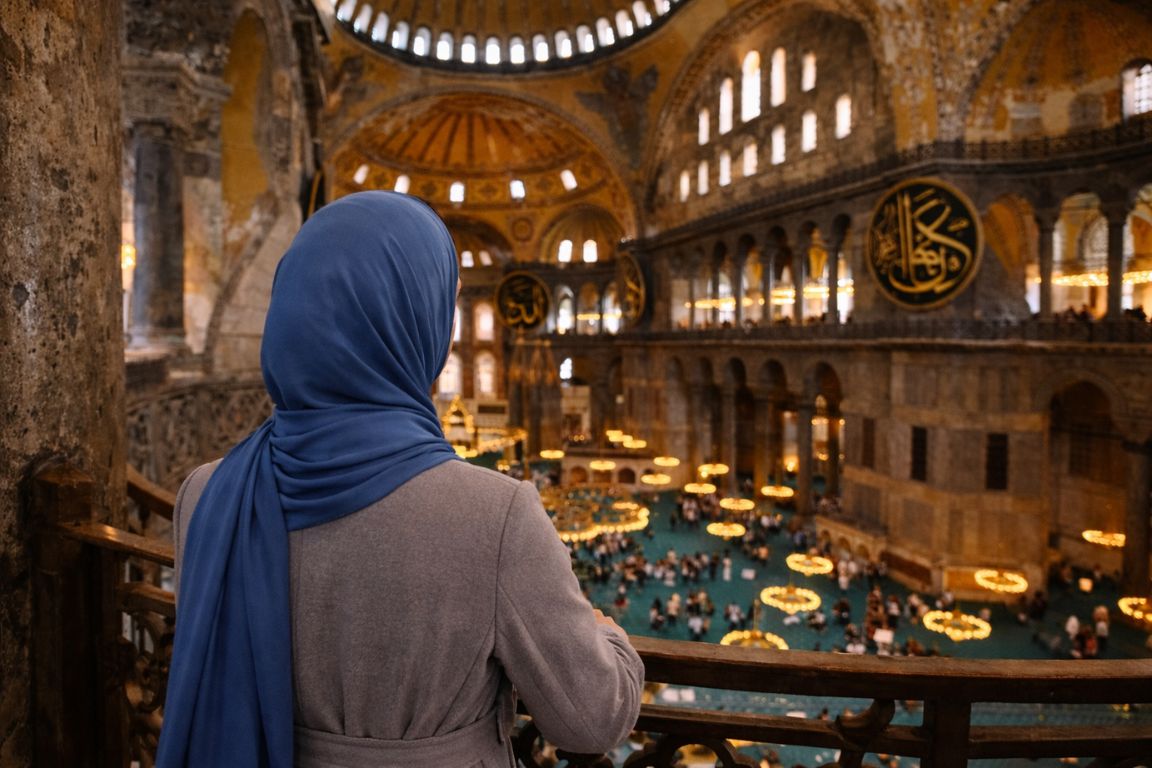 Choose guided if: it’s your first visit and you want to understand what you’re seeing; you have limited time in Istanbul and need logistics managed; you’re traveling with children or older family members; you’re a cruise passenger with a fixed schedule; or you find the historical layering of Byzantine and Ottoman art genuinely interesting and want expert framing. Choose self-guided if: you’ve researched the building seriously in advance; you’re a returning visitor; you strongly prefer your own pace; you’re visiting early on a weekday when crowds are minimal; or cost is a primary constraint. There is no universally correct answer – the right choice is the one that matches how you like to travel and what you’re prepared to bring to the visit yourself.
The honest framing is this: Hagia Sophia is a building that rewards knowledge. It is not self-explanatory. The mosaics don’t tell you they are politically coded images of imperial legitimacy. The dome doesn’t announce that it represents an engineering breakthrough that changed architectural history. The Viking graffiti doesn’t explain itself. A guide frontloads the knowledge. Advance research achieves the same thing. The audio guide provides a middle ground. The visitor who walks in with no preparation and no guide will likely leave impressed but not illuminated.
For first-time visitors, we lean toward a guided small-group visit. Not because self-guided is bad, but because the gap between a prepared and unprepared visit is larger here than at almost any site we work with. The building has 1,500 years of layered history compressed into a single gallery route that takes 45 to 60 minutes. A 25-minute pre-entry briefing from a knowledgeable guide fills that compression differently than an audio guide walking you stop by stop through the same route.
For independent travelers who travel with a guidebook or who research their destinations thoroughly, self-guided is completely viable, and arguably more satisfying, because you are in control of the experience. The best self-guided visits we’ve observed have one thing in common: the visitor arrived knowing the Deesis by name, knowing who Empress Zoe was, knowing why the dome appears to float, and knowing to look for Viking runes. That kind of preparation takes two or three hours of reading before the trip. Against the cost of a guided tour, it’s worth knowing the trade-off.
Wondering whether you need a guided tour or can explore Hagia Sophia independently? This how to visit Hagia Sophia tours guide covers the honest trade-offs between going solo and booking a guide.
Choose the questions and pace you want before deciding whether to pay for a guide. Find Your Guided Or DIY Format →
Frequently Asked Questions
Can guides go inside Hagia Sophia’s upper gallery?
No. Since the January 2024 visitor management changes, professional guides are not permitted inside the upper gallery. Guides deliver their full briefing before entry and accompany the group, but cannot narrate once inside. The substantive guidance happens outside the gate. This makes the pre-entry briefing the defining quality difference between guided tour operators.
Ask the chosen operator how its current inside/outside guiding format works. Review Operator Questions →
Is the free audio guide good enough for a self-guided visit?
It’s adequate for orientation but not deep context. The QR-activated guide covers about 20 stops in 23 languages with roughly 45 minutes of total content. It identifies the major mosaics and explains the architectural basics. It doesn’t cover the political stories behind individual panels or the significance of specific iconographic details that make the mosaics historically important. Download the app before arriving – connectivity at the entrance is unreliable.
For independent English audio, select the ticket-and-audio option and download ahead. Choose Audio Entry →
What do guided tours actually include?
Small-group tours typically include a skip-the-line ticket, a licensed guide for a full pre-entry briefing, accompaniment through the gallery, and usually a second site (Blue Mosque) in a 2.5-3 hour format. Private tours offer the same with exclusive pacing for your group. Admission is not included in every tour price. Read the selected option’s inclusion list. Guides cannot narrate inside the gallery since 2024 but remain available for questions throughout.
The shared admission-inclusive option differs from the private English option without tickets. Read The Actual Walk Inclusions →
Does a guided tour skip the security queue?
No. The security queue – the metal detector and X-ray scanner everyone must pass through – cannot be bypassed by any ticket type. Guided tours include a skip-the-line ticket that bypasses the separate ticket booth queue only. The security queue in peak summer runs 20 to 60 minutes and applies to all visitors equally.
Keep security time outside any promised ticket-queue saving. Match Your Time Budget →
Which is better for families with young children?
Private guided tours work best for families, because pacing can adjust around children without group schedule pressure, content can be pitched at the right age level, and logistics are handled without the parent juggling navigation and childcare simultaneously. Small-group tours work well for older children and teenagers. Self-guided visits with children are viable but require an early morning start to avoid congestion in the one-directional gallery.
Children under 5 may find the walking tour challenging; confirm suitability before paying. Review Family Needs →
Is a guided tour worth it for a second visit to Hagia Sophia?
Generally no. Returning visitors typically know the building’s history and benefit more from the pace control of a self-guided visit, which allows lingering at specific mosaics without group dynamics. The exception is a private tour with a specialist guide specifically focused on aspects of the building the visitor hasn’t explored before, such as Byzantine iconography, structural engineering, or Ottoman architectural additions.
The pre-entry briefing is everything.
Guides can’t go inside. That’s been true since 2024. What they can do is spend 25 minutes before you walk through that gate making sure the mosaics, the dome, the Viking graffiti, and the Ottoman calligraphy mean something to you when you see them. Compare options on our best Hagia Sophia tours page.
Keep ticket inclusions and meeting arrangements visible when making the final choice. Review The Matched Options →
If you know the history already, gallery entry keeps your pace flexible. Choose Independent Entry →