Is Hagia Sophia Free to Visit?
Two entrances, two answers. Worship is free, the tourist route is not, and knowing the difference decides which queue you join.
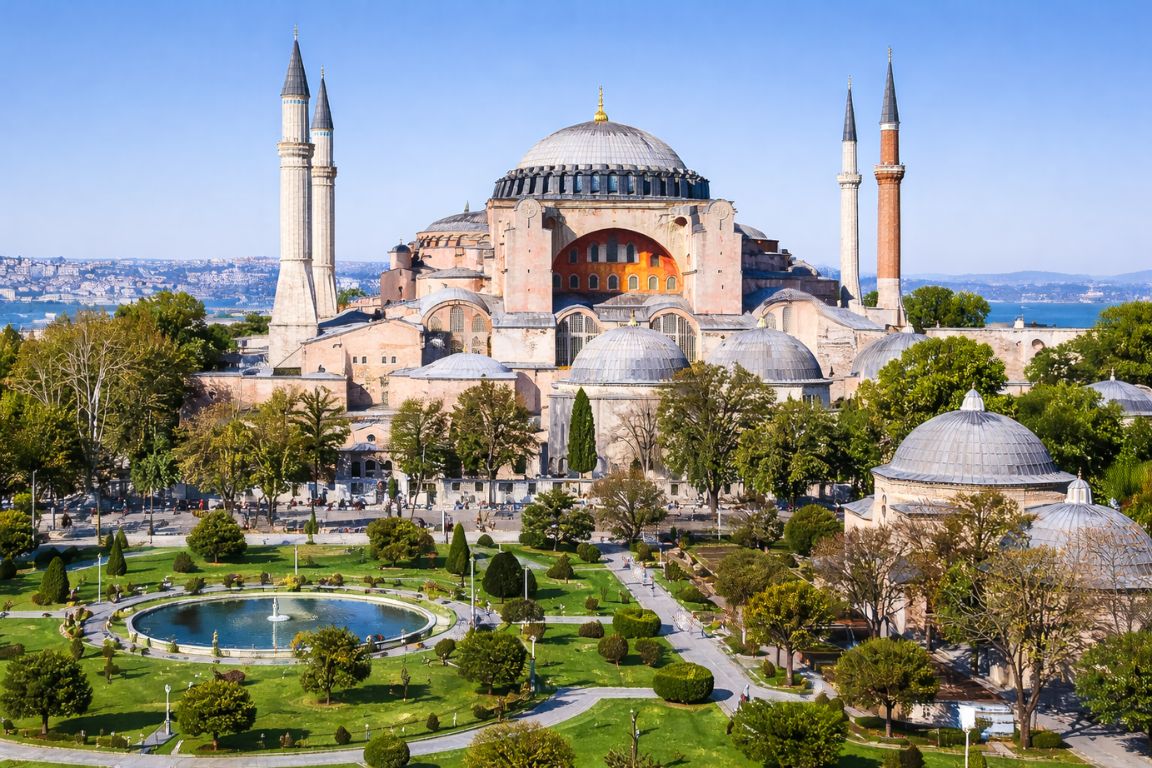
Two queues form outside Hagia Sophia most mornings, and they do not pay the same price. One moves toward the door on the Sultanahmet Square side, where worshippers walk in free of charge. The other runs along the northeast face of the building, across from the Sultan Ahmed III Fountain, where a booth sells a ticket. Same building, two access systems. Almost every argument online about whether Hagia Sophia is free comes down to which of those two doors the writer had in mind.
Keep worship access and sightseeing tickets separate. For a gallery visit, compare the current checkout total and child rules; for a free cultural stop, plan the Blue Mosque. Choose Free Sightseeing Or Paid Entry ↓
Booking Summary: In brief: select the exact ticket option, check child and access requirements, and leave time for security. Blue Mosque admission is free; guidance is optional.
Is Hagia Sophia Free To Visit?
Partly, and the split is what trips people up. Hagia Sophia has been an active mosque since 2020, so entering to pray costs nothing. Foreign tourists visiting to see the building pay €25 per adult, a fee introduced in January 2024, and enter through a separate gate leading to the upper gallery. Children under 8 go free with ID.
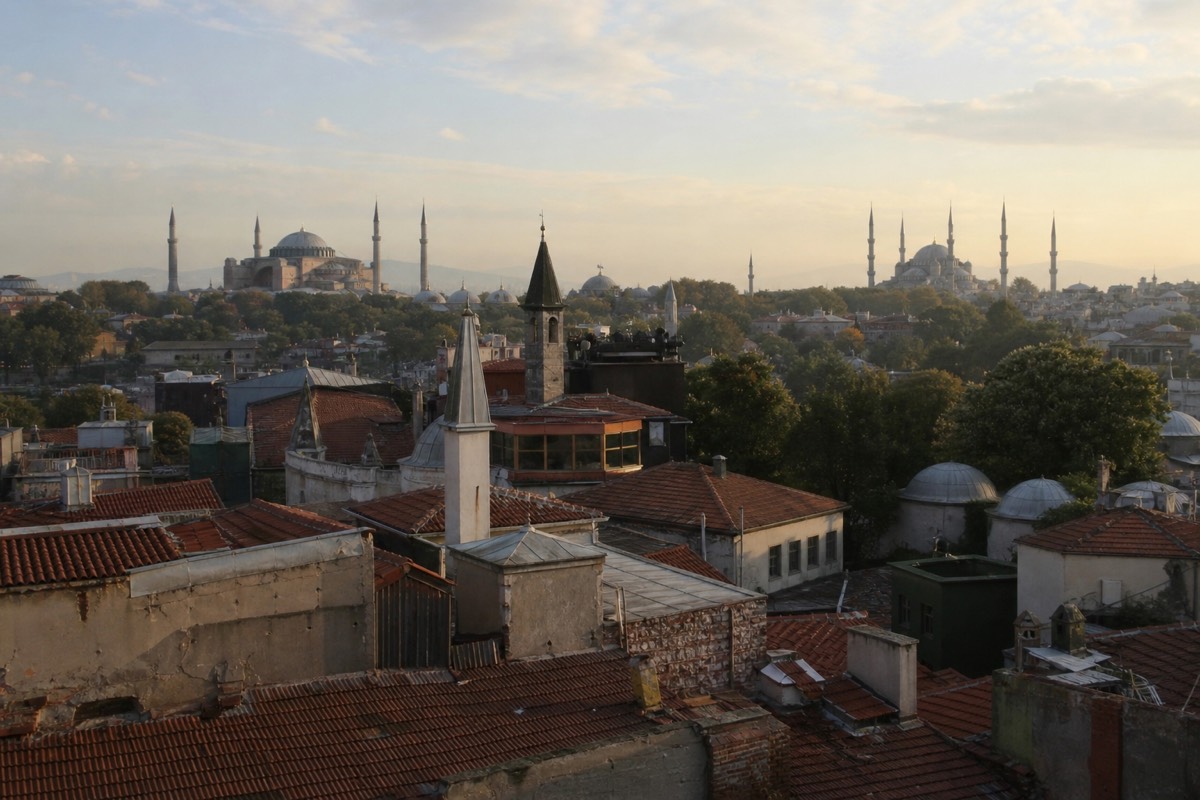
Before 15 January 2024 the building was free for everyone, tourist and worshipper alike. Turkey's Ministry of Culture and Tourism then restructured how outsiders reach it, pulling the cultural visit apart from the religious one and routing sightseers along a dedicated path through the upper galleries. The rate has held at €25 since, though a figure set by a national ministry can move, so confirm it before you travel rather than budgeting off an article.
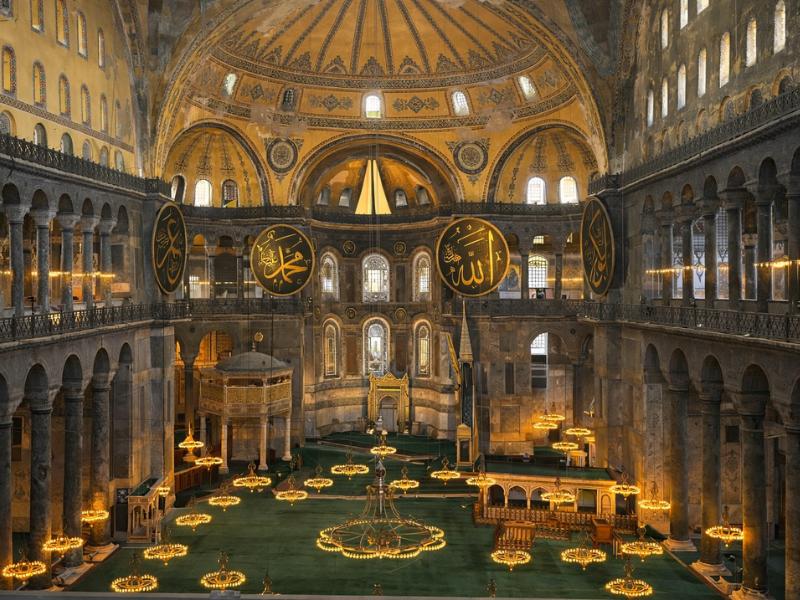
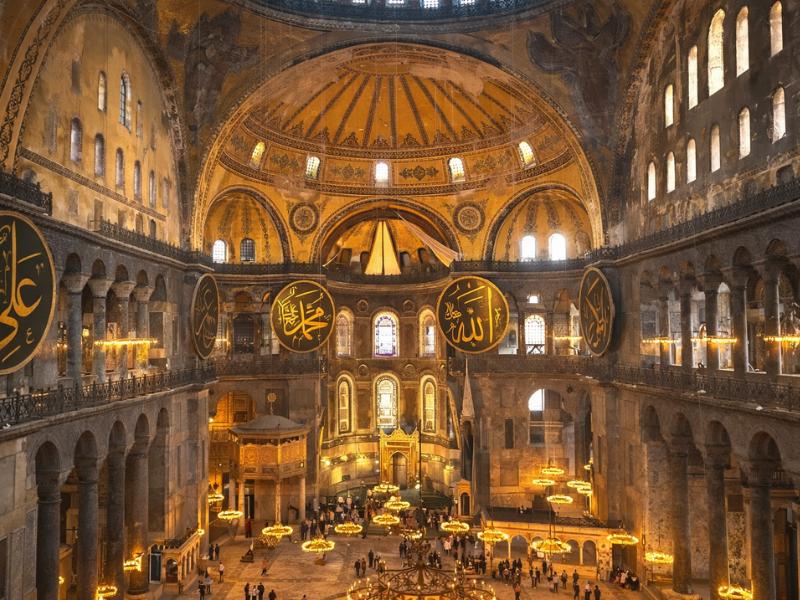
What the fee buys is specific. You get the U-shaped gallery circuit above the nave, the Byzantine mosaics along it, the Marble Door, the Viking runic graffiti scratched into a balustrade by a mercenary of the Varangian Guard, and an augmented-reality audio guide in 23 languages that opens from a QR code at the entrance. You do not get the ground floor. That surprises more than half of first-time visitors, and the full breakdown of what the €25 ticket covers is worth reading before you queue for anything.
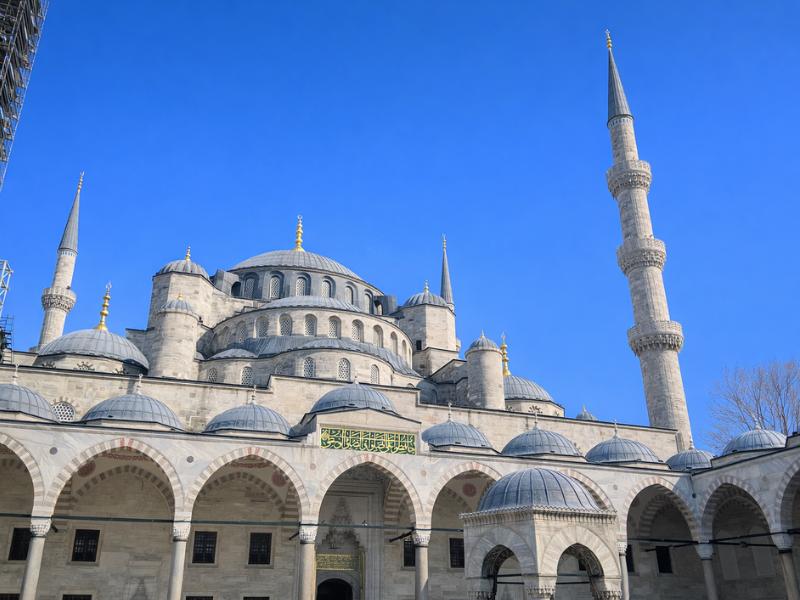
For a free sightseeing interior, choose the Blue Mosque. Worship access at Hagia Sophia is not a sightseeing-ticket workaround. Plan The Free Blue Mosque Visit →
What Separates The Free Entrance From The Paid One?
Function, not price. The free entrance leads to the ground-floor prayer hall and exists for worship. The paid entrance leads up a ramp to the upper gallery, the tourist circulation route created in 2024. The two do not connect. There is no stairway down to the prayer floor, and staff turn back anyone who looks for one.
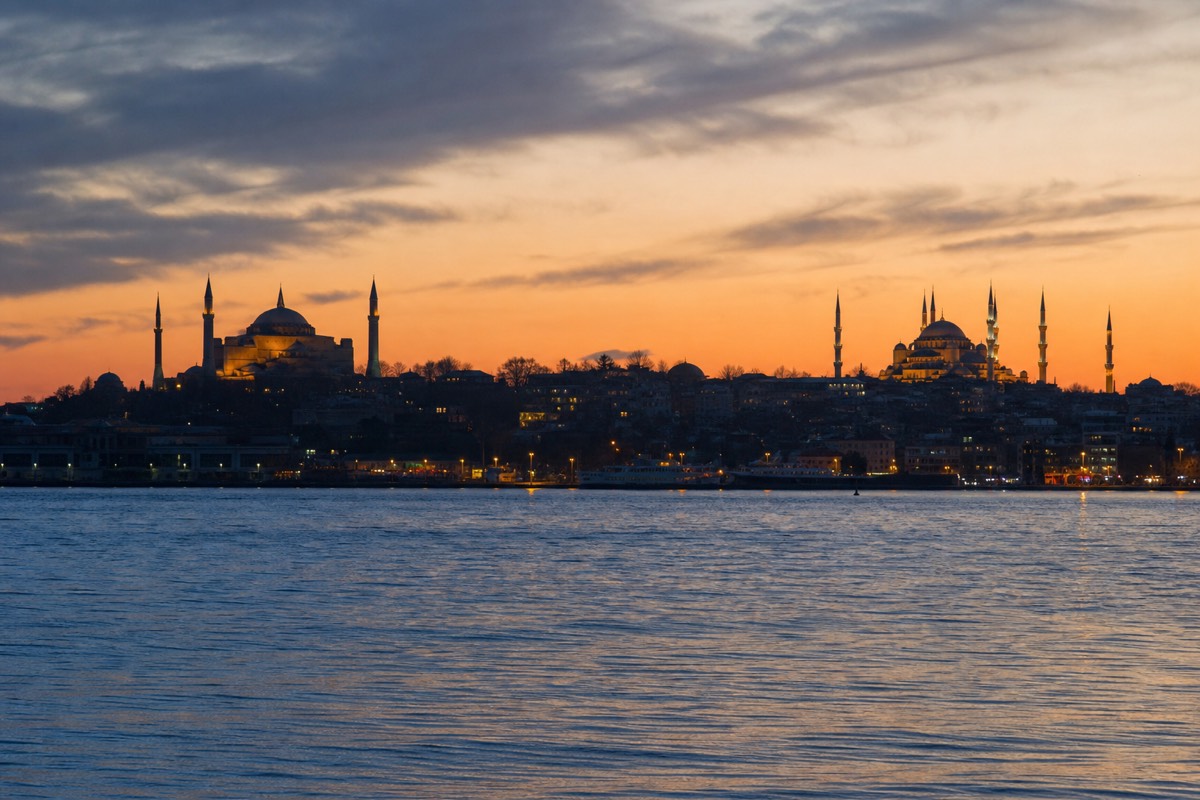
Geography matters here more than most guides admit. The ticket booth and the tourist gate sit together on the northeast side, next to the Imperial Gate of Topkapi Palace, facing the Sultan Ahmed III Fountain. Visitors who walk to the grand entrance on the square side, the one that photographs well, have found the worshippers' door instead and lost twenty minutes to the correction. The fountain is the landmark to aim for. If you can see it, you are standing in the right place.
Once inside, the route is one-directional: ramp up, gallery circuit, ramp down, out. You look over the railing at the prayer hall below and at the dome from a height Justinian's congregation never saw it from, then you follow the path to the exit. Nobody browses. In peak summer that ticket queue alone runs 60 to 90 minutes, which is the case for booking ahead: a pre-booked skip-the-line entry ticket removes the booth wait, though the security screening applies to every visitor regardless.
Explore at your own pace
Hagia Sophia gallery entry
Gallery entry · Smartphone audio
What is waiting beyond the tourist entrance?Explore the mosaics and the elevated gallery view with audio. This is the paid sightseeing route, not worship access.
Discover the Hagia Sophia Gallery →Who Actually Gets In Free?
Turkish citizens entering to pray, and children under 8 with ID or a passport. That is the complete list. There is no student rate, no senior rate, no EU concession, and no combination of passes that produces free entry. Foreign Muslim visitors making a cultural visit pay the same €25 as everyone else on the tourist route.
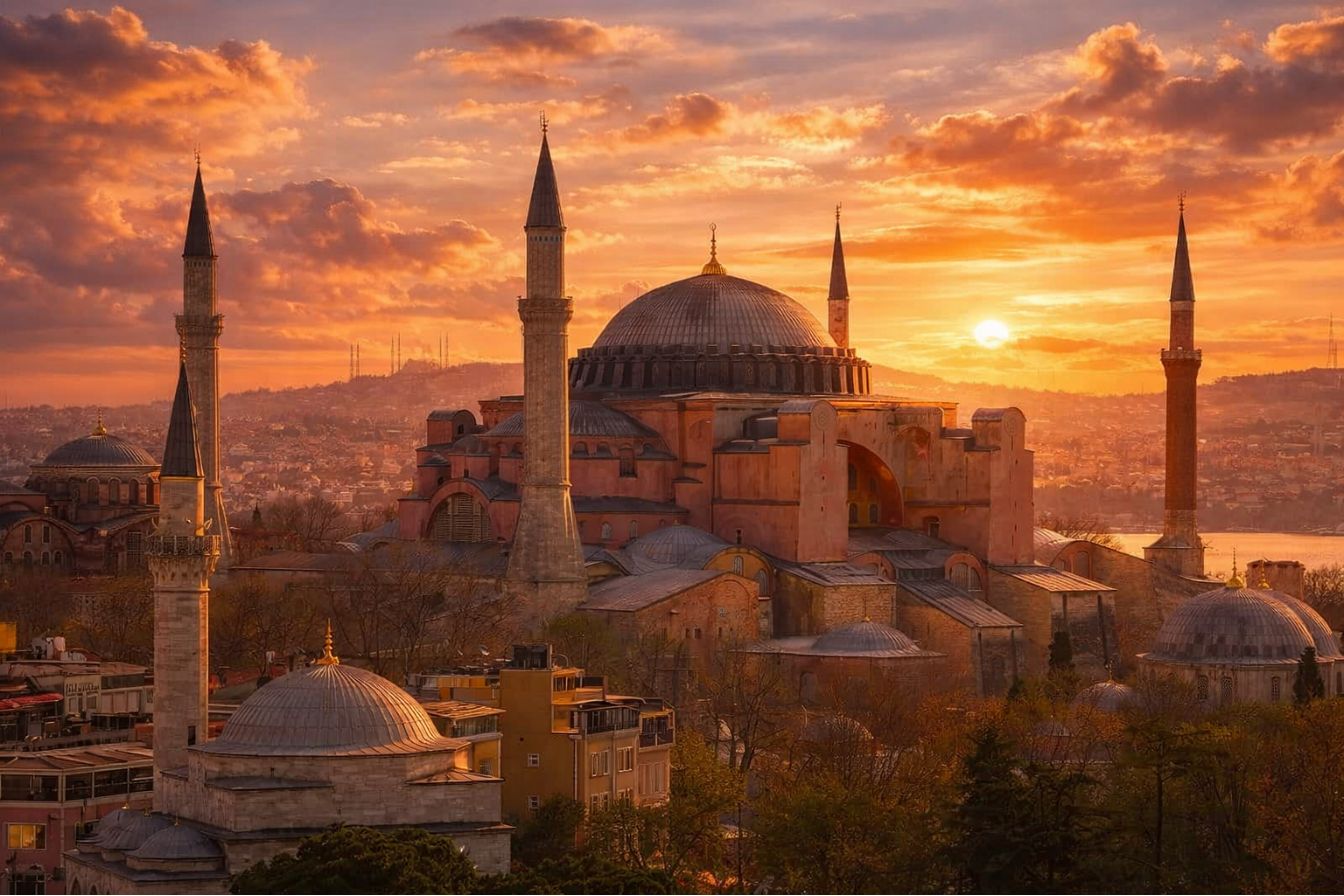
The Museum Pass Istanbul is the one that catches well-prepared travelers. It was valid here once, back when the building held museum status, and plenty of older articles still say so. It has not covered Hagia Sophia since the 2020 reconversion, and no tier of the pass changes that. If you have bought one for Topkapi and the other state museums, treat Hagia Sophia as a separate line in the budget.
One genuinely free thing sits two minutes from the exit and most people walk straight past it: the Sultan Tombs, a cluster of imperial mausoleums with some of the finest Iznik tilework in the city, open at no charge. If the €25 stings, that is where to recover some value.
| Visitor | Cost | Which entrance |
|---|---|---|
| Foreign tourist, adult | €25 | Northeast tourist gate, upper gallery route |
| Child under 8 | Free with ID or passport | Northeast tourist gate, with an adult |
| Turkish citizen attending prayer | Free | Worshippers' entrance, ground-floor prayer hall |
| Foreign Muslim visitor sightseeing | €25 | Northeast tourist gate, upper gallery route |
| Museum Pass Istanbul holder | €25, the pass is not valid here | Northeast tourist gate, upper gallery route |
| Student, senior or EU citizen | €25, no concession exists | Northeast tourist gate, upper gallery route |
The provider’s listing currently gives a different child cutoff from the inherited article. Enter ages on the booking page and confirm the total before paying. Review Child Ticket Terms →
How Do Prayer Times Affect A Paid Visit?
On Fridays the tourist area shuts completely from 12:00 to 14:30 for congregational prayer, and no ticket type overrides it. Your ticket stays valid; you simply wait. On other days the five daily prayers bring partial restrictions of roughly 20 to 40 minutes, with barriers placed and staff steering gallery traffic rather than clearing it.
The Friday window is the expensive mistake, because it lands exactly when a lot of people plan to arrive. A booked time slot inside it will usually be adjusted by the operator in advance. A ticket bought at the booth that morning will not be, and the €25 buys you an afternoon rather than a midday. Plan Friday visits before 11:30 or after 14:30, and check the date if your trip overlaps Eid al-Fitr or Eid al-Adha, when the building closes to visitors for holiday prayers.
Whichever door you use, the same dress standard applies: shoulders and knees covered, a headscarf for women, shoes off at the carpet. The full dress code and entry rules are covered separately, and getting them wrong at the barrier can cost you the queue advantage you just paid for. For anyone who would rather have the timing, tickets and prayer calendar handled by someone else, a small-group tour with an expert guide and skip-the-line entry builds the closures into the schedule instead of colliding with them.
The free-versus-paid question also carries a second assumption worth correcting, that the 2020 handover somehow closed the building to outsiders. It did not, and what the 2020 mosque conversion actually changed is a shorter story than the headlines suggested. Hagia Sophia has stood since 537, built under Emperor Justinian, and it has never been closed to curious foreigners for long. If you want the visit framed by someone who knows the building, compare guided Hagia Sophia tours before you book a bare ticket.
Confirm your date around worship arrangements and leave time for security with any ticket. Plan Entry For Your Date →