Can You Still Visit Hagia Sophia? The 2020 Mosque Conversion Explained
The museum years ended in 2020 and the visiting rules changed, but the doors never closed. Here is what the reconversion actually did.
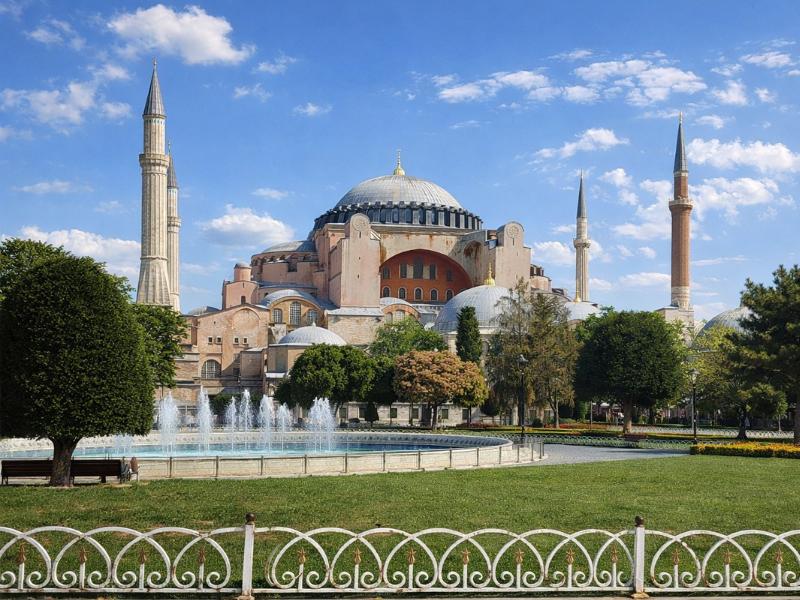
Hagia Sophia spent 85 years as a museum. That run ended in July 2020, when the Turkish government reconverted the building into a working mosque, and the news generated a wave of travel advice that is still circulating in garbled form. The most persistent garble is that visitors can no longer go in. They can, roughly 17,000 to 20,000 of them a day in peak season, and the queue outside on an August morning is proof enough.
A cultural visit is still possible. Choose a ticket for the visitor gallery, and confirm the current tour format if you want a guide as part of the day. Choose Your Gallery Visit ↓
Booking Summary: In brief: select the exact ticket option, check child and access requirements, and leave time for security. Blue Mosque admission is free; guidance is optional.
Can You Still Visit Hagia Sophia?
Yes. The building is open to visitors daily, 09:00 to 19:00 and from 08:00 between April and October, with last entry at 18:30. Since January 2024 foreign tourists buy a €25 ticket and follow a dedicated route through the upper gallery. The 2020 conversion changed the legal status and the visiting path, not whether outsiders are welcome.
Non-Muslims are not restricted from entering. Nobody is asked their religion at the gate, and the tourist route is designed for exactly this traffic: a ramp up to the gallery, a circuit above the nave, a ramp back down. What the conversion did was end the museum arrangement in which the whole floor plan was a visitor attraction. The ground floor now belongs to worship, and sightseers watch it from above.
The practical upshot is that any visit report written before 2024 describes a building you will not recognise on arrival. Free entry, ground-floor access, guides delivering commentary inside: all three were true once, none are true now.
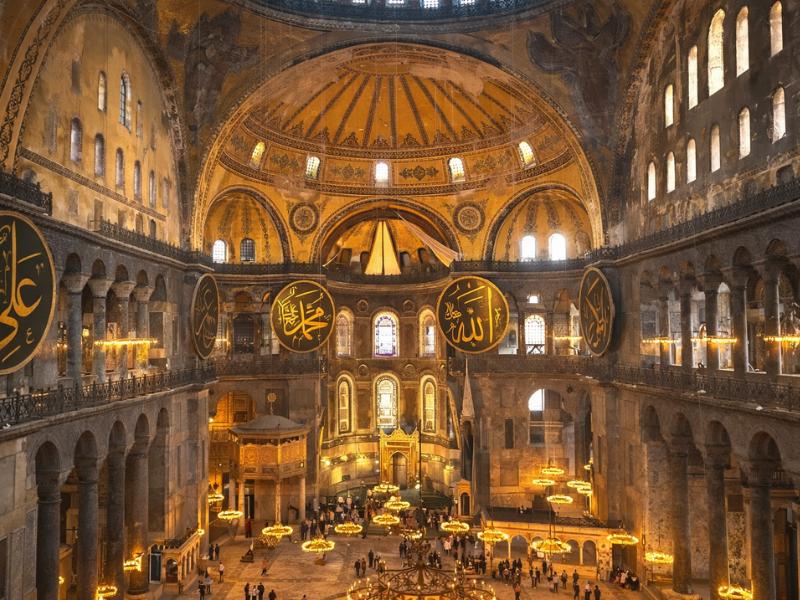
Explore at your own pace
Hagia Sophia gallery entry
Gallery entry · Smartphone audio
What can visitors discover inside today?Explore the visitor gallery, its mosaics and the view over the nave with smartphone audio.
Discover the Hagia Sophia Gallery →What Actually Changed With The 2020 Mosque Conversion?
Four things. The museum status ended and Hagia Sophia became a working mosque. The five daily prayers resumed, with the ground floor reserved for them. The Christian mosaics were covered during prayer with movable curtains and screens rather than removed or destroyed. And in 2024 a fee, a separate tourist entrance and a gallery-only route were added on top.
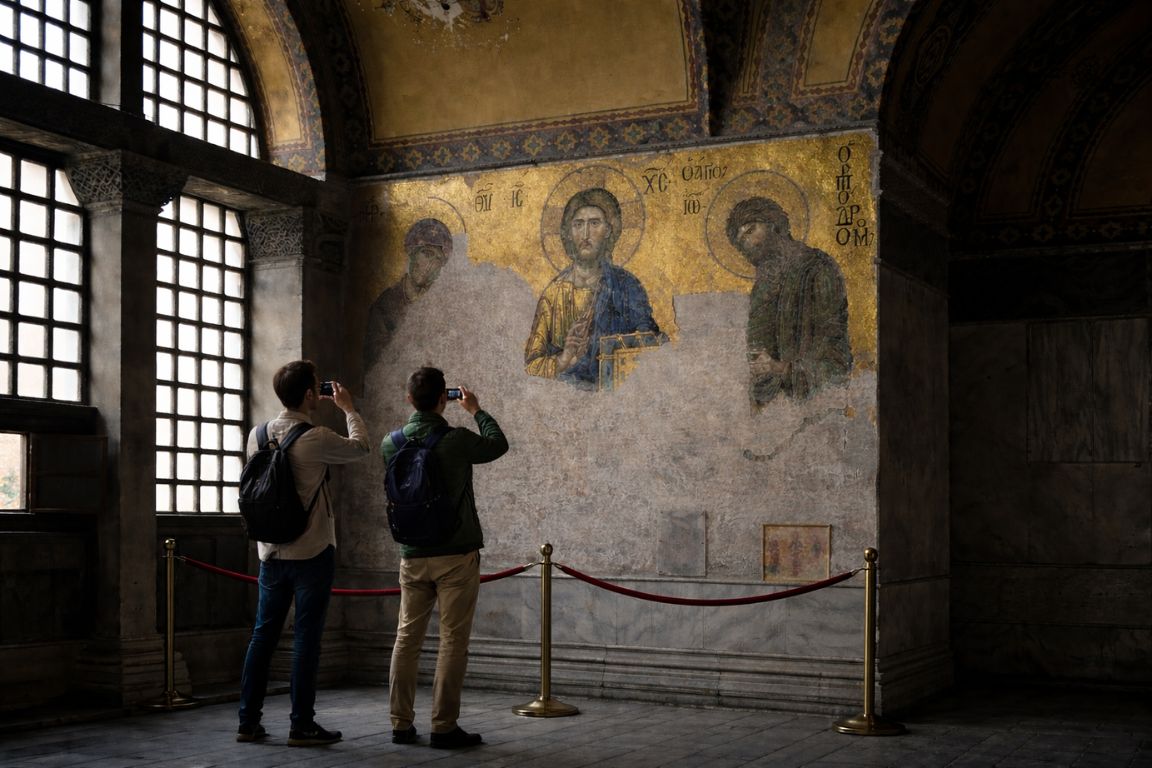
The mosaic question is the one that generates the most anxiety, and the answer is more reassuring than the debate suggested. Nothing was chiselled off or plastered over. The figural mosaics on the ground floor are screened during prayer times using curtains and movable panels, then uncovered again. The great works on the tourist route, the Deesis with its extraordinarily human face of Christ, the Empress Zoe panel with its twice-altered portrait, and the Komnenos family group, sit in the upper gallery and are visible throughout the visiting day.
The 2024 layer is the one that reshapes an itinerary. Guides are no longer permitted to lead commentary inside the visiting area, so operators brief their groups outside and accompany them in. An augmented-reality audio guide in 23 languages comes with the ticket and fills part of that gap, but it runs on its own schedule and answers no questions. For a first visit, a private Hagia Sophia tour that skips the ticket line gets the context delivered properly before you walk up the ramp.
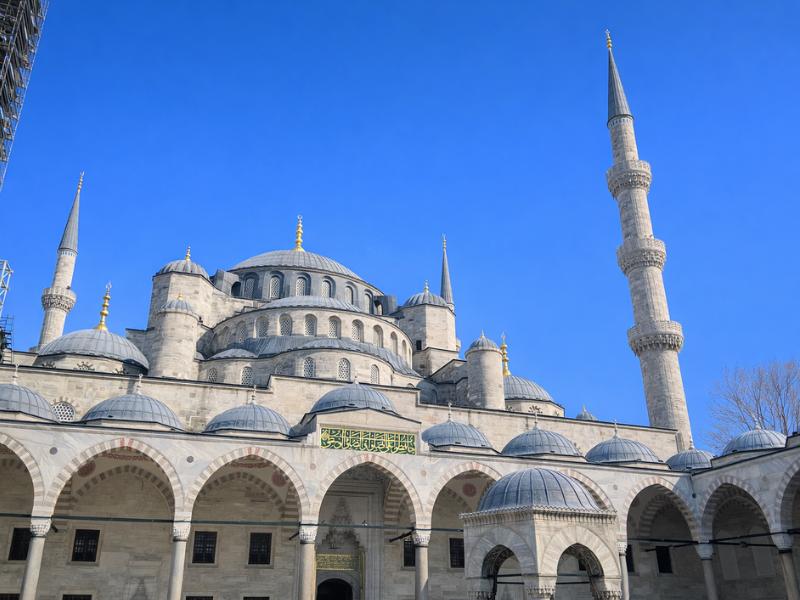
Connect the two mosques
Two mosques & Old Town walk
2.5–3 hours · English guided walk
Have your Istanbul travel date?Connect Hagia Sophia’s changing history with the Blue Mosque on a guided Old Town walk.
Check Dates for the Two-Mosque Walk →How Does The Timeline Run From 537 To 2020?
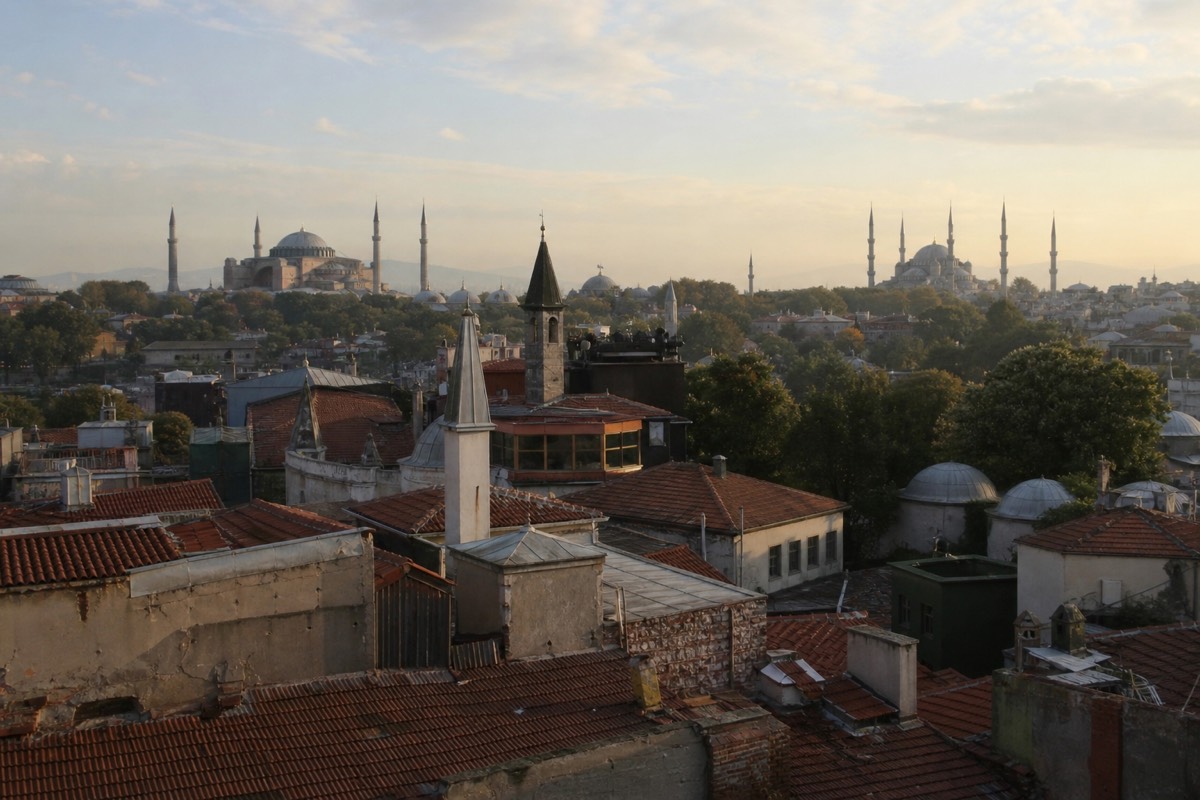
Hagia Sophia has changed religious hands five times. Built between 532 and 537 under Justinian I, it served as an Orthodox cathedral, was held as a Catholic one after the Fourth Crusade, returned to Orthodoxy in 1261, became a mosque in 1453 under Mehmed the Conqueror, became a museum in 1935, and returned to mosque status in 2020.
| Period | Status | What it meant |
|---|---|---|
| 532 to 537 | Built under Justinian I | First service held on 27 December 537 |
| 537 to 1204 | Eastern Orthodox cathedral | Seat of the Patriarch of Constantinople |
| 1204 to 1261 | Roman Catholic cathedral | Imposed after the Fourth Crusade sacked the city |
| 1261 to 1453 | Eastern Orthodox again | Restored after the Byzantine reconquest |
| 1453 to 1935 | Ottoman mosque | Converted immediately after the conquest of Constantinople |
| 1935 to 2020 | Museum | Secularized by decree in 1934, opened to the public in 1935 |
| 2020 onward | Working mosque | Daily prayers resumed; mosaics covered at prayer times, not removed |
Read as a sequence, 2020 looks less like a rupture and more like the sixth entry in a long list. The museum era, from 1935 to 2020, was the shortest chapter of the six and the only one in which the building held no religious function at all. That is the era most Western visitors grew up picturing, which is why the change registered as such a shock. The building itself is inscribed as part of the Historic Areas of Istanbul on the UNESCO World Heritage list, a status unaffected by what happens inside it. The longer version of this story, including the marble slab in the south gallery marking the grave of the Venetian doge who led the 1204 sack, is set out in the guide to Hagia Sophia's journey from Byzantine church to Ottoman mosque.
Take the full chronology with you to connect the building’s different identities. Read The Longer History →
What Does Mosque Status Mean For Your Visit In Practice?
Four rules you will feel at the door. Shoulders and knees covered for everyone, a headscarf for women, shoes off at the carpeted sections, and no photographs of anyone praying. On top of that, tourist access stops entirely on Fridays from 12:00 to 14:30 for congregational prayer, and no ticket type gets you past that.
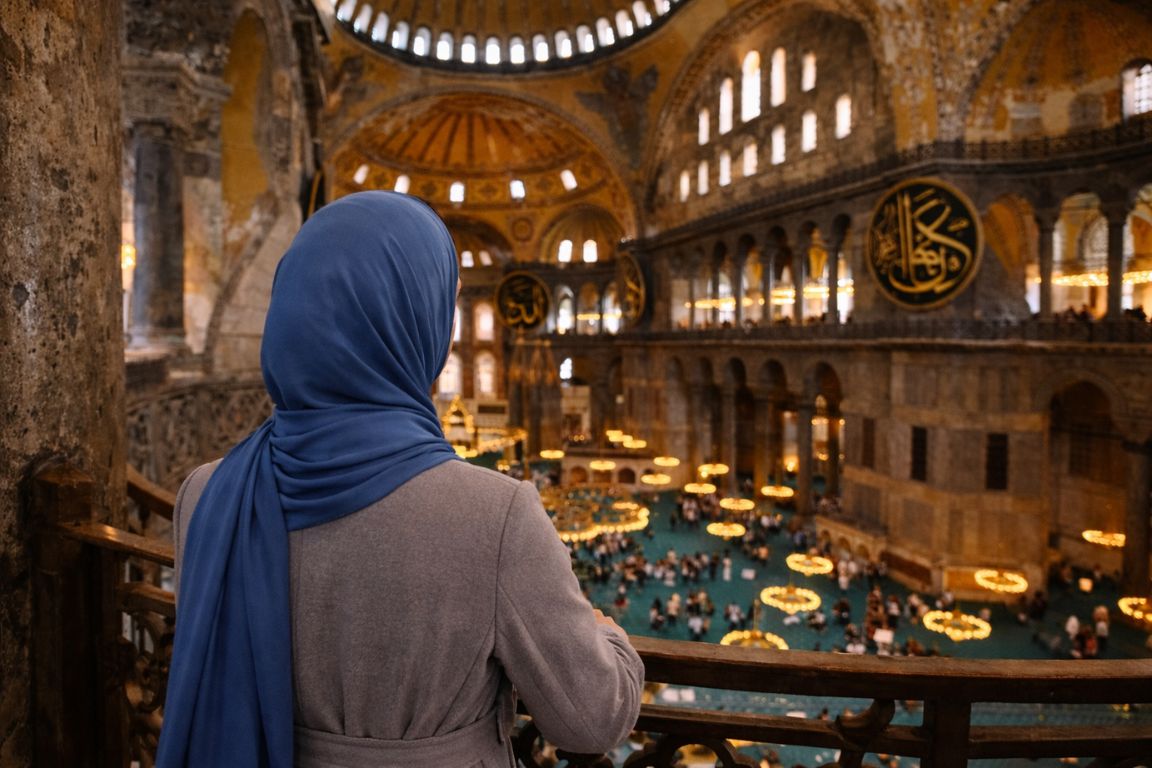
Dress enforcement here is stricter than at most mosques in the city, and it happens after the security screening rather than before, so being turned back costs time you have already spent queuing. Scarves are sold at the booth for €1 and paper cover robes for €3, but both run short in July and August. Bringing your own scarf is the single easiest preparation, and the rest of the rules for what to wear inside take two minutes to read.
Daily prayers other than Friday rarely derail a visit. Barriers go up, staff redirect gallery traffic for twenty minutes or so, and the circuit reopens. It is the Friday midday block that ruins itineraries, and it is entirely predictable. If you are pairing Hagia Sophia with the building across the square, note that the Blue Mosque closes for the whole of Friday morning instead, so the two do not line up. A small-group tour covering Hagia Sophia and the Blue Mosque sequences both around those windows in one three-hour block.
Cost is the other question the conversion left behind, and the short answer is that free entry now applies only to worship, not to the tourist route. If you would rather see the format options side by side before committing, compare the guided visits on offer and pick the one that fits your morning.
Prepare for an active place of worship regardless of ticket type. Read The Dress And Entry Guide →