Do You Need a Ticket for the Blue Mosque? (2026)
No ticket, no booth, no booking fee. What the Blue Mosque asks for instead is the right clothing and the right hour.
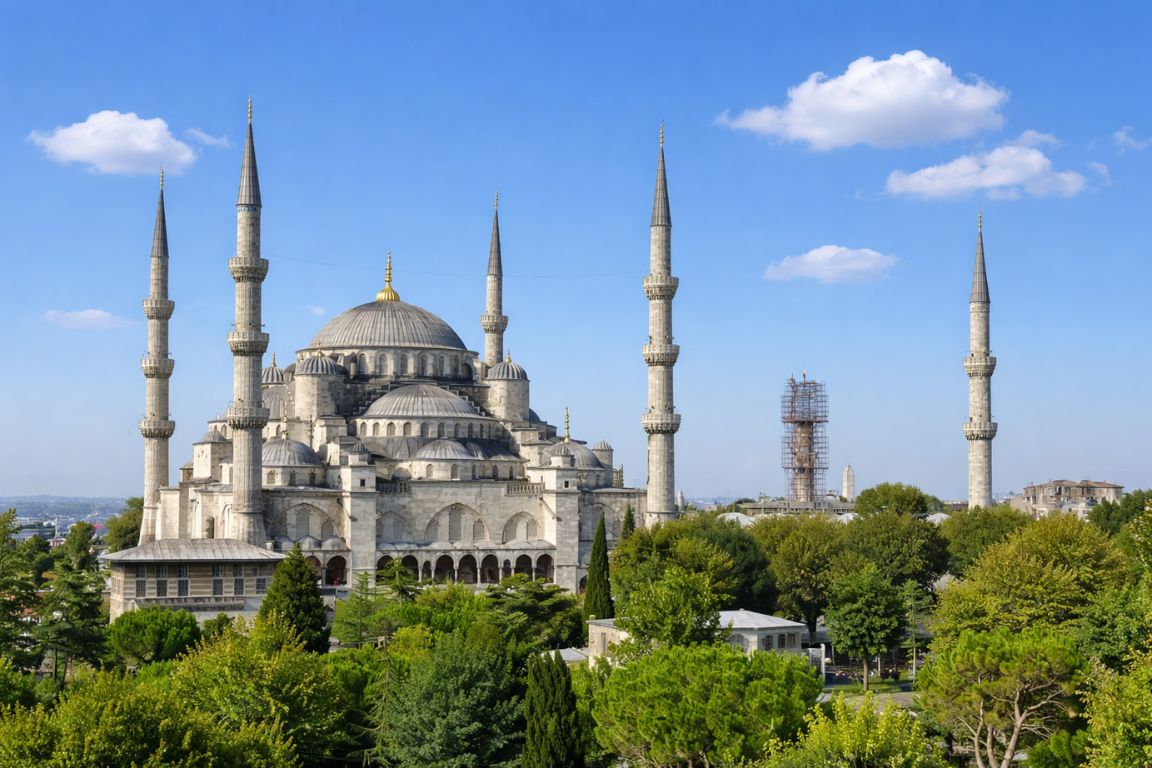
The Blue Mosque takes no money at the door and still produces a queue that can run 30 to 60 minutes in high season. Nobody standing in it is holding a ticket. They are waiting on the security screening and, more often, on the end of a prayer session. That is the whole shape of the answer: the cost of entry here is not paid in euros, it is paid in timing and preparation.
You can visit the Blue Mosque without buying anything. A paid walk is an optional way to understand both mosques and the Hippodrome; select the admission-inclusive option if you also want Hagia Sophia. Choose Free Entry Or A Guided Walk ↓
Booking Summary: In brief: select the exact ticket option, check child and access requirements, and leave time for security. Blue Mosque admission is free; guidance is optional.
Do You Need A Ticket For The Blue Mosque?
No. Entry to the Blue Mosque is free for every visitor, with no ticket, no advance booking and no pass involved. It is an active mosque rather than a ticketed attraction, so what it asks for instead is compliance: covered shoulders and knees, a headscarf for women, shoes removed, and an arrival that falls between the five daily prayers.
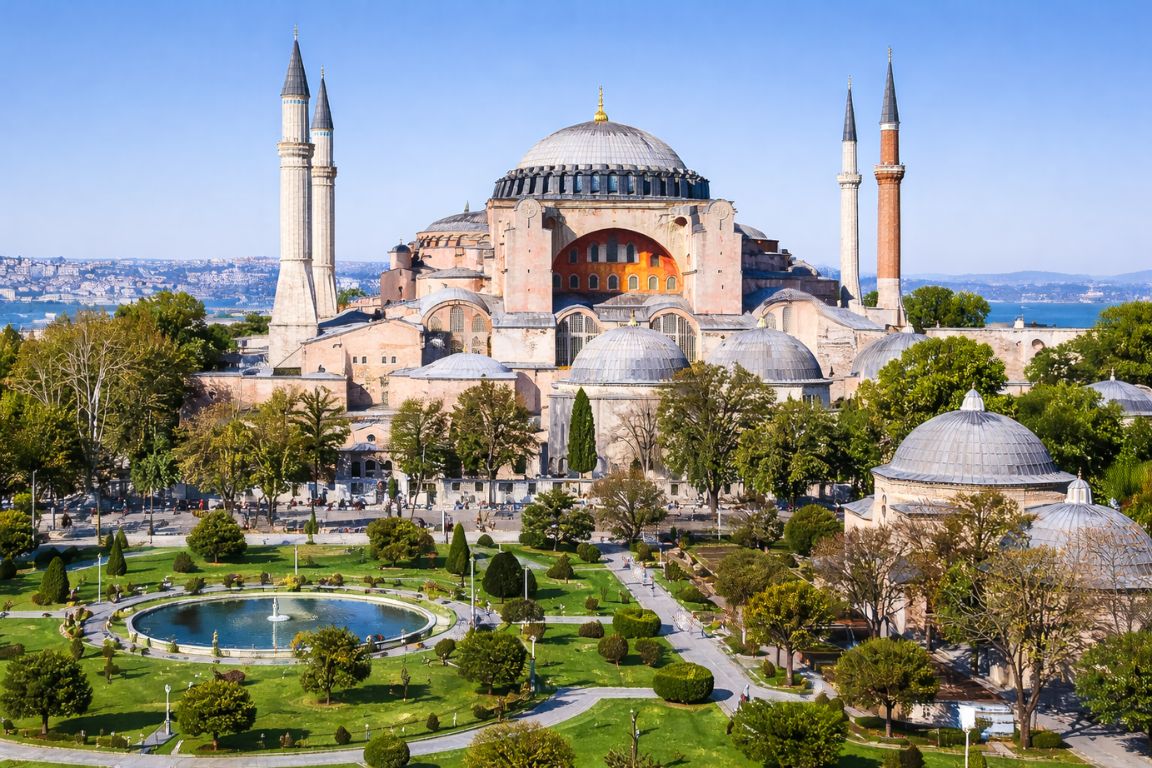
This is the point where the two great domes of Sultanahmet part company. Hagia Sophia, 250 metres away, runs a paid tourist circulation route alongside its free worship entrance. The Blue Mosque never split the two. Every visitor, worshipper and sightseer alike, comes through the same building into the same prayer hall, with tourists kept to a visitor zone behind a low barrier during non-prayer hours.
Anyone selling you a Blue Mosque entry ticket is selling something else: a guided walk, a combined itinerary, or a ticket to a different site altogether. Guided products are legitimate and often worth it, but they are buying you a guide, not access. Access is free and always has been.
You need no paid admission for the Blue Mosque. Use a guided walk only if you want interpretation or a combined day. Choose Free Entry Or Guidance →
What Are The Actual Entry Rules?
Shoulders and knees covered, for men and women. A headscarf covering the hair for women, lent free at the entrance rather than sold. Shoes off before the carpet, carried with you in a bag. Small bags only. Photography is fine without flash, but never aimed at anyone in prayer, and tourists use a separate door from worshippers.
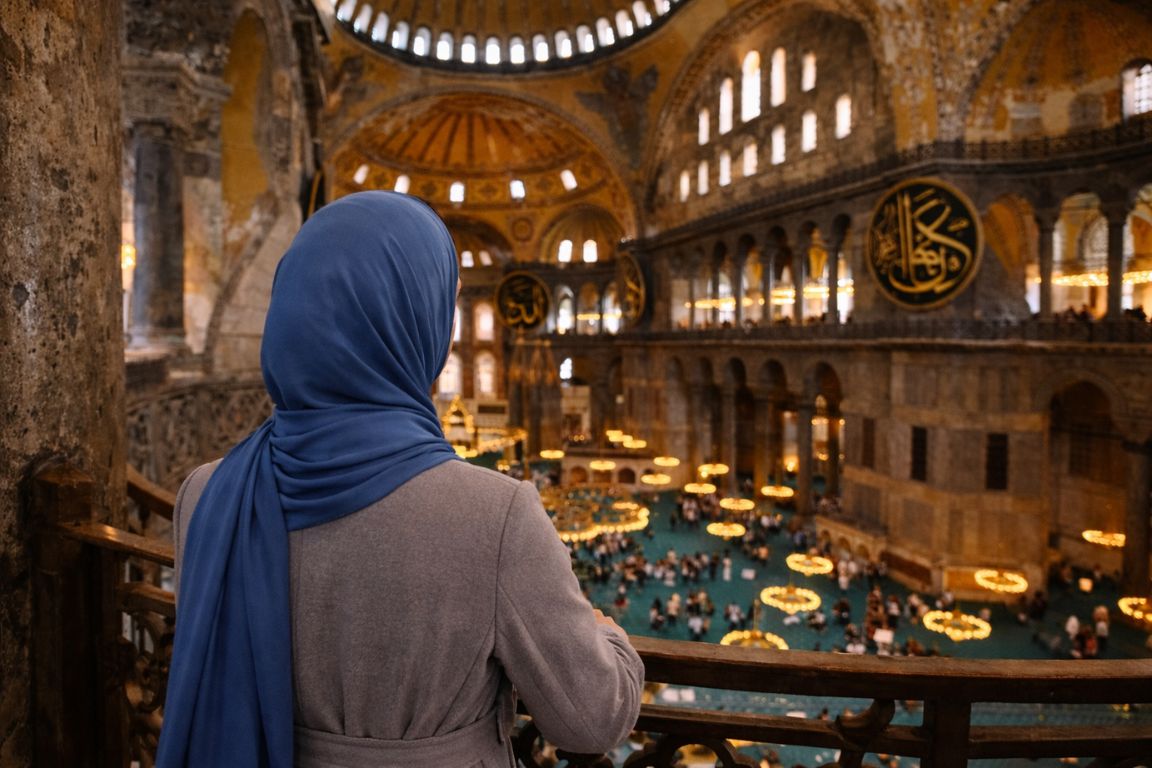
The free scarves are a real difference from Hagia Sophia, where a headscarf costs €1 at the booth and the supply runs out during July and August peaks. Even so, bringing your own is easier: a lightweight scarf in a day bag covers every mosque in Istanbul and removes any dependence on what the entrance has left. For men, the recurring problem is shorts. They are not accepted at any length, so lightweight trousers are the summer answer.
Shoes come off at the carpet line and go into a bag you carry. Slip-ons make this painless; lace-up boots create a bottleneck with people waiting behind you. The standards are close enough to Hagia Sophia's that one outfit works for both buildings, and the detailed dress code rules apply almost identically across the square.
Preparing clothing solves the practical entry issue without buying a tour. Read The Clothing Checklist →
When Is The Blue Mosque Closed To Visitors?
During each of the five daily prayers, when the visitor zone shuts completely for roughly 90 minutes and tourists wait outside, and for the whole of Friday morning, reopening around 14:30. Opening runs from about 08:30 to 18:00 or 19:00 in summer and to around 17:30 in winter, with prayer times shifting through the year as the sun moves.
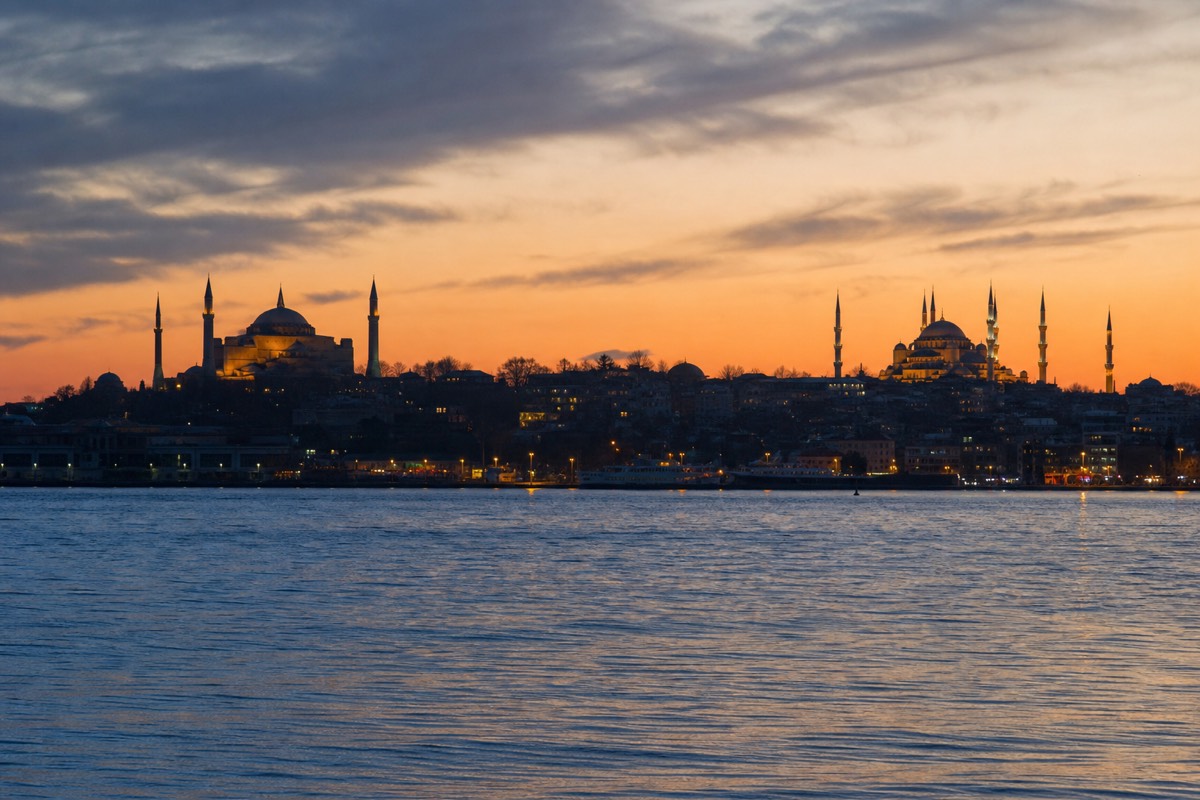
These closures are fuller than Hagia Sophia's. When Hagia Sophia restricts access for a daily prayer, gallery visitors are usually redirected rather than removed. When the Blue Mosque closes, the visitor zone empties and you go back out to the courtyard. Ninety minutes is a long time to lose from a half-day in Sultanahmet, so check the day's prayer schedule before you pick your slot rather than turning up hopefully.
| Entry factor | Blue Mosque | Hagia Sophia |
|---|---|---|
| Ticket | None, free for all visitors | €25 per adult for foreign tourists |
| Where tourists go | Main prayer hall, visitor zone behind a low barrier | Upper gallery only, since January 2024 |
| Daily prayer closures | Full closure, around 90 minutes per session | Partial restrictions, roughly 20 to 40 minutes |
| Friday | Closed all morning, reopens around 14:30 | Open in the morning, closed 12:00 to 14:30 |
| Headscarf for women | Required, lent free at the entrance | Required, sold at the booth for €1 |
| Typical time inside | 30 to 45 minutes | 60 to 90 minutes |
| Peak queue | 30 to 60 minutes for security | 60 to 90 minutes at the booth, plus security |
Check the day’s visitor and prayer arrangements before setting your walking route. No booking overrides a closure. Plan Your Timing →
Why Does Hagia Sophia Charge When The Blue Mosque Does Not?
Because Hagia Sophia operates two parallel systems and the Blue Mosque operates one. In January 2024 Turkey's culture ministry created a separate ticketed tourist route through Hagia Sophia's upper gallery, priced at €25, running alongside a free worship entrance below. The Blue Mosque has no equivalent tourist route, so there is nothing to charge for.
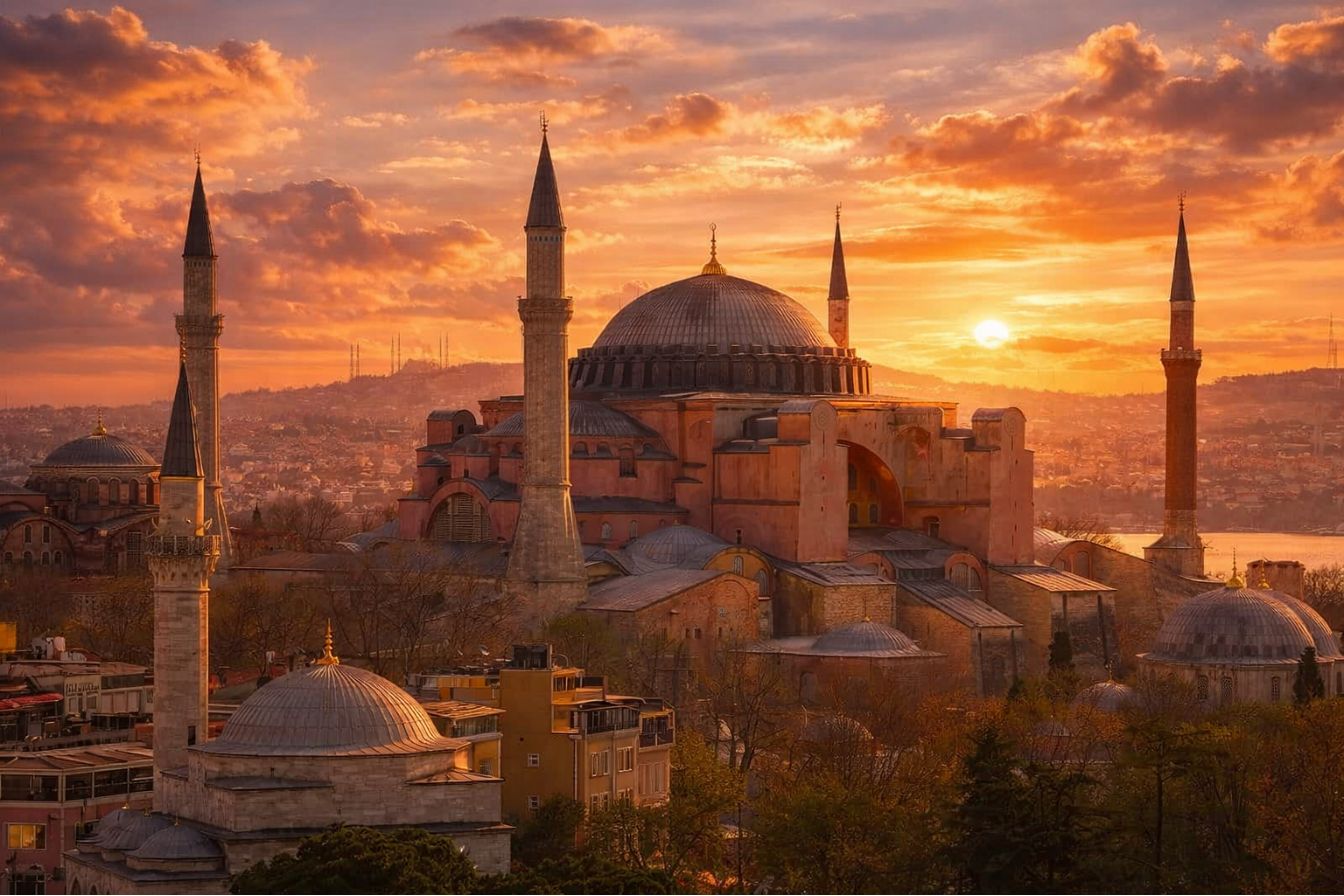
Both buildings are working mosques, which surprises people who assume the fee marks a museum. It does not. What the fee marks is a physical separation of visitor traffic from prayer, a solution to crowding that the Blue Mosque handles with a barrier and a closing schedule instead. Whether the split is worth €25 is a fair question, and the honest comparison of how the two buildings differ for visitors answers it better than a price tag does.
If you are budgeting a Sultanahmet day, the arithmetic is straightforward: the Blue Mosque costs nothing, Hagia Sophia costs €25 per adult, and the detail of where to buy Hagia Sophia tickets matters more than the number itself. The nuance on the paid side, that free entry there covers worship only, is the piece most itineraries get wrong.
Explore at your own pace
Hagia Sophia gallery entry
Gallery entry · Smartphone audio
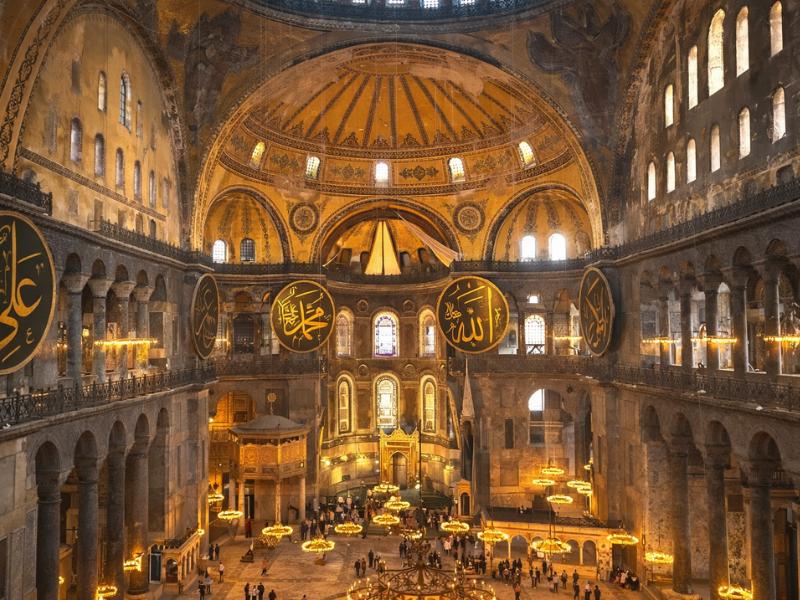
What does the paid Hagia Sophia visit reveal?Explore the upper gallery independently with audio; your separate Blue Mosque visit remains free.
Discover the Hagia Sophia Gallery →If It Is Free, Why Do The Queues Still Form?
Security screening, prayer scheduling and geography. Every visitor passes a scanner, the closures compress arrivals into narrow windows, and the two most photographed buildings in Istanbul sit a three-minute walk apart, so groups leaving one arrive at the other in waves. Free entry removes the ticket booth, not the wait.
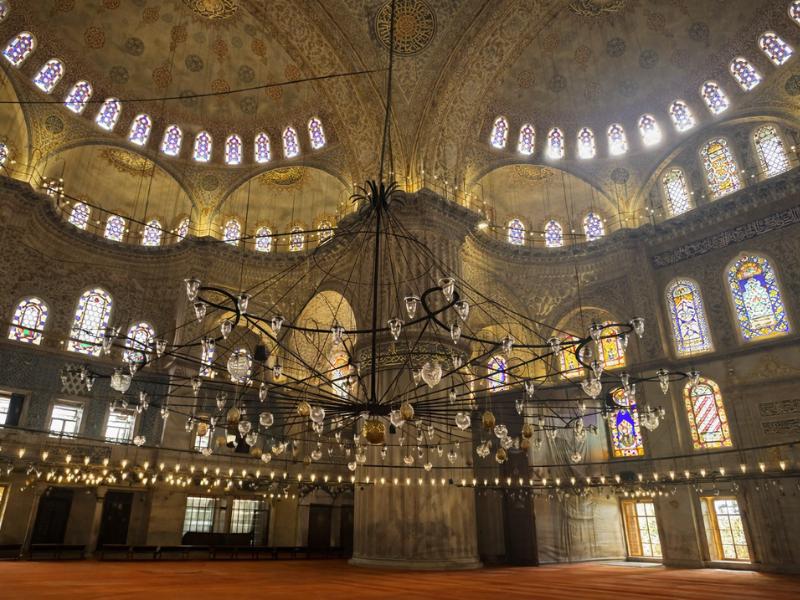
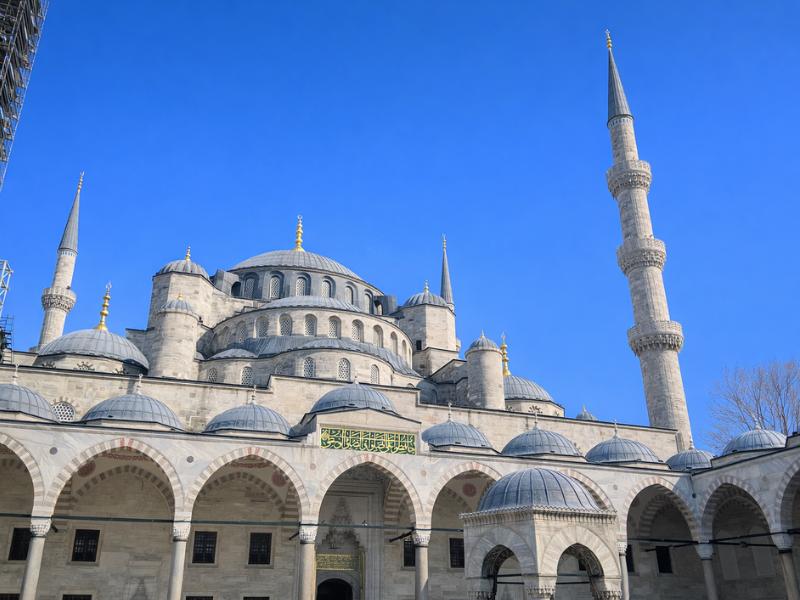
There is also more demand than there was a few years ago. The Blue Mosque came out of a six-year restoration in April 2023, and the scaffolding that hid the Iznik tilework and the courtyard for most of that period is gone. Visitors now see an interior in close to its best condition in modern memory: more than 21,000 hand-painted tiles across the walls and upper registers, light arriving through 260 windows, a dome 23.5 metres across resting on four cylindrical piers wide enough to have earned the nickname elephant feet.
Timing beats everything else here. Early morning before the first tourist wave, or the window straight after a prayer closure lifts, is when the hall is calmest. Both buildings sit inside the Historic Areas of Istanbul on the UNESCO World Heritage list, and a well-planned morning takes in both without a single wasted hour. A small-group tour of Hagia Sophia and the Blue Mosque builds the prayer schedule into its route, while the Istanbul highlights walk with Hagia Sophia tickets included adds the Hippodrome and its obelisks to the same two-hour loop.
Two more options are worth knowing about. If photographs are the point of the morning, an Istanbul private photo session at both mosques puts someone who knows the light and the vantage points on the square with you. And if Sultanahmet is only the opening act, a full-day private guided tour folds both buildings into a single planned day that reaches the rest of the old city.
Connect the two mosques
Two mosques & Old Town walk
2.5–3 hours · English guided walk
Putting both mosques into one morning?Choose optional paid guidance for the stories and route between the mosques. Blue Mosque admission itself is free.
Check Dates for the Two-Mosque Walk →