Basilica Cistern Tickets & Visitor Guide (2026)
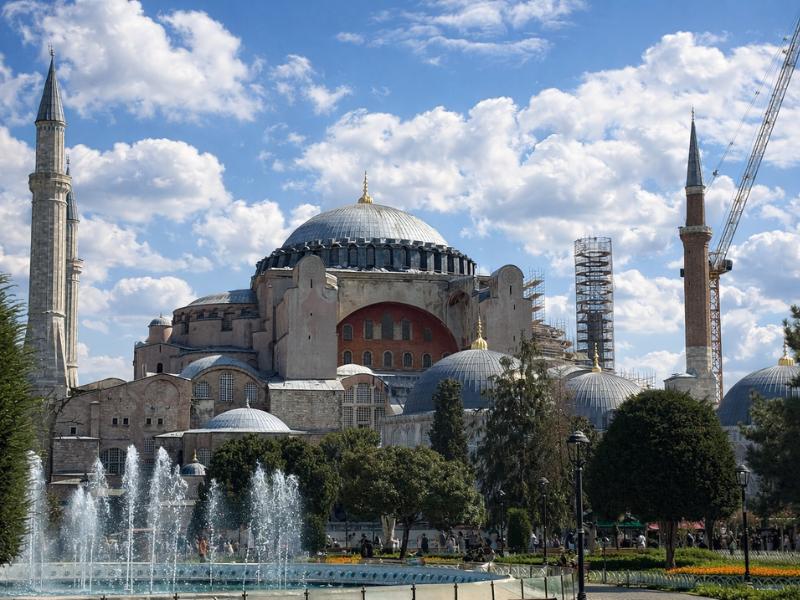
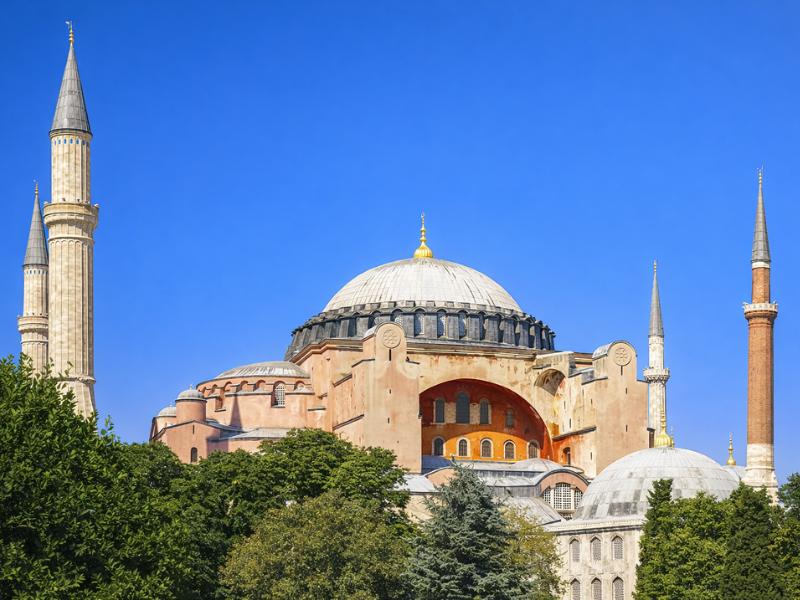
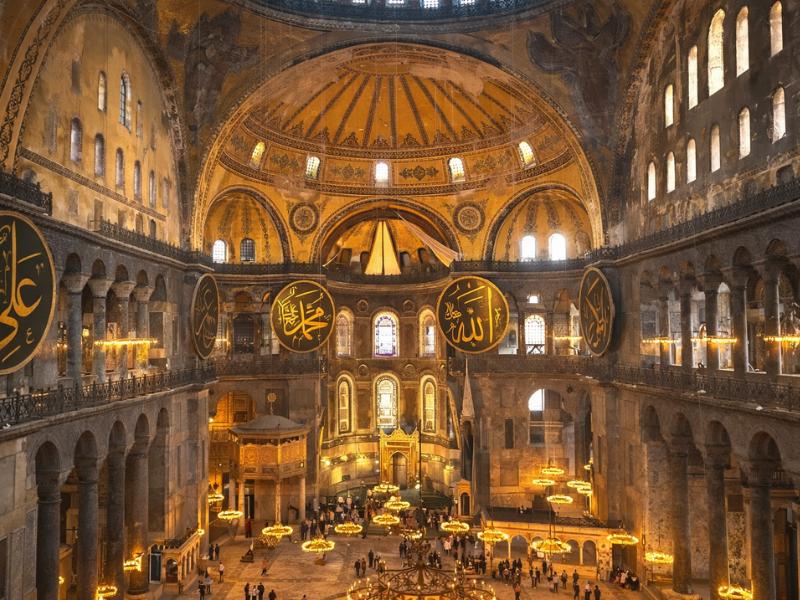
The Basilica Cistern was built by the same emperor as Hagia Sophia, in the same decade, a few hundred metres away. Here is what entry costs, when the evening session runs, and what to look for among the 336 columns.
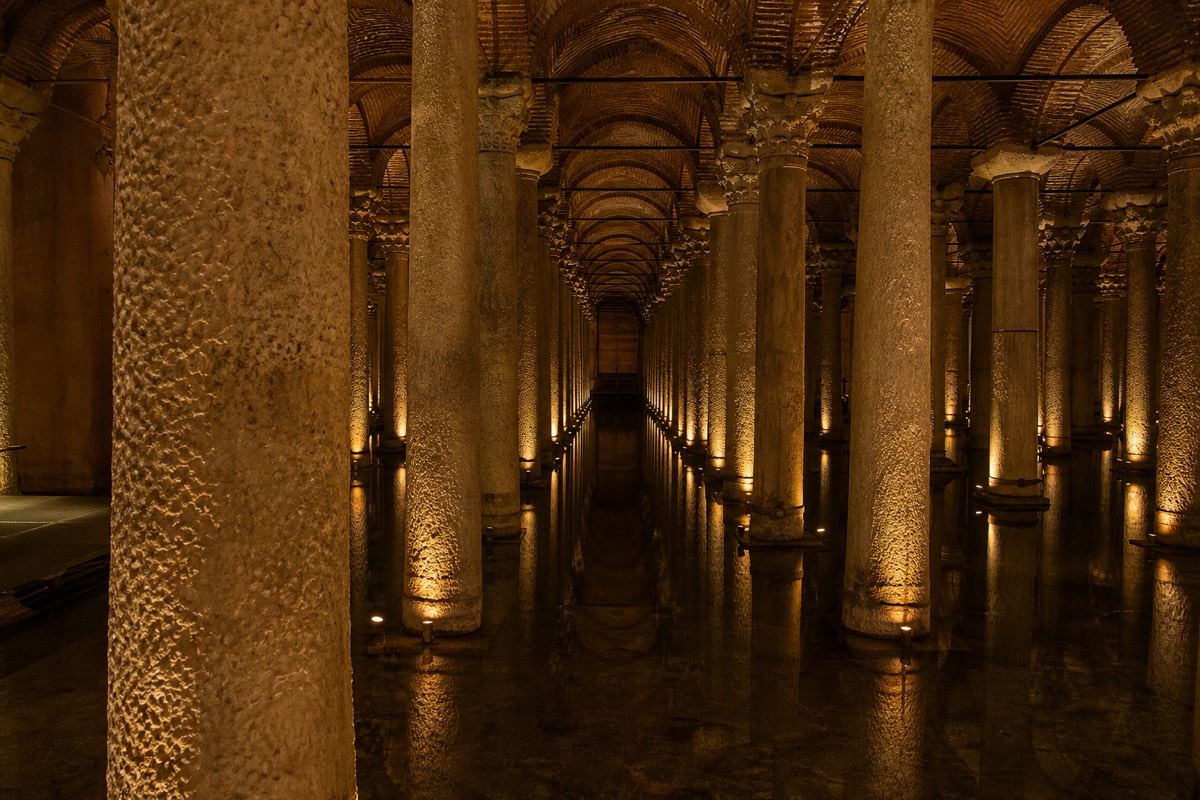
Thirty-odd steps below street level, the temperature drops and the noise of the tram stops. What replaces it is dripping water and a low orange glow across rows of columns standing in shallow water, holding up a brick vault the size of a cathedral floor. The Basilica Cistern is the least monumental-looking of Sultanahmet's headline sites from the outside, a small entrance building on a busy corner, and the most disorienting once you are inside it.
Choose cistern-only entry for a short underground visit, or a combo if Hagia Sophia is also on your itinerary. A daytime ticket is not evidence of Night Shift access. Choose Your Cistern Visit ↓
Booking Summary: In brief: cistern-only entry suits a short visit; the combo covers Hagia Sophia too. Daytime admission does not establish Night Shift access. Compare current complete totals.
It was never meant to be looked at. This was infrastructure, a reservoir built to hold water for the imperial palace and the surrounding quarter, and the fact that it is beautiful is a byproduct of sixth-century builders reusing whatever columns were to hand. That reuse is the reason the interior looks the way it does, and the reason two carved Medusa heads ended up wedged under two of the columns.
How Much Is A Basilica Cistern Ticket, And What Is The Night Shift Session?
Standard entry runs around 1,950 TL, roughly 38 to 40 euros. A separate evening session called the Night Shift runs 19:30 to 22:00 at a higher price, near 3,000 TL, and is sold as its own product rather than an add-on. Rates are set in lira and change, so check the live listing for the current price.
The two products are genuinely different visits, not two doors into the same experience. The daytime ticket is the standard one: you go down, follow the raised walkways, see the columns and the Medusa heads, and come back up. The Night Shift is a smaller evening session in a building that has already closed to the daytime crowd, and the pricing reflects the reduced numbers rather than any extra area opened up.
Whether the evening session is worth the premium comes down to what you are there for. If you want photographs without other visitors in frame, or you have already spent a morning in queues and want somewhere quiet at the end of the day, it earns the difference. If you simply want to see the columns and the carved heads, the standard daytime ticket shows you the same things for meaningfully less.
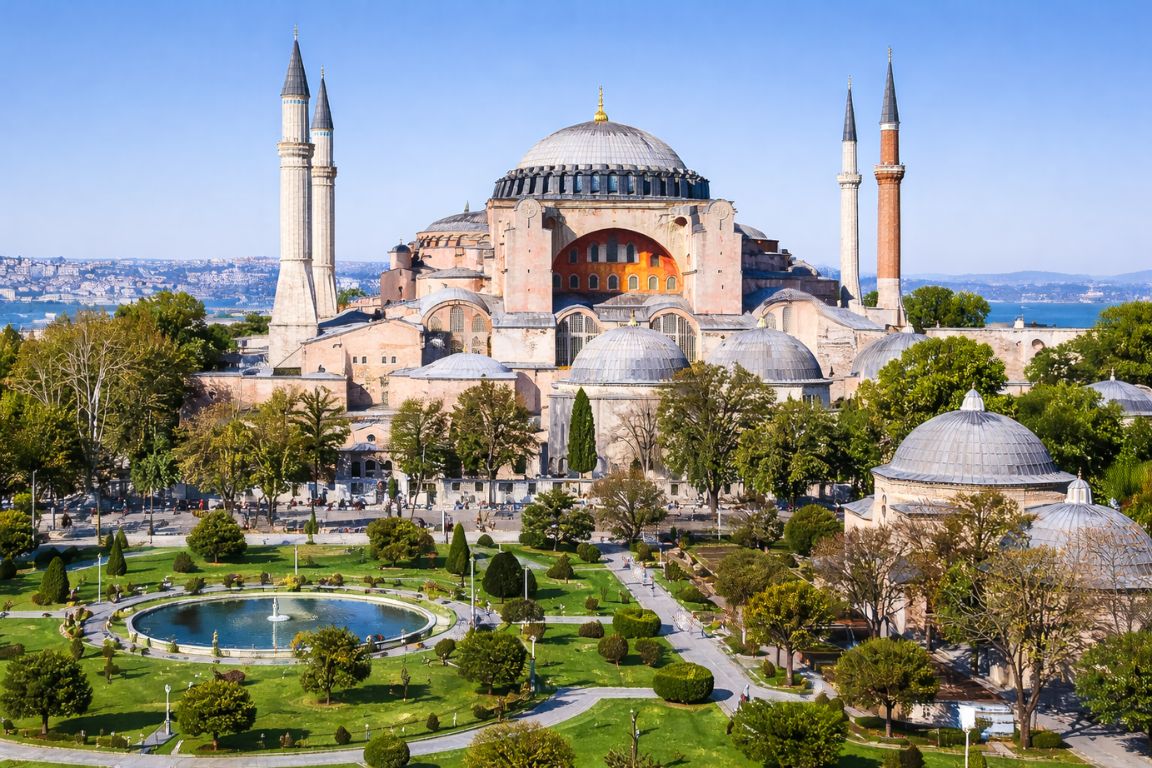
Because the cistern sits a few minutes from Hagia Sophia, the most economical route for most people is a bundle rather than two separate purchases. The combo ticket covering Hagia Sophia and the Cistern is listed around $84 with a 72-hour validity window, which matters more than it sounds: it means the two visits do not have to happen on the same day. Check the live listing for the current rate and what the optional Topkapi upgrade adds.
| Option | Roughly | When | Best for |
|---|---|---|---|
| Standard daytime entry | ~1,950 TL, about 38 to 40 euros | Daily opening hours | Most visitors |
| Night Shift evening session | ~3,000 TL | 19:30 to 22:00 | Photography, fewer people, a late finish |
| Combo with Hagia Sophia | Listed around $84 | 72-hour validity | Splitting two big sites across days |
| Combo with a Bosphorus cruise | Listed around $57 | 48-hour validity | Pairing the old city with time on the water |
| Museum Pass Istanbul | Not applicable | Any date | Does not cover the Cistern at all |
Choose daytime Cistern entry for the columns and Medusa heads. Night Shift inclusion is not verified for this product. Choose Daytime Cistern Entry →
What Are The Opening Hours, And How Long Is The Queue At The Door?
The Basilica Cistern opens daily 09:00 to 18:30, with last entry an hour before closing. Between April and October the door queue commonly runs 30 to 60 minutes, and buying online in advance is the standard way around it. Winter queues are far shorter, and a walk-up visit is realistic from November to March.
The queue here surprises people who have budgeted their waiting time for Hagia Sophia and assumed the cistern would be a quick stop. It is not. The entrance is small, the staircase down is narrow, and the number of visitors inside at any moment is managed, which means the line at street level moves in batches rather than continuously. On a July afternoon that translates into standing on an exposed corner in full sun.
Last entry an hour before closing is enforced, and it is a real constraint on an ambitious day. If your plan has you finishing at Topkapi and then walking over, check the clock before you commit: the palace's inner sections start clearing well before its own closing time, and arriving at the cistern at 17:45 leaves you exactly nothing in hand.
The timing logic that works at Hagia Sophia works here too. Early is better than late, weekdays beat weekends, and the shoulder months of April, May, September and October give you the best combination of weather and crowd level. The reasoning is laid out in the guide to the quietest hours at Hagia Sophia, and the same pattern of cruise-ship arrivals and tour-group waves drives both sites.
| Detail | What to expect |
|---|---|
| Daily hours | 09:00 to 18:30 |
| Last entry | One hour before closing |
| Evening session | Night Shift, 19:30 to 22:00, separate ticket |
| Door queue, April to October | Commonly 30 to 60 minutes |
| Door queue, November to March | Short; walking up works |
| Best window | At opening on a weekday, or the last hour before last entry |
| Worst window | Midday on a summer weekend |
The online-ticket line bypasses the purchase queue; security and the attraction’s current opening hours still apply. Arrange The Cistern Ticket →
Who Built The Basilica Cistern, And Why Did The City Need It?
It was built under the Byzantine emperor Justinian I, commissioned around 532 and completed in the 530s or 540s, the same emperor and effectively the same decade as Hagia Sophia. Constantinople had no reliable local water source, so the city stored water brought in by aqueduct in covered reservoirs like this one.

The chronology is the detail most visitors miss and the one that makes the site click into place. Emperor Justinian rebuilt Hagia Sophia between 532 and 537 after the previous church burned in the Nika riots. The cistern was commissioned in the same period. Sources differ on the exact completion year, which is why it is fairer to describe it as built in the 530s and 540s than to pin it to a single date, but the point stands: the same administration, at the same moment, was building the largest church in the world and the water supply that let the quarter around it function.
A city under siege lives or dies on stored water, and Constantinople was besieged repeatedly across its history. The covered cistern kept the supply clean and cool and out of reach. Its position matters too, directly under the ceremonial heart of the city, close to the imperial palace and the great church, which is why it is the largest of the several hundred cisterns known beneath the old city.
If the sixth century interests you more than the ticket logistics, the full imperial chain of Hagia Sophia from Justinian's dedication onward is set out in the guide to how Hagia Sophia went from Byzantine church to Ottoman mosque.
| Hagia Sophia | Basilica Cistern | |
|---|---|---|
| Commissioned by | Justinian I | Justinian I |
| Built | 532 to 537 | Commissioned around 532, finished in the 530s or 540s |
| Purpose | State church of the empire | Covered water reservoir |
| Defining feature | A 31-metre dome that appears unsupported | 336 columns holding a brick vault over water |
| Materials | Purpose-cut marble and imported stone | Largely reused columns from older Roman buildings |
| Status today | Working mosque, tourists in the upper gallery | Ticketed monument, walkways above the water |
Read Hagia Sophia’s chronology alongside the Cistern story to connect Justinian’s two projects. Read The Byzantine Context →
Why Do The 336 Columns Not Match Each Other?
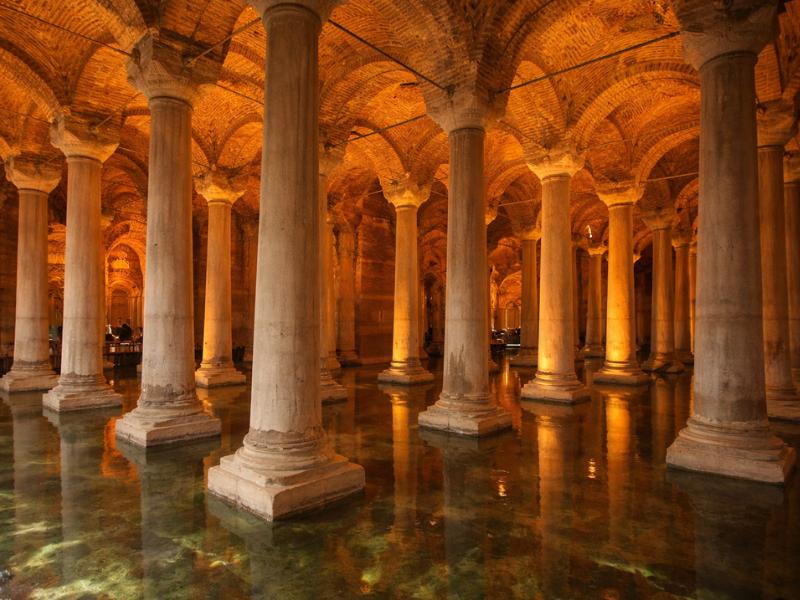
The 336 columns were mostly not made for this building. They are spolia, salvaged from older Roman-era structures and reused, which is why Doric, Ionic and Corinthian capitals stand in the same rows at slightly different heights and finishes. A reservoir did not need to look consistent, so nobody made it look consistent.
Once you know to look for it, the mismatching is the most interesting thing in the room. Walk the length of one aisle and the capitals change character: a plain block here, deeply carved acanthus leaves there, one shaft slightly thicker than its neighbour, another set on a base that clearly began life somewhere else. Sixth-century builders were pragmatic. Columns were expensive to quarry and carve, older buildings were available, and this was a structure nobody was expected to admire.
The columns stand in twelve rows of twenty-eight, spaced closely enough that the sight lines change constantly as you walk. That regular grid against irregular parts is what gives the underground cistern its strange visual rhythm, and it is why photographs of the place rarely convey what standing in it is like. The vault above is brick, the floor below is water, and the light is deliberately low.
One column stands out on its own terms: the shaft carved with a repeated teardrop or peacock-eye pattern, often called the weeping column, which people naturally connect to the similarly named column upstairs in Hagia Sophia's gallery. The two are unrelated in origin, but the coincidence gives you a decent way to remember which is which.
| Feature | Where | What it tells you |
|---|---|---|
| Mismatched capitals | Throughout, most obvious along a single aisle | Reused stone from earlier Roman buildings |
| Doric, Ionic and Corinthian styles together | Adjacent rows | Salvage, not a design scheme |
| Varying shaft heights on levelled bases | Across the grid | Builders adjusted the bases to make the roof line work |
| The carved teardrop column | Roughly mid-hall | The most distinctive single shaft in the room |
| Two Medusa-head bases | Northwest corner | The site's most photographed detail |
Go beneath the Old Town
Basilica Cistern with audio
Basilica Cistern entry · Smartphone audio
Can you spot the differences between the columns?Explore the underground rows and Medusa heads at your own pace with an audio guide.
Explore the Basilica Cistern →What Is The Story Behind The Two Medusa Heads?
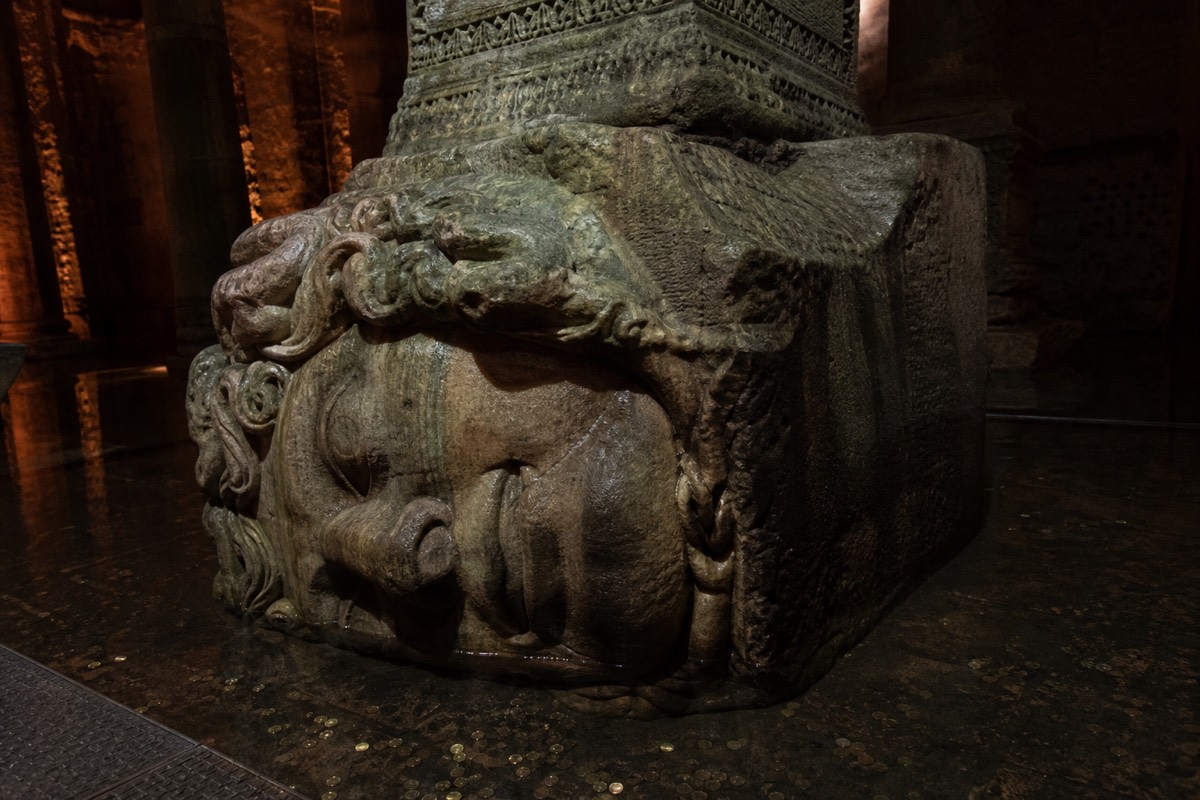
Two carved Medusa heads sit under columns in the northwest corner, one turned on its side, one completely upside down. They are reused blocks from an earlier Roman structure, pressed into service as bases. Why they were placed at those angles is genuinely unresolved, and the tidy explanations you will hear are guesses.
The most repeated story is that the heads were inverted to neutralise the gorgon's power, a superstition-driven act of Christian caution. The second most repeated is that they were positioned purely to fit, because a block of that size and shape needed a particular orientation to sit level under a column. Both are plausible. Neither is documented. The honest position is the one the specialists take: the original placement and its meaning remain debated.
What is documented is when they resurfaced. The heads were uncovered during the restoration campaign that ran from 1985 to 1987, when the cistern was cleared of mud and silt accumulated over centuries and prepared for public visits. Before that, the space had spent long stretches half-forgotten, accessible by boat and used by locals who reportedly drew water and even caught fish through openings in the floors of the houses above.
Practically, the corner where the Medusa heads sit is the single most congested spot in the building. Everyone stops, everyone photographs, and the walkway there is narrow. Go at opening or on the evening session if the shot matters to you. If it does not, the columns further from that corner are quieter and, for many visitors, more atmospheric.
Treat explanations of the heads’ orientation as theories. Give yourself time at the corner without blocking the walkway. Choose Your Cistern Format →
Does The Museum Pass Or A City Pass Cover The Basilica Cistern?
The Museum Pass Istanbul does not cover the Basilica Cistern. It also does not cover Hagia Sophia, which has charged foreign visitors a separate 25 euro fee since January 2024. Plan on separate paid entries for both, or one combo booking that bundles them, rather than assuming a pass will absorb the cost.
This catches out well-prepared travellers more often than unprepared ones, because the people who buy a museum pass are usually the ones who researched. The pass has real value across other sites in the city. It simply does not reach the two most visited attractions in Sultanahmet, and articles written before the relevant status changes still circulate saying otherwise.
Hagia Sophia's exclusion has a specific cause: the building reverted to working mosque status in 2020 and is no longer administered as a museum, so a museum pass has nothing to apply to. The reasoning and the current ticket structure are covered in the guide to how Hagia Sophia tickets are priced.
Bundled products are the practical alternative. A combo pairing Hagia Sophia, the Cistern and a Bosphorus cruise is listed around $57 with a 48-hour window on the operator's listing, which suits travellers who want one old-city day and one on the water. Check the live listing for the current rate and the exact inclusions before booking.
| Product | Basilica Cistern | Hagia Sophia | Topkapi Palace |
|---|---|---|---|
| Museum Pass Istanbul | Not covered | Not covered, any tier | Check current pass terms |
| Standard Cistern ticket | Yes, daytime | No | No |
| Night Shift ticket | Yes, 19:30 to 22:00 | No | No |
| Hagia Sophia and Cistern combo | Yes | Yes, upper gallery | Optional upgrade |
| Cistern and Bosphorus cruise combo | Yes | Yes | No |
This combo explicitly includes the Cistern and Hagia Sophia. Compare those named inclusions with any pass you already hold. Choose The Two-Site Bundle →
What Is It Actually Like Inside, And How Long Should You Allow?
You descend a stone staircase into a low-lit brick hall with raised walkways running above shallow water and columns rising out of it. It is cool, humid and echoing all year. Allow about 45 minutes inside, plus whatever the door queue costs, and expect the walkway to be crowded near the Medusa corner.
The sensory shift is the point. Sultanahmet above ground in August is hot, loud and bright. Twenty seconds down the staircase it is cold enough that people who dressed for the square notice, damp enough that camera lenses can fog for a moment, and quiet in a way that makes the dripping audible. Visitors who describe the columns standing in dark water are describing it accurately.
Photography is difficult and rewarding in equal measure. The lighting is low and coloured, which flatters the columns and defeats most phone cameras unless you brace against a railing. The walkways are metal grids in places, so a stable footing for a long exposure is easier to find than you would expect. Flash mostly makes things worse.
Accessibility is worth flagging honestly: entry is by staircase, the walkways are raised and narrow in sections, and there are level changes. Anyone with limited mobility should check current arrangements before buying a ticket rather than at the door.
Underground access and low light need their own consideration. Confirm assistance requirements with the provider before purchasing. Review Access Needs →
How Do You Fit The Cistern Into A Day With Hagia Sophia?
The Cistern is a 30-to-45-minute stop with a variable queue, which makes it the flexible piece of a Sultanahmet day rather than its anchor. The workable order in summer is Hagia Sophia at opening, the Cistern late morning or late afternoon, and Topkapi in between if you have the stamina.
Distance is not the constraint. Everything here sits within a few hundred metres, and walking between the sites takes minutes. Queues are the constraint, and they peak at broadly the same hours across all three sites as tour groups and cruise arrivals move through the district in waves from mid-morning.
The Friday complication applies here too. Hagia Sophia closes to tourists from 12:00 to 14:30 for congregational prayer, so on a Friday the Cistern and Topkapi are what fill that window. That is the one day of the week when starting underground makes more sense than starting at the mosque, and the full timing picture sits in the practical visiting guide to Hagia Sophia.
For travellers who would rather not run the sequencing themselves, a full-day private tour of historic Istanbul folds the old city into one planned day, listed around $120 with a 4.9 rating across more than 1,300 bookings on the operator's listing. A shorter alternative is an old city highlights and hidden gems tour, which trades some famous stops for quieter ones. Check the live listing for the current rate on either.
| Time | Standard weekday | Friday |
|---|---|---|
| 08:00 to 09:00 | Hagia Sophia at opening, summer season | Hagia Sophia at opening |
| 09:30 to 11:00 | Hagia Sophia upper gallery | Hagia Sophia upper gallery, finish before noon |
| 11:00 to 12:00 | Basilica Cistern | Basilica Cistern while the mosque is closed to visitors |
| 12:00 to 14:30 | Lunch, Sultanahmet Square | Lunch, then Topkapi Palace |
| 14:30 onward | Topkapi Palace and the Harem | Topkapi Palace continues |
| Evening | Night Shift session if you skipped the daytime slot | Night Shift session |
See two remarkable interiors
Hagia Sophia & Cistern combo
Hagia Sophia + Cistern · 3-day validity
Fitting the Cistern around Hagia Sophia?Bring both admissions into one booking and split the visits across your stay if you prefer.
Check Your Two-Site Visit Dates →Which Booking Format Fits Which Visitor?
Solo travellers and couples in shoulder season can walk up and buy at the door. Anyone visiting between June and August should book online. Photographers should take the evening session. Families and anyone with a fixed single day are usually better off on a bundle or a guided day that handles entry logistics.
The variable that decides it is not budget, it is the calendar. In February, an online booking buys you almost nothing, because the door queue is short and the price is the price. In July, the same booking removes 30 to 60 minutes of standing outside, which is the difference between three sites in a day and two.
Guided formats add something that neither ticket type does: an explanation of what you are standing in. The cistern presents almost no interpretation to a self-guided visitor. There is water, there are columns, there are two carved heads, and unless you already know about Justinian's building programme and the practice of reusing Roman stone, the visit is atmospheric but flat. Reading up beforehand fixes that as effectively as a guide does.
For a first Istanbul trip, comparing formats side by side beats picking on price. The page for guided Hagia Sophia tours lists the options by length and group size, and the honest advice is to match the format to how many days you actually have.
| You are | Best option | Why |
|---|---|---|
| Visiting November to March | Walk-up daytime ticket | Short queue, no booking premium to pay |
| Visiting June to August | Pre-booked online entry | Removes a 30 to 60 minute door queue |
| Photographing the columns | Night Shift, 19:30 to 22:00 | Fewer people in frame, no daytime wave |
| One day, several sites | Combo ticket with Hagia Sophia | One booking, 72 hours to use it |
| Want the history explained | Guided old-city day | The cistern interprets itself poorly on its own |
Cistern-only and combo tickets answer different itineraries. Use your available time and actual party totals to choose. Match Your Cistern Plan →
What Do Visitors Get Wrong About The Basilica Cistern?
The common errors: treating it as a ten-minute stop, arriving inside the final hour and being turned away at last entry, expecting a museum pass to cover it, assuming the evening session is an upgrade rather than a separate ticket, and dressing for the square rather than for a damp room at cellar temperature.
Underestimating the time is the most frequent. Because the cistern looks small from the street, people slot it into a gap between two bigger sites and then find themselves in a queue that eats the gap. Building in an hour, queue included, keeps the rest of the day intact.
The last-entry rule is the most painful, because there is no negotiating with it and no partial refund for arriving late. Set an alarm if the cistern is your final stop, or move it earlier in the day and finish somewhere with looser hours.
The clothing mistake is small but real. In summer, visitors arrive in what makes sense for a hot square and spend forty minutes underground in cool, damp air. A light layer in a day bag solves it. That bag will go through screening at other sites in the district anyway, and the guidance in the Hagia Sophia dress code and rules covers what to carry across the whole cluster.
One last framing worth carrying in with you. The cistern is not a monument that was built to be seen. Everything about it that is striking, the mismatched columns, the reused carvings, the sheer scale of a room nobody was ever supposed to stand in, exists because the people who built it were solving a practical problem quickly. It is a better visit when you read it that way rather than as a piece of design.
Have tickets and downloaded audio ready before entering, and confirm the attraction’s current last-entry time. Review The Entry Checklist →