Topkapi Palace Tickets & Visitor Guide (2026)
The ticket most visitors actually want at Topkapi is not the one sold as basic entry. Here is what the combined ticket covers, how the four courtyards are arranged, and how the palace fits around a Hagia Sophia morning.
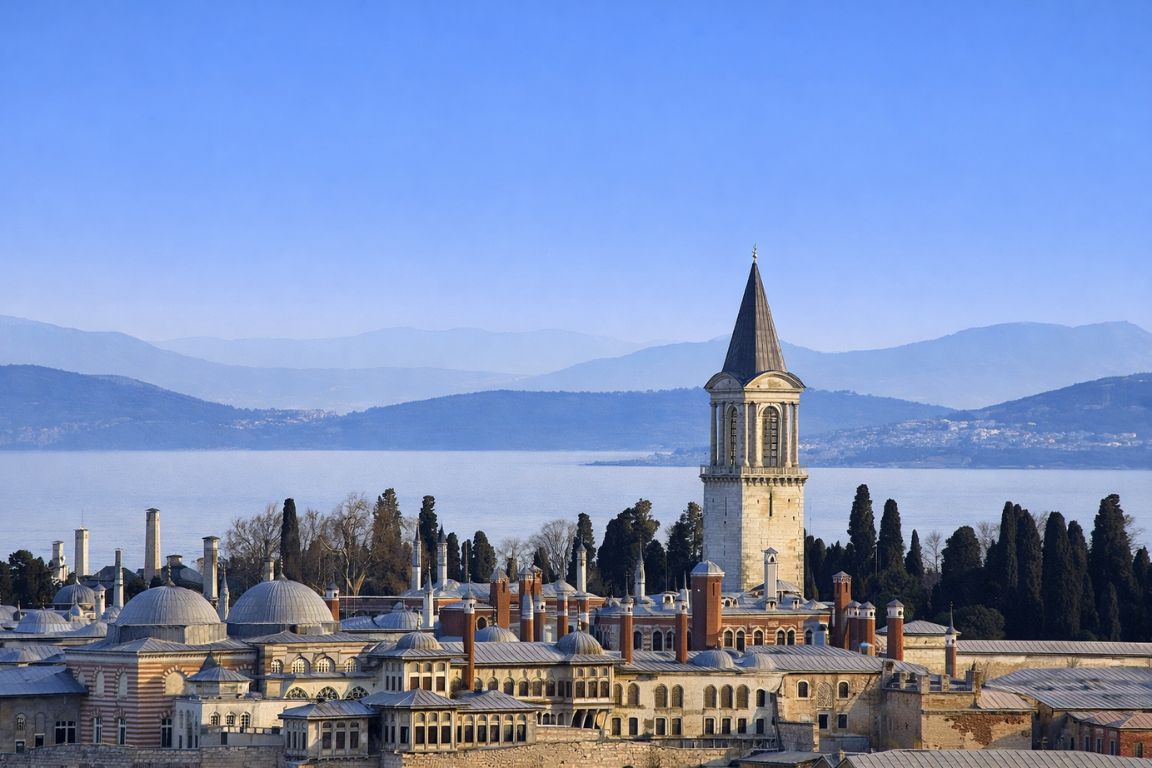
Topkapi Palace does not work like a museum with one front door and one route. It is a sequence of four courtyards, each behind a gate that fewer people were once permitted to pass, and the ticket you hold decides how deep into that sequence you get. Buy the wrong one and you will stand outside the Harem entrance with a ticket that does not open it, which happens to a steady stream of visitors every day.
Make Harem access an explicit choice. The 1.5-hour guided palace option includes it; the Hagia Sophia and Cistern combo with optional Topkapi does not. Choose Palace Access And Extras ↓
Booking Summary: In brief: choose the 1.5-hour guided highlights option for the Harem. The optional Topkapi upgrade on the two-site combo excludes it. Check your date against Tuesday closure.
The palace sits roughly 300 steps from Hagia Sophia's tourist entrance, close enough that the two share a crowd and a rhythm. Both were seats of power in the same square kilometre of the old city, one religious, one imperial, for centuries at a time. Planning them as a pair is the single best decision you can make about a day in Sultanahmet.
How Much Does A Topkapi Palace Ticket Cost, And What Does It Cover?
The combined ticket for foreign visitors covers Topkapi Palace, the Harem and Hagia Irene, and runs around 2,750 TL, roughly 55 euros. Skip-the-line online entry with an audio guide starts near 57 euros. The cheaper museum-only entry does not include the Harem. Prices move, so check the live listing for the current rate before you travel.
The pricing structure at Topkapi confuses people because the palace sells access in layers rather than as one product. Basic entry gets you through the outer gates and into the courtyards, the pavilions and most of the collections. The Harem is a walled residential quarter inside the second courtyard with its own door, its own attendant and its own line on the ticket. If your ticket does not name it, you do not enter it.
Payment at the gate is in Turkish lira, and the lira figure is the one that shifts with inflation and policy rather than the euro conversion, which is why any published euro number should be treated as an approximation. Online sellers list in euros or dollars and lock the rate at booking, which is part of why the online price sits above the gate price. What you buy with that difference is a fixed cost, a printed or scannable voucher, and a shorter wait.
If you are already committing to Hagia Sophia the same week, the combo ticket that bundles Topkapi with Hagia Sophia is worth pricing against three separate purchases. It is listed around $84, carries a 72-hour validity window so the visits can be split across days, and shows more than 17,700 bookings on the operator's listing. Check the live listing for the current rate and what the optional Topkapi upgrade adds.
| Option | Roughly | Covers | Leaves out |
|---|---|---|---|
| Combined ticket (foreign visitor) | ~2,750 TL, about 55 euros | Palace, Harem, Hagia Irene | Nothing inside the palace complex |
| Museum-only entry | Lower, sold at the gate | Courtyards, pavilions, main collections | The Harem, and Hagia Irene as a separate building |
| Skip-the-line online entry | From about 57 euros | Combined access plus an audio guide | Security screening, which everyone still clears |
| Combo with Hagia Sophia and the Basilica Cistern | Listed around $84 | Hagia Sophia, Basilica Cistern, optional Topkapi, valid 72 hours | Hagia Sophia's ground floor, which no ticket covers |
| Museum Pass Istanbul | Varies by tier | Check the current pass terms before relying on it | Hagia Sophia is not covered by any tier of the pass |
For Harem access, select the 1.5-hour Guided Highlights Tour. Hosted fast-track entry alone excludes it. Choose The Harem-Inclusive Option →
Why Is The Harem A Separate Section, And Is It Worth The Extra?
The Harem was the sultan's private household, physically sealed off from the rest of the palace, and it is still ticketed that way. Only the combined ticket admits you. Inside are the Court of the Black Eunuchs, the Concubines' Apartments and corridors lined with Iznik tile. For most visitors it is the strongest hour of the whole visit.
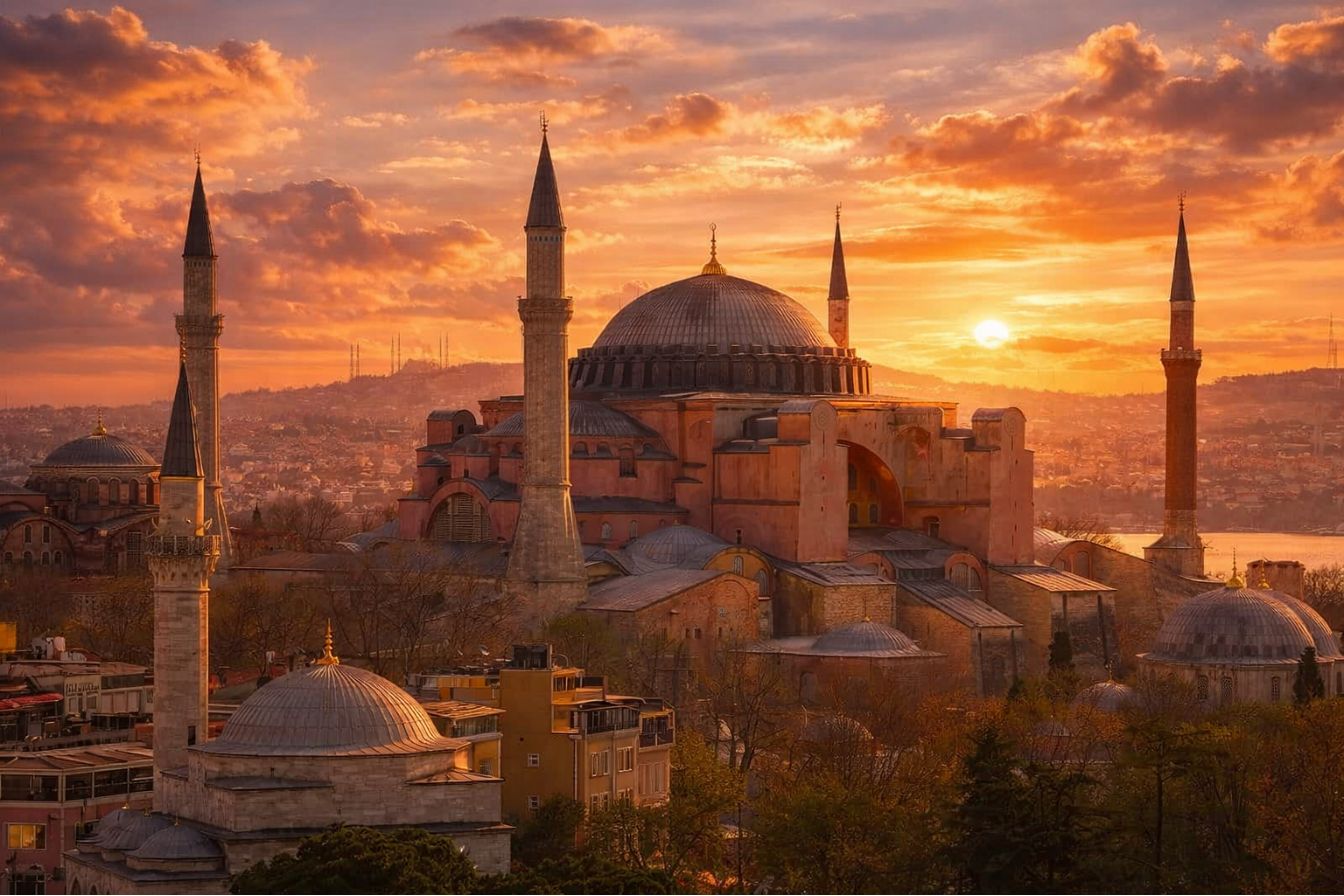
Nothing else in the palace feels like the Harem. The courtyards are open, bright and ceremonial, built to impress ambassadors and to stage the machinery of an empire. The Harem is the opposite: narrow, low, tiled from floor to ceiling, a warren of rooms where the sultan's mother, his wives, his children and the staff who served them lived under supervision. The scale drops from imperial to domestic in the space of one doorway.
The Court of the Black Eunuchs sits at the entrance, a long tiled passage with dormitory rooms off it. Past that, the Concubines' Apartments and a run of corridors where the tilework is worth slowing down for, blue and turquoise Iznik panels installed across different reigns, so the patterns shift as you move deeper. Some rooms carry paintwork from later centuries laid over earlier tile, the same layering that makes Hagia Sophia's interior so difficult to date at a glance.
Skipping the Harem to save money is a false economy. You would be paying most of the ticket price for the outer palace and then declining the part that visitors consistently describe as the reason to come. If your budget only stretches to one paid interior in Sultanahmet on a given day, the honest comparison is Harem versus Hagia Sophia's upper gallery, and that comes down to whether you want Ottoman domestic life or fifteen centuries of layered religious architecture.
Explore Ottoman palace life
Topkapi Palace & Harem options
Palace visit · Harem option
What lies behind the Harem’s tiled corridors?Explore Ottoman palace life with the 1.5-hour Guided Highlights option that includes Harem access.
Explore the Palace & Harem →What Are Topkapi Palace's Opening Hours, And Which Day Is It Closed?
In the summer season, 1 April to 31 October, Topkapi Palace opens 09:00 to 18:30 with last entry around 18:00. It is closed on Tuesdays, every week, all year. Winter hours are shorter, so confirm them before a November to March visit. Arriving in the first hour is the difference between an easy morning and a slow one.
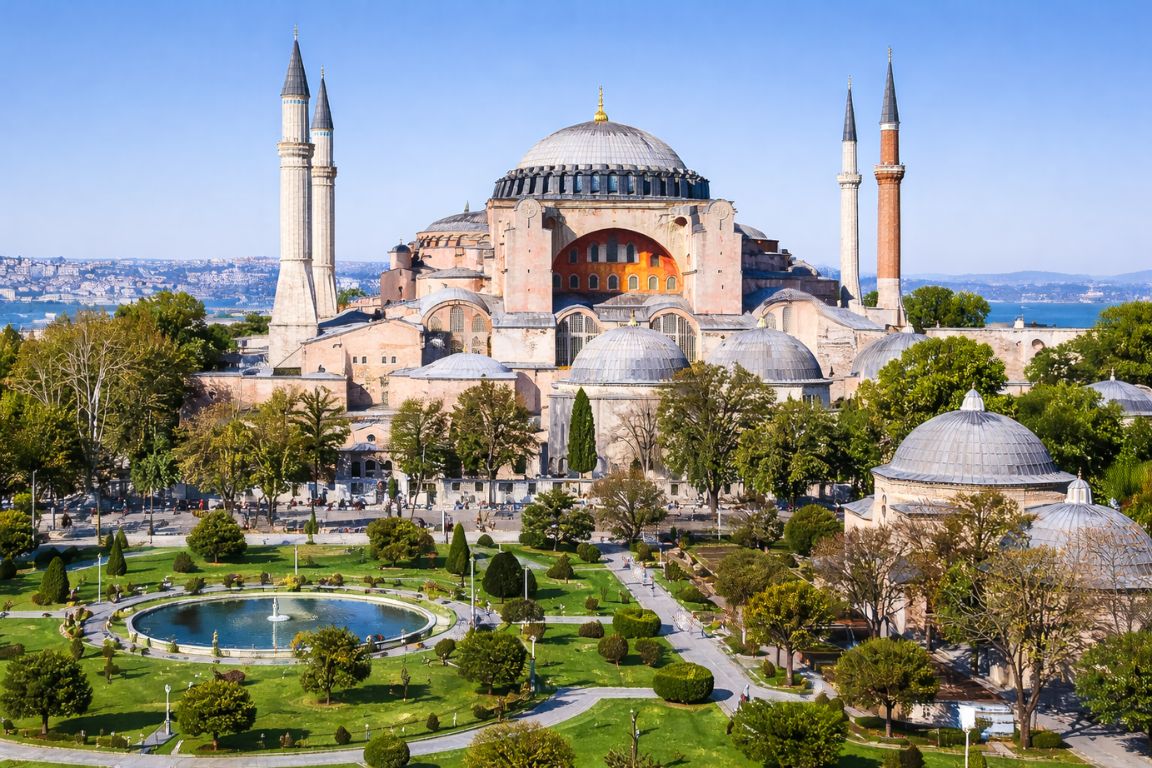
The Tuesday closure has a knock-on effect worth planning around. When Topkapi shuts, a slice of the day's visitors redirects to Hagia Sophia, which measurably raises the crowd level there. If your Istanbul days are fixed and one of them is a Tuesday, use it for something other than the two headline sites, or accept that Hagia Sophia will be busier than the same hour on a Wednesday. The timing detail is covered further in the guide to the quietest hours at Hagia Sophia.
Last entry is not the same as closing time, and at Topkapi the gap matters more than it does at most museums. The palace is large, the four courtyards run in sequence, and staff begin clearing the inner sections before the outer gates shut. An 18:00 entry does not give you the palace until 18:30 in any meaningful sense. If you want the Treasury and the Harem without being moved along, be inside by mid-afternoon at the latest.
Morning is the better half of the day here for a second reason. The fourth courtyard terraces look out over the Bosphorus and the Golden Horn, and the light on the water is at its best early, before the haze builds over the strait in summer. The same logic runs through the practical visiting guide to Hagia Sophia, where the first hour after opening consistently beats anything after 10:30.
| Detail | What to expect |
|---|---|
| Summer season | 1 April to 31 October |
| Summer hours | 09:00 to 18:30 |
| Last entry | Around 18:00, and inner sections clear earlier |
| Weekly closure | Closed every Tuesday, all year |
| Winter hours | Shorter than summer; confirm current times before a November to March visit |
| Best arrival | At opening, or after 15:00 in the shoulder months |
| Knock-on effect | Tuesday closure pushes extra visitors toward Hagia Sophia |
Tuesday is a no-match for this palace product. Choose another day before comparing departure times. Choose A Palace Date →
How Are The Four Courtyards Arranged, And What Is In Each One?
Topkapi runs outward to inward through four courtyards, each behind a more restrictive gate. The first was effectively public and holds Hagia Irene. The second holds the Harem and the palace kitchens. The third holds the Imperial Treasury and the Sacred Relics Room. The fourth is gardens and terraces above the Bosphorus.
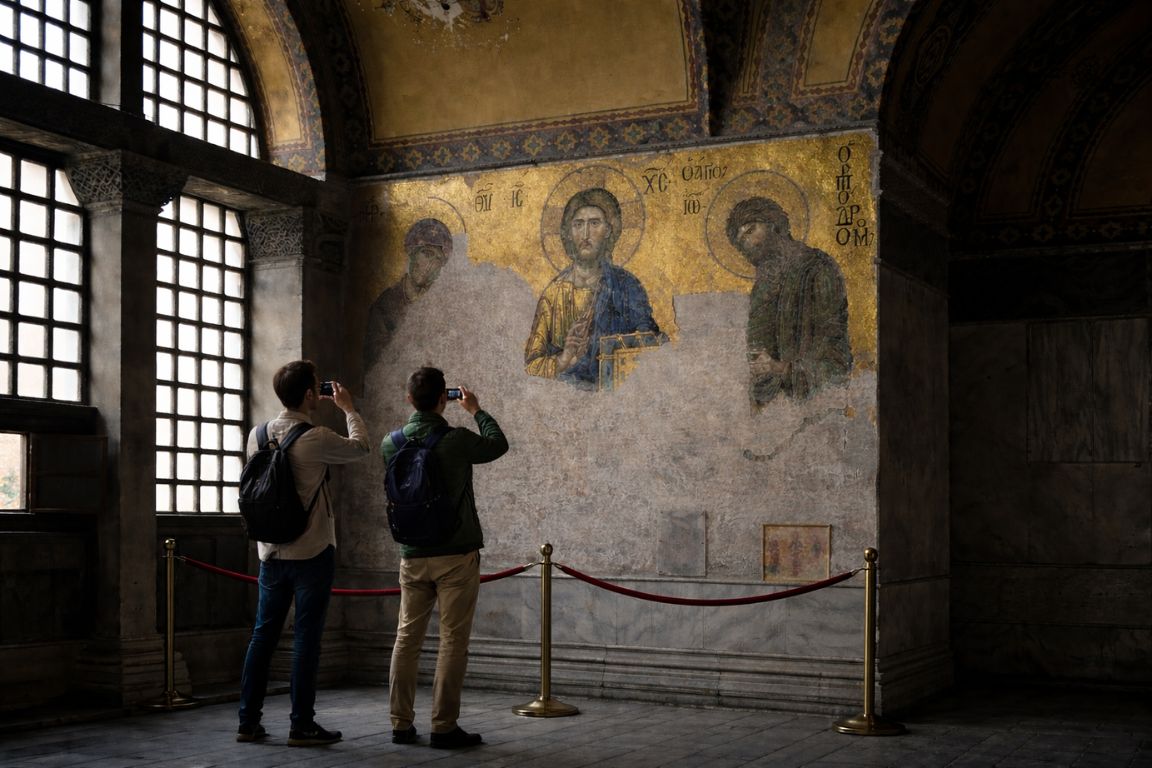
Understanding the sequence changes how the visit reads. This was not a palace in the European sense of one grand building with staterooms inside it. It was a walled city of pavilions, kitchens, dormitories and gardens, organised so that access itself signalled rank. A merchant might reach the first courtyard. An ambassador might be received in the second. The third was the sultan's own household, and passing its gate was a privilege granted, not assumed. Britannica's overview of Topkapi Palace's courtyards sets out the same progression.
The first courtyard is free to walk into and still functions as a public park with the Byzantine church of Hagia Irene standing in it, which is one of the oldest churches in the city and predates the palace by a thousand years. The second courtyard is where the ticket starts working: the palace kitchens with their run of chimneys, the Imperial Council chamber, and the Harem entrance off to the left. The third is the collections. The fourth is the reward, a set of terraced gardens including the Tulip Garden with the water view.
Most visitors underestimate the walking. There are no shortcuts back through the gates once you are deep in the sequence, the ground is uneven cobble in places, and the courtyards are large. Comfortable shoes matter more here than at any other Sultanahmet site.
| Courtyard | Access historically | What is there now | Time to allow |
|---|---|---|---|
| First | Effectively public | Hagia Irene, open grounds, the outer gate | 15 to 20 minutes |
| Second | Officials and invited guests | Palace kitchens, Imperial Council chamber, Harem entrance | 45 to 60 minutes |
| Third | The sultan's own household | Imperial Treasury, Sacred Relics Room, audience hall | 60 minutes or more |
| Fourth | Innermost, private | Tulip Garden, terraces, Bosphorus and Golden Horn views | 30 minutes |
The guided introduction helps orient you before further independent exploration with audio. Allow time beyond the introduction. Choose A Palace Introduction →
What Is Actually Inside The Imperial Treasury And The Sacred Relics Room?
The Imperial Treasury holds the Spoonmaker's Diamond and the Topkapi Dagger, two of the most photographed objects in Turkey. The Sacred Relics Room holds items attributed to the Prophet Muhammad and earlier prophets, in tile-lined chambers where recitation runs continuously. Both sit in the third courtyard, and both draw the palace's densest crowds.
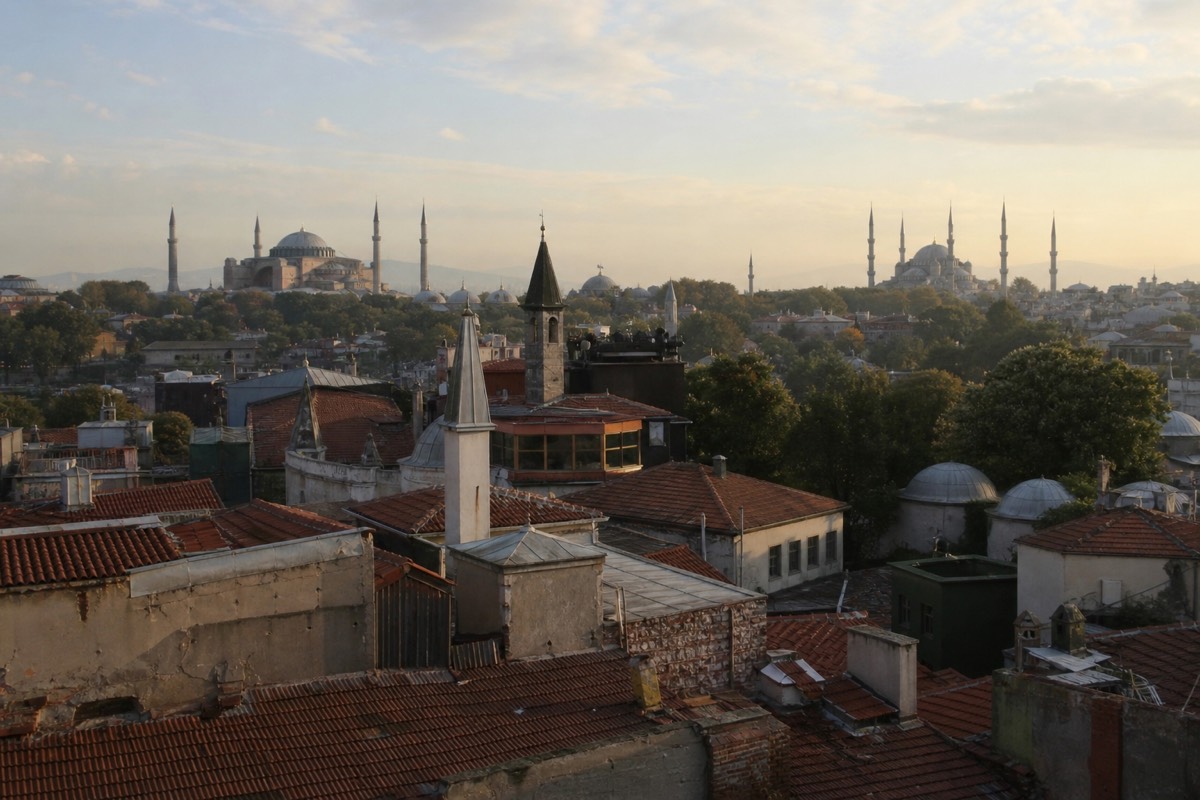
The Treasury is a set of rooms rather than one hall, and the queue inside it moves in a slow shuffle past cases. The Spoonmaker's Diamond is the object most people come for, mounted and lit so it is visible from a few metres back, which is as close as the flow allows at midday. The Topkapi Dagger, with its emeralds set into the hilt, is in the same sequence. Photography rules are enforced more tightly here than in the courtyards, and staff will say so.
The Sacred Relics Room asks something different of a visitor. It is a working devotional space as much as a display, quiet, tiled, with Quranic recitation audible throughout. Visitors of any faith are welcome, and the expectation is simply that you keep your voice down and do not treat the rooms as a photo stop. If you have already read the Hagia Sophia dress code and rules, the same instinct applies here: dress modestly, move quietly, and let the space set the tone.
The practical advice for both rooms is the same. Go early or late, not between 11:00 and 14:00. The third courtyard is where tour groups concentrate, and a twenty-minute wait to shuffle past a case is the standard midday experience in July and August.
| What | Where | Why it draws a crowd |
|---|---|---|
| Spoonmaker's Diamond | Imperial Treasury | The single most recognised object in the palace |
| Topkapi Dagger | Imperial Treasury | Emerald-set hilt, heavily photographed |
| Relics attributed to the Prophet Muhammad | Sacred Relics Room | A devotional space, not only a display |
| Iznik tilework | Sacred Relics Room and Harem corridors | Some of the finest surviving panels in the city |
| Audience hall | Third courtyard, just inside the gate | Where ambassadors met the sultan |
The current listing reports some collection closures. Confirm the rooms you most want before making them the reason to book. Read Current Palace Conditions →
How Long Does Topkapi Palace Take, And How Do You Pair It With Hagia Sophia?
Allow three hours for Topkapi with the Harem, four if you linger in the Treasury. Hagia Sophia's upper gallery takes 60 to 90 minutes, plus 15 to 45 minutes for security. That makes a realistic pairing: Hagia Sophia at opening, lunch, Topkapi from early afternoon. Reversing the order pushes Hagia Sophia into its worst crowd window.
The temptation is to add a third or fourth site to the same day. It usually does not work. Topkapi alone can absorb a morning if you actually stop at the collections, and Hagia Sophia rewards standing still in front of the Deesis rather than passing it at walking speed. Two major interiors in one day is a full day, and the people who try for four end up remembering none of them clearly.
Friday needs its own plan. Hagia Sophia closes to tourists from 12:00 to 14:30 for congregational prayer, and no ticket type overrides that. On a Friday, the workable order flips: Topkapi in the morning while Hagia Sophia is shut to visitors, then Hagia Sophia from 14:30. Details of that closure and how tickets behave around it are in the guide to how Hagia Sophia tickets are priced.
If the sequencing sounds like more logistics than you want to run, a flexible one to three day private tour exists precisely for this problem. It is listed around $100 with a 5.0 rating on the operator's listing, and the multi-day structure means Topkapi and Hagia Sophia can sit on different days without you rebuilding the itinerary yourself. Check the live listing for the current rate.
| Time | Standard weekday plan | Friday plan |
|---|---|---|
| 08:00 to 09:00 | Hagia Sophia at opening, summer season | Topkapi at opening |
| 09:00 to 11:00 | Hagia Sophia upper gallery | Topkapi courtyards and Harem |
| 11:00 to 13:00 | Sultanahmet Square, lunch | Topkapi Treasury, then lunch |
| 13:00 to 16:00 | Topkapi, Harem first, then Treasury | Hagia Sophia reopens to tourists at 14:30 |
| 16:00 to 18:00 | Fourth-courtyard terraces | Sultanahmet Square, Blue Mosque between prayers |
| Closed to you | Topkapi on Tuesdays | Hagia Sophia 12:00 to 14:30 |
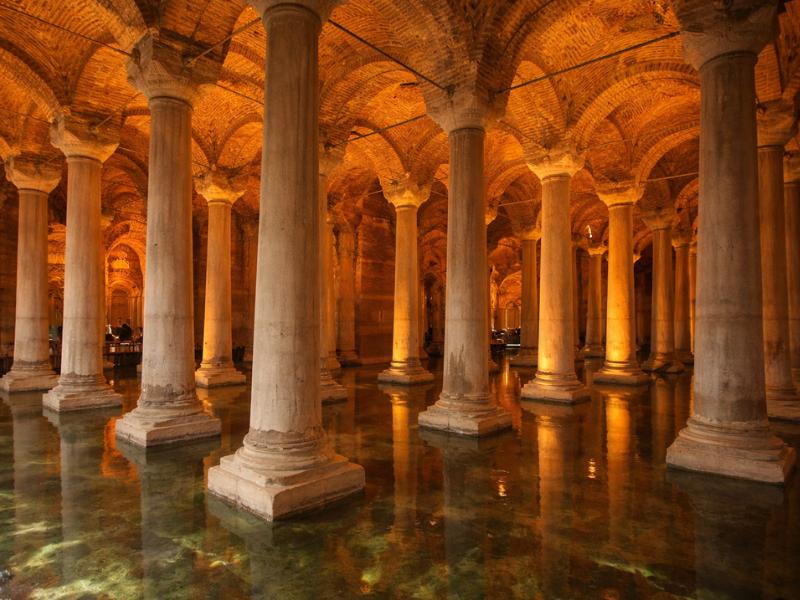
See two remarkable interiors
Hagia Sophia & Cistern combo
Hagia Sophia + Cistern · 3-day validity
Pairing Topkapi with the gallery and Cistern?Explore the two-site bundle’s optional palace upgrade. Choose a separate Harem-inclusive option if the Harem is essential.
Check Your Two-Site Visit Dates →How Are Topkapi Palace And Hagia Sophia Connected, Beyond The Short Walk?
They are the religious and political halves of the same imperial centre. Hagia Sophia was the state church of Byzantium and then the imperial mosque of the Ottomans. Topkapi, from the 1460s onward, was the sultans' residence and the seat of government. The two sit within sight of each other because power in this city was always administered in one place.
The connection is legible on the ground. Hagia Sophia's tourist entrance is on the northeast side, alongside the Imperial Gate of Topkapi Palace, which means the queue you stand in to enter a sixth-century church touches the wall of a fifteenth-century palace. Mehmed the Conqueror took the city in 1453, converted the church to a mosque immediately, and began building the palace within a decade. The proximity was deliberate.
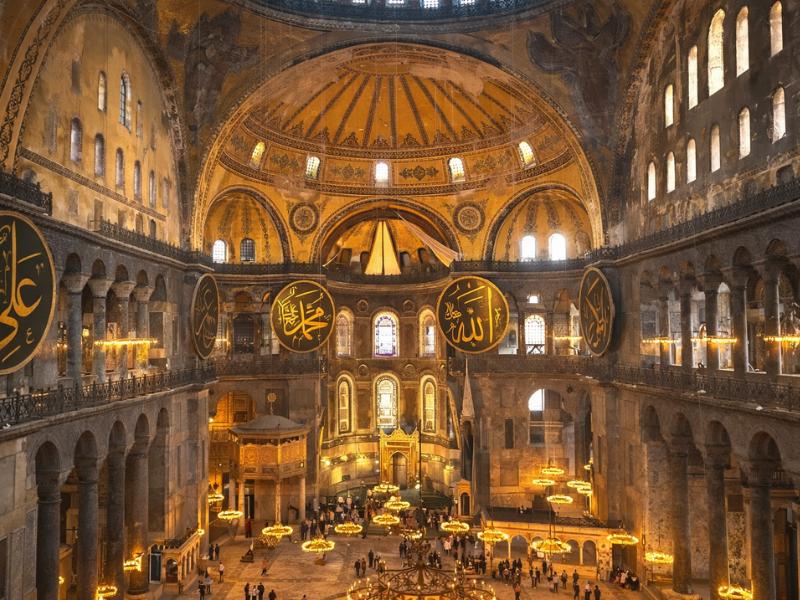
What that means for a visitor is a legible chronology if you take the two in the right frame of mind. Hagia Sophia is what the Ottomans inherited and admired enough to keep and imitate. Topkapi is what they built for themselves once the city was theirs. The fuller chain of ownership, from Emperor Justinian's dedication in 537 through to the 2020 reconversion, is set out in the guide to how Hagia Sophia went from Byzantine church to Ottoman mosque.
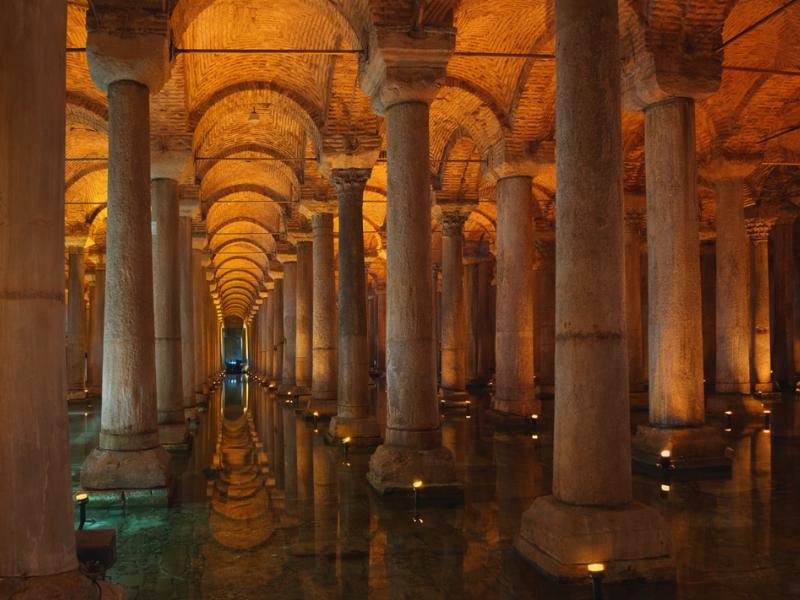
Both stand inside the UNESCO World Heritage listed historic areas of Istanbul, along with the Basilica Cistern a few hundred metres west. Seeing all three in sequence gives you the water supply, the cathedral and the palace of the same city across a thousand years of continuous use.
Put the palace and former cathedral into chronological context before you cross between them. Read Hagia Sophia’s History →
What Does A Topkapi Ticket Not Cover, And What Needs A Separate Booking?
A Topkapi ticket covers Topkapi. Hagia Sophia is a separate 25 euro ticket for foreign visitors, and no pass or palace ticket includes it. The Basilica Cistern is separately ticketed too, and the Museum Pass Istanbul does not cover it. Budget three purchases for a full Sultanahmet day, or one combo booking.
This trips people up because the sites are so close together that they feel like one attraction. They are not. Hagia Sophia has run its own ticketing since January 2024, at 25 euros for foreign tourists, with children under 8 free on production of ID. The Museum Pass Istanbul has not been valid there since the building reverted to mosque status, and no version of the pass changes that.
The Basilica Cistern is the other one to plan for. It has its own entrance fee, its own queue that can run 30 to 60 minutes between April and October, and its own evening session. The full breakdown sits in the guide to Basilica Cistern tickets and hours, including why the Museum Pass does not help you there either.
For travellers planning a longer stay with more than these three sites on the list, an Istanbul city pass covering 100+ attractions can shift the arithmetic, listed around $201 with a five-day window on the operator's listing. Read what it includes carefully before buying, and check the live listing for the current rate, because the value depends entirely on how many paid sites you actually reach.
| Site | Ticket needed | Museum Pass Istanbul | Note |
|---|---|---|---|
| Topkapi Palace and Harem | Combined palace ticket | Check current pass terms | Harem needs the combined ticket, not basic entry |
| Hagia Irene | Included in the combined ticket | Not a substitute | Stands in the first courtyard |
| Hagia Sophia | Separate, 25 euros for foreign tourists | Not valid, any tier | Upper gallery only; ground floor is for worship |
| Basilica Cistern | Separate entrance fee | Not covered | Evening session sold as a distinct product |
| Blue Mosque | Free | Not applicable | Closes to visitors around each of the five daily prayers |
Compare only matching inclusions: a Harem tour and a palace-only combo upgrade do not buy the same visit. Calculate Complete Party Totals →
Which Topkapi Ticket Or Tour Fits Which Visitor?
Independent visitors with time should buy the combined ticket online and go at opening. Travellers on one tight day are better served by a combo that bundles Hagia Sophia. Anyone who wants the history explained needs a guide booked as a tour, because a palace this large gives up very little to someone reading labels.
The decision really turns on how much context you want. Topkapi labels its objects, but it does not explain the system: why the third gate mattered, what the Council chamber's latticed window was for, how the Harem functioned as an institution rather than a fantasy. That is the gap a guide fills, and it is the reason people who take a guided visit consistently report staying longer than they planned.
Independent visits work well if you do two things: book online to fix the price and skip the ticket queue, and start with the Harem rather than the Treasury. Almost everyone does the reverse, which is why the Treasury is jammed at 11:00 and the Harem is comparatively calm at 09:15.
For a first trip to Istanbul where Topkapi is one stop among many, compare formats on the page for guided Hagia Sophia tours and pick by day length rather than by price alone. A three-hour walk and a full-day private tour are not competing products; they are answers to different trips.
| You are | Best option | Why |
|---|---|---|
| Independent, two or more days in the old city | Combined ticket bought online | Fixed price, shorter wait, full access including the Harem |
| On one day, want Hagia Sophia too | Combo ticket with a 72-hour window | One booking, both sites, splits across days if plans slip |
| First visit, want the history explained | Guided or private tour | The palace does not explain its own system on the labels |
| Five days, many paid sites | City pass | Only pays off at volume; read the inclusion list first |
| Visiting on a Tuesday | Anything but Topkapi | Closed weekly, and Hagia Sophia absorbs the overflow |
Choose guided highlights for the Harem; choose a different format only after checking what it leaves out. Choose Your Palace Option →
What Mistakes Cost Visitors The Most Time At Topkapi Palace?
The expensive errors are predictable: arriving on a Tuesday, buying basic entry and discovering the Harem is not included, starting in the Treasury at midday, entering after 16:00 with three courtyards left, and assuming a Hagia Sophia ticket or a museum pass gets you in. Each one costs an hour or the visit itself.
The Tuesday closure is the most absolute. There is no workaround, no partial opening, no ticket that changes it. Check the day of the week against your itinerary before you book anything else in Sultanahmet, because it is the one fixed point the rest of the plan has to bend around.
The ticket-tier mistake is the most common. People compare prices online, see a lower number for museum-only entry, and buy it without registering that the Harem is a separate section. The gap is only noticed at the Harem door, at which point buying an upgrade means backtracking through two courtyards to the gate. Read what the ticket names before you pay.
The timing mistakes are subtler but cost just as much. Entering late means being moved through the third courtyard by staff closing sections behind you. Starting at the Treasury means queueing inside a queue. And treating the fourth courtyard as an optional extra means skipping the terraces, which are the calmest twenty minutes in the entire complex and the only place in the palace where you see why the sultans built here in the first place.
One last thing worth carrying over from the Hagia Sophia side of the square: bring as little as possible through security, and dress for a site with religious spaces inside it. The specifics for the mosque are set out in the guide to what to see inside Hagia Sophia, and the same restraint serves you well in the Sacred Relics Room.
Check the day, Harem inclusion, meeting point and 15-minute early arrival instruction together. Review Palace Booking Details →